
.
9. Simple Ways To Attract More Lacewings To Your Yard And Patio
To attract more lacewings, plant a variety of flowering plants that provide nectar and pollen, such as dill, fennel, and cosmos. These plants not only attract adult lacewings but also provide a habitat for their larvae. Minimizing the use of chemical pesticides can also encourage lacewings to establish themselves in your garden, as they prefer environments where they can thrive without interference.
10. When To Worry: Similar-Looking Egg Clusters That Aren’t Lacewings
While lacewing eggs are beneficial, some similar-looking egg clusters may belong to less desirable insects. For instance, certain moths and beetles also lay eggs in clusters, but these can lead to pest outbreaks. It’s important to accurately identify the eggs; if in doubt, consulting a local entomologist or extension service can help ensure proper identification.
11. Quick Identification Checklist For Those Weird Little Beads
To quickly identify lacewing eggs, check for the following characteristics: they are tiny, white, and bead-like, positioned on hair-thin stalks about 10 millimeters long. They are often found in clusters and are usually located in areas with ample insect prey. Observing these features can help you distinguish them from other types of eggs or growths.
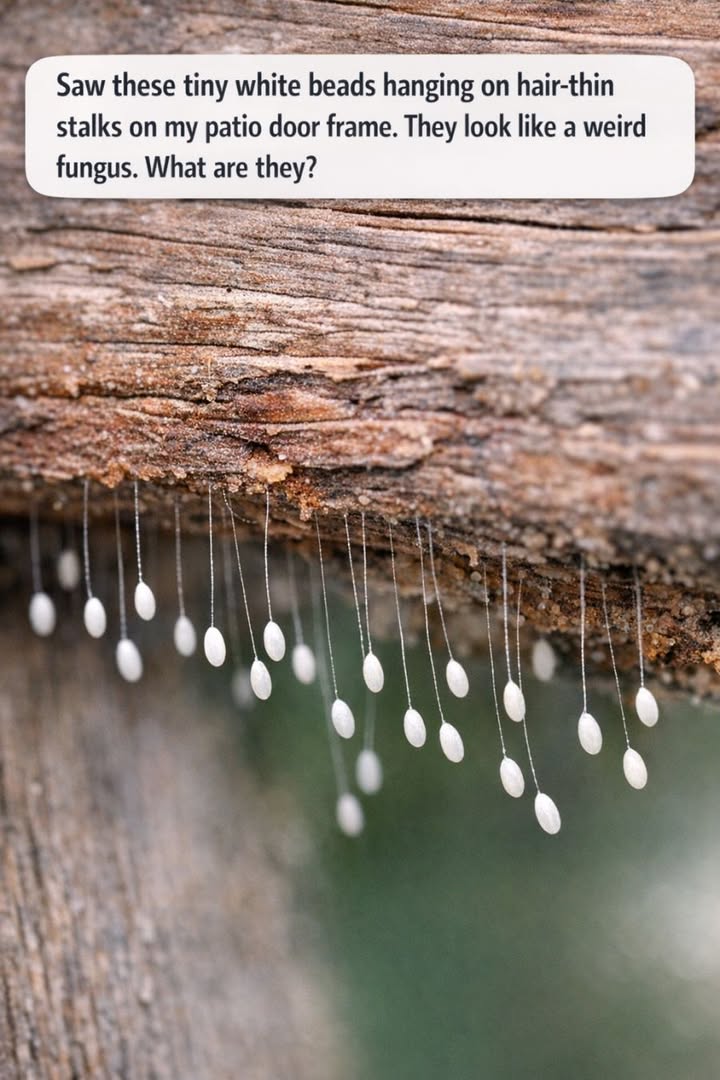
Saw these tiny white beads hanging on hair-thin stalks on my patio door frame. They look like a weird fungus. What are they?
Pages: 1 2
