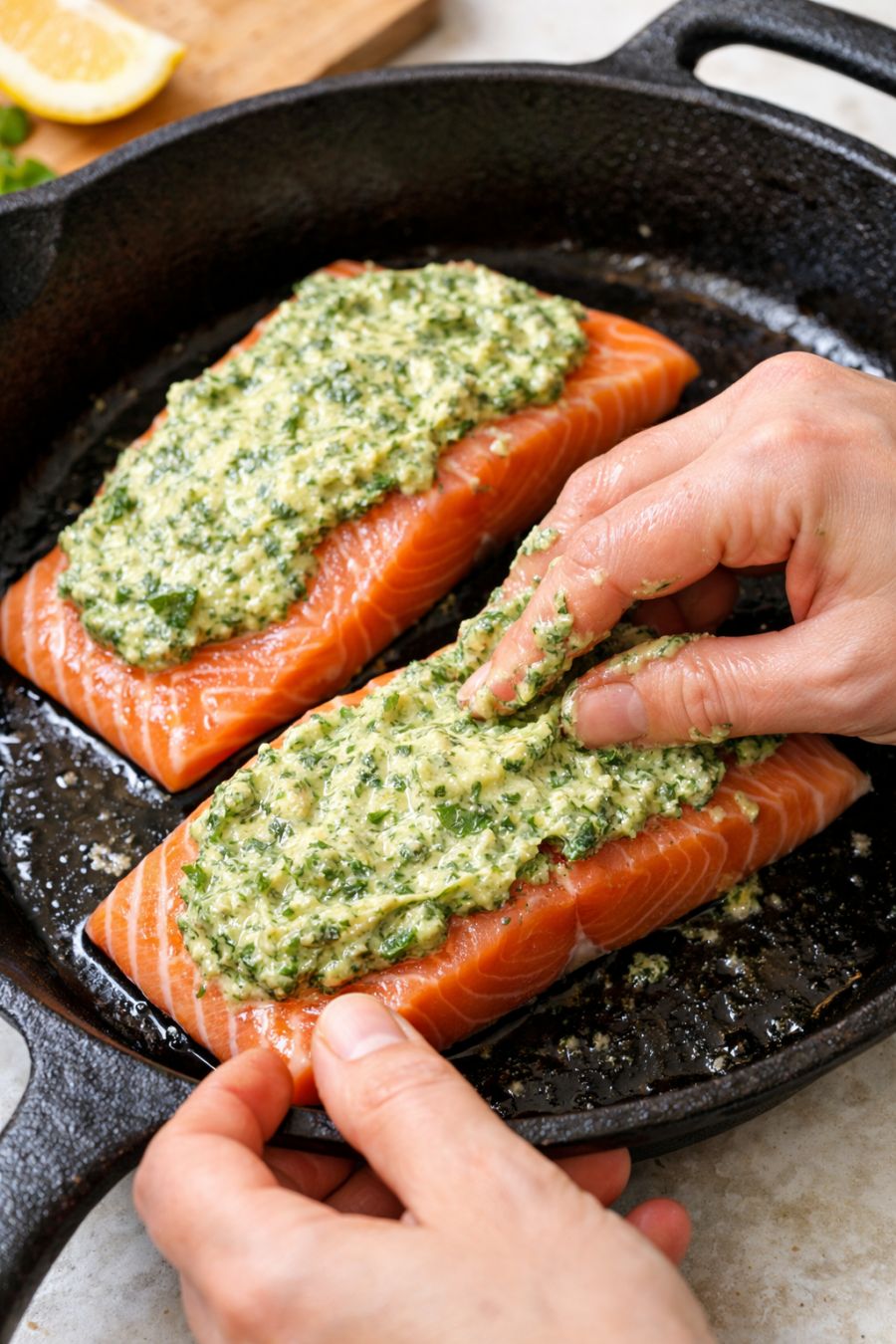
Transfer the skillet back to the oven and bake for 12–15 minutes, or until the salmon flakes easily with a fork and the creamy pesto topping is bubbly and just starting to turn golden at the edges. Thicker fillets may need an extra 2–3 minutes.
If you like a more browned top, switch the oven to broil for 1–2 minutes at the end, watching closely so the topping doesn’t burn.
Remove the skillet from the oven and let the salmon rest for 3–5 minutes. Garnish with chopped fresh basil or parsley and serve with lemon wedges on the side for an extra squeeze of brightness.
Serve the salmon directly from the cast iron skillet, spooning any extra creamy pesto sauce from the pan over the fillets or your side vegetables.
To switch things up, you can swap the basil pesto for sun-dried tomato pesto or a spinach pesto for a slightly different flavor while keeping the same creamy, low carb concept. If you prefer a lighter sauce, replace half of the mayonnaise with plain Greek yogurt (just know it may separate slightly more in the oven, but it still tastes great). For extra crunch, sprinkle a tablespoon or two of finely crushed pork rinds or almond flour over the creamy topping before baking. If you don’t have a cast iron skillet, use any oven-safe skillet or a small baking dish and lightly grease it before adding the salmon. For meal prep, cook the salmon as directed, let it cool, then store it in airtight containers for up to 3 days; reheat gently in a 300°F oven or in a covered skillet over low heat so the fish doesn’t dry out. You can also make the herby mixture up to 2 days ahead and keep it in the fridge, then just slather it over the raw salmon right before baking on a busy night.