
4. Iridescence vs. Spoilage: Key Visual Differences
Understanding the difference between iridescence and spoilage is crucial for food safety. Iridescence will often appear as a uniform, shiny, rainbow-like layer on the surface of the meat. It does not affect the texture, smell, or overall appearance of the meat beyond the color.
Spoilage, on the other hand, often presents with more than just a color change. Spoiled meat may have a slimy texture, an off-putting odor, and a dull or discolored appearance that is inconsistent with the natural look of cooked meat. These signs indicate bacterial growth and should be taken seriously.
5. Smell, Texture, And Color Changes That Signal Bad Meat
Spoiled meat typically has a distinct odor that is sour, ammonia-like, or metallic, which is different from the benign metallic sheen of iridescence. This odor is a result of bacterial activity breaking down the proteins and fats in the meat.
In addition to smell, the texture of spoiled meat can become slimy or sticky to the touch, a clear sign that bacterial colonies are thriving. Color changes associated with spoilage often include browning or graying, and the meat may appear dull rather than shiny.
6. When A Green Sheen On Steak Is Still Safe To Eat
If the green sheen is the only unusual trait of your leftover steak, and it otherwise smells and feels normal, it’s likely safe to eat. This iridescence is a natural optical effect and not an indication of spoilage or contamination.
However, it’s always important to use your senses to evaluate the meat for any other signs of spoilage. If the steak smells fresh and the texture is firm, the green sheen can safely be ignored.
7. Storage Rules: How Long Leftover Steak Actually Lasts
Proper storage is key to maintaining the quality and safety of your leftovers. Cooked steak should be stored in the refrigerator within two hours of cooking and can last for 3-4 days when kept in an airtight container.
For longer storage, consider freezing your leftover steak. When properly wrapped in foil or placed in a freezer-safe bag, steak can maintain its quality for up to 6 months. Always label your containers with the date of storage to keep track of freshness.
8. Safe Reheating Practices For Low-Carb Steak Lunches
Reheating steak safely is essential to avoid foodborne illnesses. The USDA recommends reheating leftovers to an internal temperature of 165°F (74°C) to kill any potential bacteria.
Avoid microwaving steak on high settings, as this can lead to uneven heating. Instead, use a medium setting or reheat on the stove over low heat, covering the steak to retain moisture. This ensures the steak heats evenly without drying out.
9. When To Toss It: Red-Flag Signs You Shouldn’t Ignore
There are certain signs that indicate it’s time to discard your leftover steak. If the meat has an off smell, even slightly, it’s safest to err on the side of caution and throw it away.
Additionally, any slimy or sticky texture, signs of mold, or color changes that don’t resemble the harmless iridescence should be treated as red flags. Consuming spoiled meat can lead to food poisoning and should always be avoided.
10. How To Prevent Weird Colors In Future Leftovers
To minimize the appearance of iridescence in your leftover steak, consider slicing it in a way that reduces light diffraction. Cutting with the grain rather than against it can help lessen the surface area exposed to light.
Additionally, store your steak in airtight containers to prevent oxidation, which can sometimes enhance the appearance of iridescence. Vacuum sealing is another effective method to maintain the original appearance of your leftovers.
11. What Experts Say About Metallic Colors And Meat Safety
Food safety experts often emphasize that iridescence in meat is a cosmetic issue rather than a safety concern. The USDA states that the natural pigments in the muscle react to light, creating the iridescent effect, and this does not impact the quality or safety of the meat.
Experts advise consumers to use their senses to assess the overall state of the meat. If only a color change is present while smell and texture remain normal, the meat should be safe to consume. Always prioritize proper storage and reheating practices to ensure your leftovers remain safe to eat.
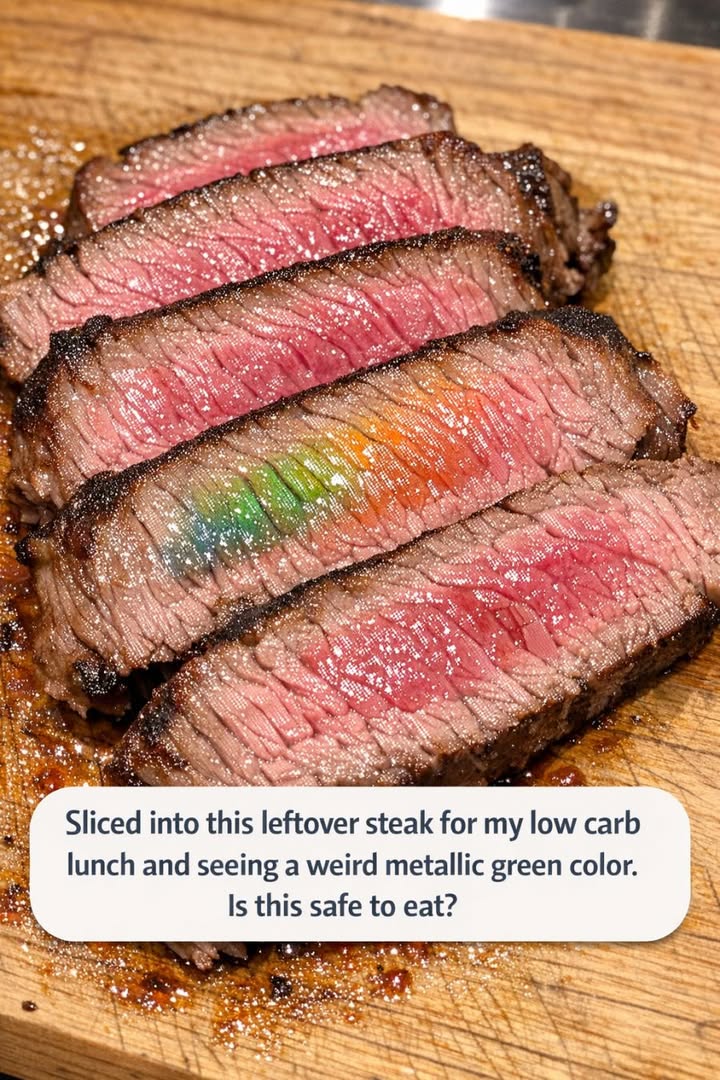
Sliced into this leftover steak for my low carb lunch and seeing a weird metallic green color. Is this safe to eat?
Pages: 1 2
