
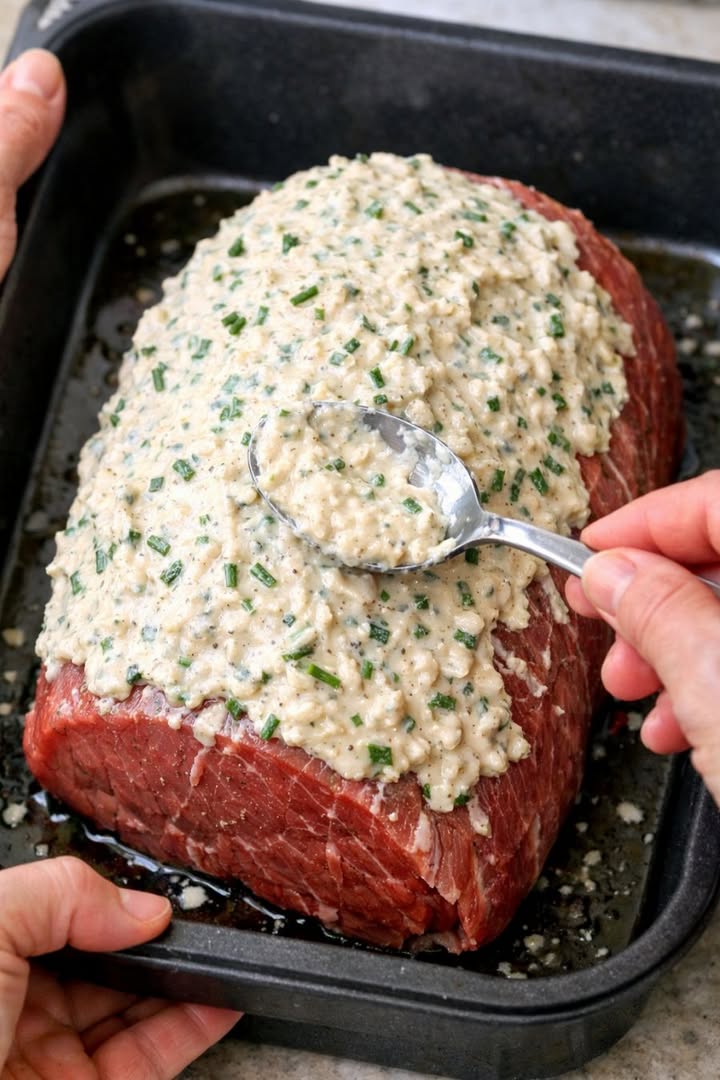
This is my cozy, cold-weather take on classic roast beef: an eye of round roast baked under one simple, creamy “blanket” made with prepared horseradish, sour cream, Dijon mustard, garlic, chives, and black pepper. Eye of round can be a little lean and unforgiving on its own, but this tangy topping keeps it moist, adds tons of flavor, and makes the whole thing feel like a Sunday dinner you can pull off on a weeknight. It’s the kind of recipe I throw together when I want something impressive with very little hands-on time—just whisk, spoon over the roast in a pan, and let the oven do the work.
Slice the roast thinly and spoon any extra pan juices over the top. It’s perfect with creamy mashed potatoes or buttered egg noodles to soak up the drippings, plus a simple green side like roasted broccoli, green beans, or a tossed salad. Warm dinner rolls or crusty bread are great for swiping through the horseradish blanket that caramelizes around the edges. Leftovers make amazing roast beef sandwiches on toasted buns with a little extra sour cream or mustard and some crisp lettuce.
Cozy Horseradish Blanket Eye of Round Roast
Servings: 6
Ingredients
1 (2 1/2 to 3 pound) beef eye of round roast, trimmed and patted dry
1 cup sour cream (full-fat or light)
1/4 cup prepared horseradish (not cream-style), drained if very wet
2 tablespoons Dijon mustard
3 cloves garlic, minced
1/4 cup finely chopped fresh chives (plus extra for garnish, optional)
1 1/2 teaspoons kosher salt, divided
1 teaspoon freshly ground black pepper (plus extra to taste)
1 tablespoon olive oil or neutral cooking oil (for searing, optional but recommended)
1/2 cup low-sodium beef broth or water (for the bottom of the roasting pan)
Directions
Preheat your oven to 375°F (190°C). Set a roasting pan (or a 9×13-inch baking dish) nearby. If you plan to sear the roast first, place a large skillet on the stove and let it heat over medium-high.
Pat the beef eye of round roast very dry with paper towels. Sprinkle it all over with 1 teaspoon of the kosher salt and a few extra grinds of black pepper, pressing the seasoning into the surface.
Optional sear for extra flavor: Add the olive oil to the hot skillet. Sear the roast on all sides, 1 to 2 minutes per side, until lightly browned. Transfer the seared roast to the roasting pan. (If you skip searing, just place the seasoned raw roast directly into the roasting pan.)
In a medium bowl, stir together the sour cream, prepared horseradish, Dijon mustard, minced garlic, chopped chives, remaining 1/2 teaspoon kosher salt, and 1 teaspoon black pepper until smooth and well combined. Taste and adjust with a bit more horseradish or pepper if you like more kick.
Pour the beef broth or water into the bottom of the roasting pan, being careful not to wash off the seasoning on the roast. This helps keep the oven moist and creates a little jus for serving.
Using a spoon (or a small spatula), spoon this 1 blanket of horseradish-sour cream mixture all over the top and sides of the raw beef eye of round roast in the roasting pan. Aim for an even, fairly thick layer that completely covers the meat; it will cling and set as it bakes.
Place the roasting pan on the middle rack of the preheated oven. Roast for about 55 to 75 minutes, depending on the size of your roast and your preferred doneness, until a meat thermometer inserted into the thickest part reads about 125°F (52°C) for medium-rare or 135°F (57°C) for medium. Start checking at 50 minutes to avoid overcooking, since eye of round is lean.
As the roast bakes, the blanket will set, turn lightly golden in spots, and drip flavorful juices into the pan. If the pan looks very dry at any point, carefully splash in a bit more broth or water.
When the roast reaches your desired internal temperature, remove the pan from the oven. Transfer the roast carefully to a cutting board, keeping as much of the creamy blanket on top as possible. Tent loosely with foil and let it rest for 15 to 20 minutes; the temperature will rise a few degrees as it rests and the juices will redistribute.
