
Cover the baking dish loosely with foil and bake for 15 minutes. Remove the foil and continue baking for another 10 to 15 minutes, or until the pork reaches an internal temperature of 140°F to 145°F in the thickest part and the stuffing is hot throughout and golden on top.
Remove the dish from the oven and let the pork rest on the stuffing for 5 to 10 minutes. The carryover heat will finish cooking the meat gently and keep it juicy. During this time, the stuffing will also firm up slightly, making it easier to cut into neat slabs.
Slice the pork tenderloin into 1/2-inch medallions and arrange the slices over the stuffing. Cut the stuffing into squares or rectangles (slabs) so that each serving includes a generous slice or two of pork on top. Spoon any pan juices over the pork and serve warm.
Variations & Tips
For a more autumnal version, fold in 1 peeled and diced tart apple and a small handful of dried cranberries or golden raisins with the sautéed vegetables before mixing with the stuffing; the fruit adds sweetness that plays nicely with the sage. If you prefer a richer, almost Thanksgiving-style flavor, swap half of the chicken broth for turkey or vegetable stock and add a pinch of poultry seasoning to the stuffing mix. You can also change the profile entirely by using a rosemary-forward herb blend and adding a splash of white wine to the broth for a slightly more European feel. For a lighter dish, use a whole-grain or reduced-sodium herb stuffing mix and cut the butter in half, replacing the rest with extra broth. If you don’t eat pork, this same slab-bake method works beautifully with boneless, skinless chicken thighs—just adjust the cooking time so the chicken reaches 165°F. Finally, if you like extra-crispy edges on your stuffing, spread the mixture in a slightly larger pan so it’s thinner, and bake the last 5 minutes under the broiler, watching closely so it browns without burning.
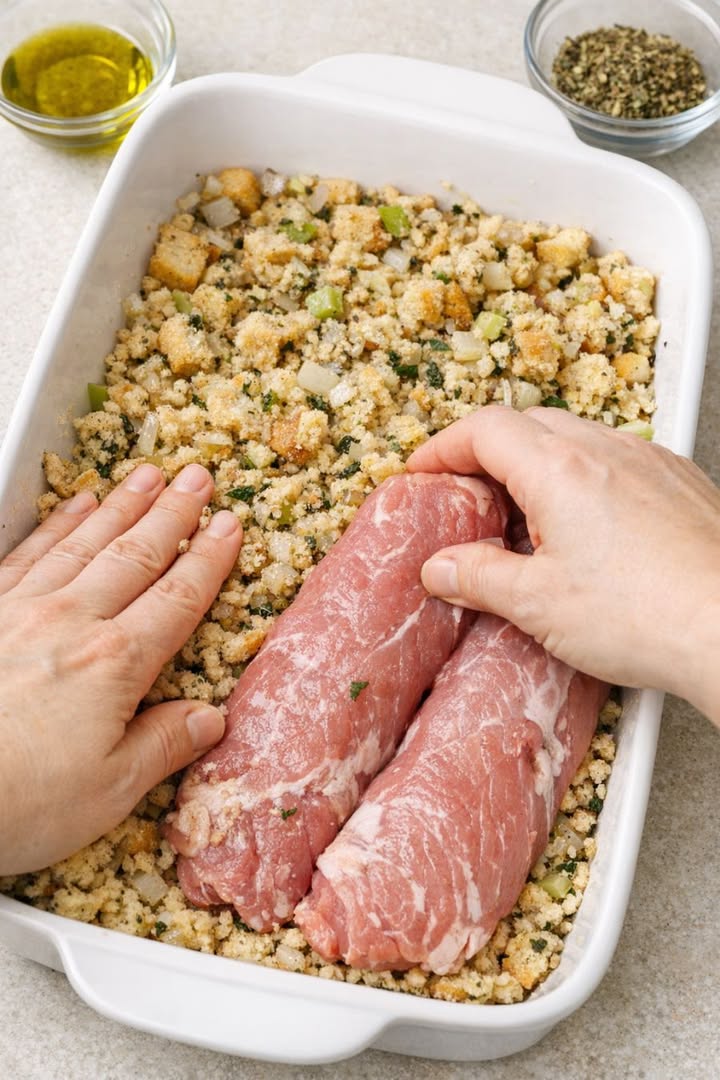
Spread stuffing and these 3 ingredients under pork for a baked supper I’ll happily repeat
Pages: 1 2
