
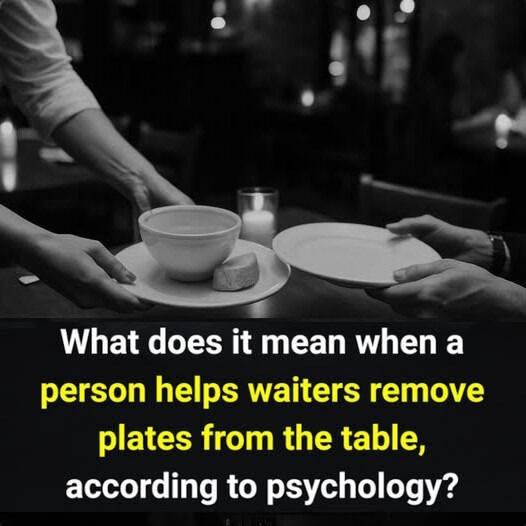
We’ve all experienced it: the meal is finished, the conversation slows, and the waiter comes over to clear the table. Before they can grab a plate, you’re already stacking dishes and gathering the silverware.
While it may seem like simple courtesy, psychologists say this behavior—often referred to as “guest pre-bussing”—can reveal deeper aspects of our personality and social instincts. Here’s what may actually be going on behind that small but thoughtful act.
- The Desire for Control and Order
For some people, a messy table feels mentally distracting. Once the meal is done, leftover plates no longer represent food—they represent clutter.
Visual Completion: Humans naturally seek closure. Sliding your plate forward signals to your brain that the dining experience is officially complete.
Space Regulation: Individuals who are organized in everyday life often tidy up because they prefer reclaiming their personal space from disorder.
- Empathy and People-Pleasing Tendencies
In social psychology, people high in agreeableness (one of the Big Five personality traits) are more likely to offer help.
Empathy: You may notice the waiter looks busy and instinctively want to lighten their load by handing over a plate.
Maintaining Harmony: Some guests help because they want to be considerate and avoid feeling like an inconvenience. They aim to keep interactions smooth and positive.
- Service and Subtle Power Dynamics
Helping can also unconsciously reduce the perceived divide between “server” and “served.”
Leveling the Field: Being waited on can make some people uncomfortable. Assisting with plates can feel like a way of signaling equality.
Reinforcing Self-Image: Acts of helpfulness can boost how we see ourselves—competent, thoughtful, and kind—which provides a small psychological reward.
