
As the chilly months roll around each year, many homeowners face the perplexing issue of finding a fine white powder accumulating under their radiators. Despite regular cleaning, this powder seems to return annually, leaving many puzzled and concerned about what it could be and whether it poses any health risks. Understanding the source of this powder and how to prevent it can help maintain a cleaner and safer home environment.
Radiators are a common heating solution in many homes, particularly in older buildings. While they efficiently warm your living spaces, they can also contribute to unexpected maintenance challenges. The mysterious white dust is one such challenge, often linked to the materials used in your home’s construction and the interaction of these materials with the heat emitted by the radiators.
1. Why Radiators Leave Mysterious White Dust Every Winter
Radiators operate by heating the air around them, which in turn circulates throughout the room. This heating process can cause nearby materials, such as paint and plaster, to deteriorate over time. As these materials break down, they can produce a fine white dust that settles on the floor beneath the radiators. In older homes, this issue is more pronounced due to the age and condition of the materials.
Moreover, the cyclical nature of heating during the winter months exacerbates this process. The constant expansion and contraction of materials as they heat up and cool down can cause micro-fractures in paint and plaster, leading to further dust production.
2. How Aging Paint Turns Into Fine White Powder
Older paint, especially if it contains lead, is prone to deteriorating into a powdery substance when exposed to continuous heat. The heat from radiators can cause the binding agents in the paint to break down, leading to the formation of a chalky residue. This is particularly common in homes built before the 1970s, where lead-based paints were widely used.
As the paint ages, its ability to adhere to surfaces diminishes, especially under repeated thermal stress. This leads to the formation of fine particles that are easily dislodged and can accumulate under radiators, creating the white powder many homeowners observe.
3. Distinguishing Benign Dust From Dangerous Lead Paint
Identifying whether the white powder is simply benign dust or potentially hazardous lead paint is crucial for maintaining a safe home environment. One way to distinguish between the two is to conduct a lead test, which can be done using a simple testing kit available at most hardware stores. These kits can detect lead in paint within a few minutes, providing peace of mind or indicating the need for further action.
If the test reveals the presence of lead, it is important to take immediate steps to mitigate exposure, as lead particles can pose significant health risks, particularly to children and pregnant women. Professional assessment and remediation may be necessary to address the issue safely.
4. Other Common Culprits: Plaster, Mortar, and Construction Debris
Apart from paint, other materials such as plaster and mortar can also contribute to the accumulation of white dust. Plaster, especially if old or improperly mixed, can degrade into a powder over time, particularly when subjected to the drying effects of radiator heat. Similarly, mortar used in brick or stone walls can crumble, releasing fine particles into the air.
Construction debris, often found in older homes that have undergone renovations, can also contribute to the white dust problem. Small particles left behind or released from deteriorating materials during heating cycles can accumulate, adding to the mysterious white powder found under radiators.
5. When Radiator Heat Triggers Paint and Plaster Deterioration
The consistent heat from radiators causes nearby materials to dry out and become brittle. Paint, for instance, may lose its elasticity and begin to crack, leading to the formation of fine powder. Similarly, plaster can become desiccated, especially if it has been applied in thick layers or has not been properly sealed.
As these materials deteriorate, they shed tiny particles that settle under radiators. This process is often exacerbated by fluctuations in temperature, as the repeated heating and cooling cycle causes materials to expand and contract, further contributing to their breakdown.
6. Simple Tests To Identify What the White Powder Really Is
To determine the composition of the white powder, homeowners can perform a few simple tests. For instance, a vinegar test can help identify if the powder is lime-based, as found in plaster or mortar. Simply apply a small amount of vinegar to the powder; fizzing indicates a lime reaction.
Additionally, a tape test can help assess the condition of paint. By pressing a piece of adhesive tape onto the painted surface and pulling it away, you can check for paint flakes or powder adhering to the tape, which suggests paint deterioration.
7. Health Risks You Should Know About (Especially With Older Homes)
In homes built before the 1970s, the presence of lead-based paint is a significant concern. Inhaling or ingesting lead dust can lead to serious health problems, including neurological damage and developmental issues in children. Therefore, identifying lead as the source of white powder is crucial for health and safety.
Apart from lead, other substances, such as asbestos, may also be present in older homes. Asbestos fibers, if disturbed, can pose a severe health risk, including lung cancer and mesothelioma. Professional testing and remediation are recommended if there is any suspicion of such hazardous materials.
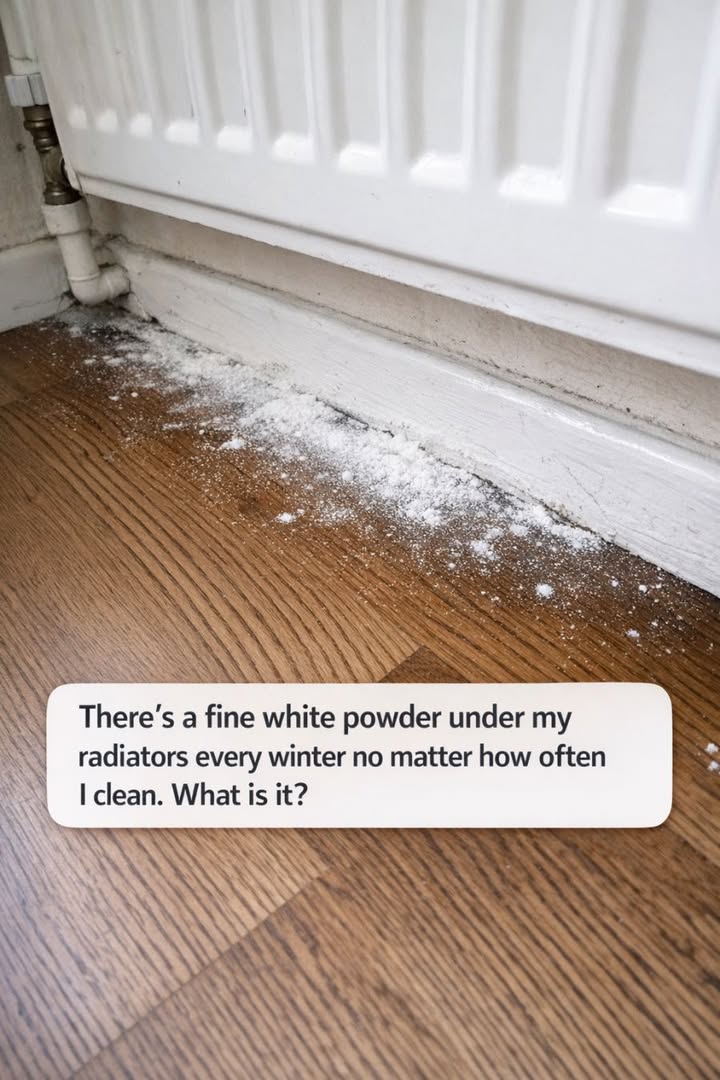
There’s a fine white powder under my radiators every winter no matter how often I clean. What is it?
Pages: 1 2
