
In a DWC setup, cayenne peppers benefit from a steady supply of nutrients and consistent moisture levels, leading to robust growth and abundant pod production. Ensure that your air pump is providing sufficient oxygen to the root zone, as cayenne peppers are particularly susceptible to root rot in poorly aerated conditions. With proper care, you can expect each plant to produce dozens of peppers, perfect for spicing up your recipes.
6. Banana Peppers That Pump Out Mild, Snackable Pods
Banana peppers are a delightful addition to any patio garden, offering mild, tangy fruits that are perfect for pickling, salads, or snacking. These peppers thrive in DWC systems, where the constant nutrient supply encourages prolific flowering and fruiting. Banana pepper plants are typically compact, growing 18 to 24 inches tall, making them ideal for space-constrained areas.
To ensure maximum yield, maintain a nutrient solution pH of 6.0 to 6.5 and provide plenty of light. Banana peppers prefer warm growing conditions, so aim to keep the nutrient solution between 70 and 75 degrees Fahrenheit. With the right environment, your DWC-grown banana peppers will produce an abundance of crisp, flavorful pods throughout the growing season.
7. Habanero Heat Factories for Serious Spice Lovers
Habanero peppers are renowned for their intense heat and fruity flavor, making them a favorite among spice enthusiasts. These peppers flourish in DWC systems, where the controlled environment allows for optimal growth and high yields. Habanero plants typically reach 2 to 3 feet in height, producing small, lantern-shaped fruits that pack a serious punch.
In a DWC setup, it’s crucial to provide habanero peppers with plenty of light and warmth, as they thrive in hot conditions. Aim for a nutrient solution temperature of 70 to 80 degrees Fahrenheit and a pH of 5.8 to 6.2. Regularly monitor the nutrient levels to prevent deficiencies, and you’ll be rewarded with a bountiful harvest of fiery peppers to spice up your dishes.
8. Sweet Mini and Lunchbox Peppers for Colorful Patio Snacking
Sweet mini and lunchbox peppers are perfect for those who prefer milder flavors in a compact package. These small, sweet peppers are ideal for snacking, salads, and garnishes, and they thrive in DWC systems that provide consistent nutrients and moisture. Typically growing 1 to 2 feet tall, these plants are well-suited for container gardening on patios and balconies.
To maximize the productivity of your sweet pepper plants, maintain a nutrient solution pH of 6.0 to 6.5 and ensure they receive plenty of light. These peppers are generally less demanding than their hotter counterparts, making them a great choice for beginners. With the right care, your DWC-grown mini peppers will produce an abundance of colorful, tasty fruits that are sure to brighten up any dish.
9. Ornamental Hot Peppers That Double as High-Yield Decor
Ornamental hot peppers offer the best of both worlds: eye-catching beauty and culinary utility. These plants produce vibrant, colorful fruits that add a decorative touch to your patio, while also providing spicy peppers for cooking. Ornamental peppers are typically compact, with plants reaching 12 to 24 inches in height, making them ideal for small spaces.
In a DWC system, ornamental peppers benefit from the constant supply of nutrients and moisture, resulting in lush foliage and abundant fruiting. These peppers are relatively easy to care for, requiring a nutrient solution pH of 5.8 to 6.5 and temperatures between 65 and 75 degrees Fahrenheit. With proper maintenance, your ornamental pepper plants will thrive, providing both visual appeal and flavorful heat.
10. Superhot Varieties That Thrive in Oxygen-Rich DWC Roots
For those who crave extreme heat, superhot pepper varieties are a must-have addition to your DWC garden. These peppers, including the infamous Carolina Reaper and Ghost Pepper, require the precise conditions provided by a DWC system to reach their full potential. Superhot plants typically grow 3 to 4 feet tall, producing small, intensely hot fruits.
In a DWC setup, it’s essential to maintain a nutrient solution temperature of 70 to 85 degrees Fahrenheit and a pH of 5.5 to 6.0 to support the vigorous growth of these challenging plants. Ensure that your air pump is providing adequate oxygen to prevent root issues, and be prepared for a lengthy growing season, as superhots can take up to 120 days to mature. With dedication, your DWC-grown superhot peppers will reward you with a fiery harvest that’s not for the faint of heart.
11. Pro Tips to Keep Your DWC Pepper Jungle Exploding With Growth
To ensure the success of your DWC pepper garden, it’s important to regularly monitor and adjust the nutrient solution. Check the pH daily and adjust as needed to keep it within the optimal range for your specific pepper varieties. Additionally, replace the nutrient solution every 1 to 2 weeks to prevent the buildup of salts and maintain a balanced nutrient profile.
Lighting is also crucial for the growth of your peppers. If natural sunlight is limited, consider using LED grow lights to provide the necessary light spectrum for photosynthesis. Aim for 12 to 16 hours of light per day to support flowering and fruiting.
Finally, keep an eye on the health of your plants by inspecting them regularly for signs of pests or diseases. Early intervention is key to preventing problems from spreading. With these tips and a bit of patience, your patio DWC system will be bursting with vibrant, high-yielding pepper plants.
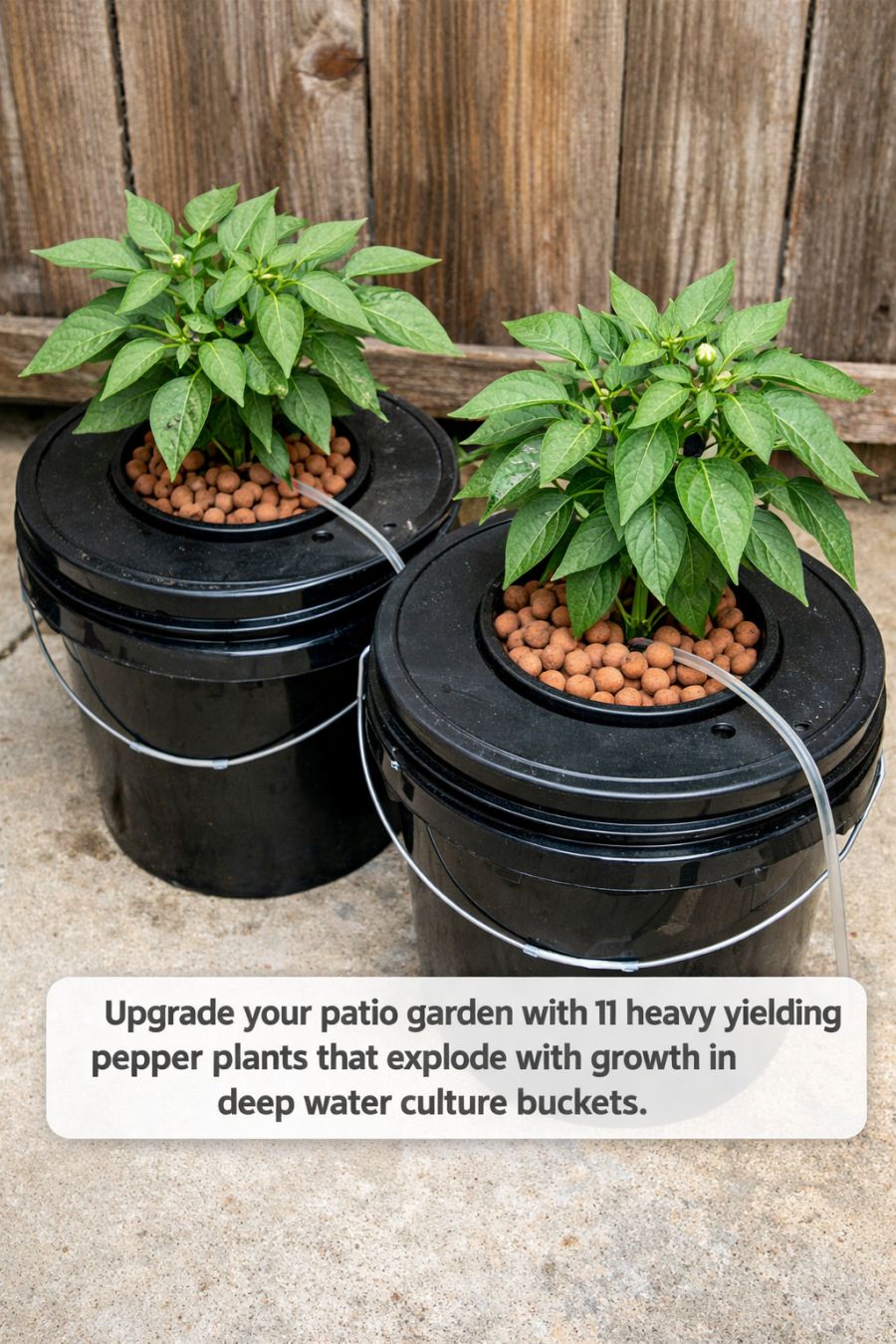
Upgrade your patio garden with 11 heavy yielding pepper plants that explode with growth in deep water culture buckets.
Pages: 1 2
