
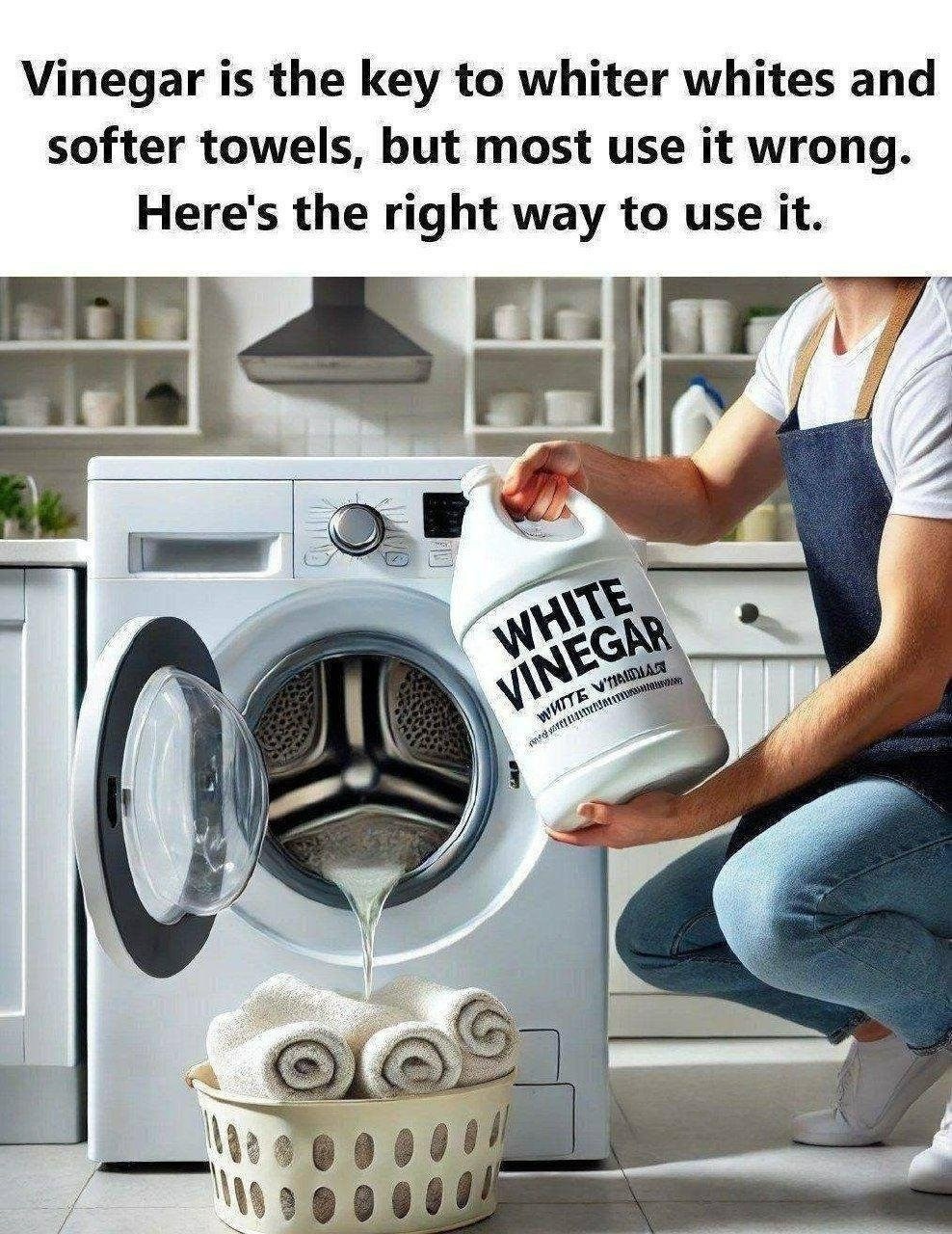
White distilled vinegar (5% acetic acid) isn’t just sour—it’s a multi-tasking laundry ally:
- Dissolves mineral buildup (from hard water) that dulls whites and stiffens fabrics
- Neutralizes alkaline detergent residue—the #1 cause of scratchy towels
- Breaks down soap scum and body oils embedded in fibers
- Mildly disinfects and deodorizes without synthetic fragrances
💡 Key fact: Vinegar is acidic, while most detergents are alkaline. When mixed directly, they neutralize each other—canceling cleaning power.
🚫 The #1 Mistake: Adding Vinegar to the Detergent Dispenser
This is why your towels are still stiff.
Pouring vinegar into the same compartment as detergent (or dumping it in with clothes) causes immediate neutralization—meaning neither product works well.
✅ The RIGHT Way: Use the Fabric Softener Dispenser
- Modern washing machines have a dedicated compartment for fabric softener—this releases vinegar during the final rinse, after detergent has done its job.
- This ensures vinegar rinses away residue, softens fibers, and leaves zero vinegar smell (it evaporates completely!).
🌿 No dispenser? Wait until the final rinse cycle, then pour ½–1 cup directly into the drum.
🧼 How to Use Vinegar for Specific Laundry Goals
📌 For Whiter, Brighter Whites
- Add 1 cup white vinegar to the rinse cycle
- Do NOT mix with bleach—creates toxic chlorine gas
- Pair with: Sun-drying (UV rays naturally whiten!) or ½ cup baking soda in the wash cycle only (not with vinegar!)
📌 For Softer, Fluffier Towels
- Use ½ cup vinegar in the rinse cycle
- Stop using commercial fabric softeners—they coat fibers with waxy chemicals that trap odors and reduce absorbency
- Strip towels monthly: Wash with hot water + 1 cup vinegar (no detergent) to remove buildup
📌 For Odor Removal (Gym Clothes, Diapers, Pet Bedding)
- Soak in 1 gallon water + 1 cup vinegar for 30 minutes before washing
- Add vinegar to rinse cycle to prevent odor recurrence
⚠️ What NOT to Do (Common Myths Busted)
|
Myth
|
Truth
|
|---|---|
|
“Vinegar damages washing machines”
|
False! It’s safe for hoses and seals in moderation (1–2x/week).
|
|
“Vinegar smells stay on clothes”
|
No—vinegar fully rinses out. If you smell it, you didn’t rinse enough.
|
|
“Vinegar + baking soda = super cleaner”
|
They cancel each other. Use baking soda in wash, vinegar in rinse—never together.
|
|
“All vinegar types work”
|
Only white distilled vinegar (5% acidity). Apple cider or wine vinegar can stain!
|
💡 Pro Tips for Laundry Success
- Use only white distilled vinegar—clear, cheap, and effective
- Never use on silk, wool, or delicate fibers—acid can weaken protein-based fabrics
- For HE machines: Use ½ cup max to avoid excess suds
- Revive stiff towels: Wash with 1 cup vinegar + ½ cup baking soda (baking soda in wash, vinegar in rinse)
- Boost freshness: Add 10 drops of essential oil (lavender, tea tree) to vinegar in the dispenser
🌍 Why Vinegar Beats Commercial Products
|
Factor
|
Vinegar
|
Commercial Softeners
|
|---|---|---|
|
Cost
|
$0.10/load
|
$0.30–$0.50/load
|
|
Eco-Impact
|
Biodegradable, non-toxic
|
Petrochemicals, microplastics
|
|
Towel Absorbency
|
Restores it
|
Coats fibers, reduces absorbency
|
|
Odor Control
|
Eliminates at source
|
Masks with synthetic perfumes
|
🌱 Switching to vinegar isn’t just smart—it’s sustainable, economical, and kinder to sensitive skin.
💬 Final Thought: Simplicity That Works
In a world of overpriced laundry pods and “miracle” stain removers, vinegar is the quiet hero that’s been hiding in plain sight.
Used the right way, it gives you:
✨ Brighter whites
✨ Fluffier, more absorbent towels
✨ Fresh, chemical-free laundry
So next wash day, skip the softener.
Grab that gallon of white vinegar.
And let centuries of cleaning wisdom do the work.
🧺 Because clean shouldn’t be complicated—just effective.
