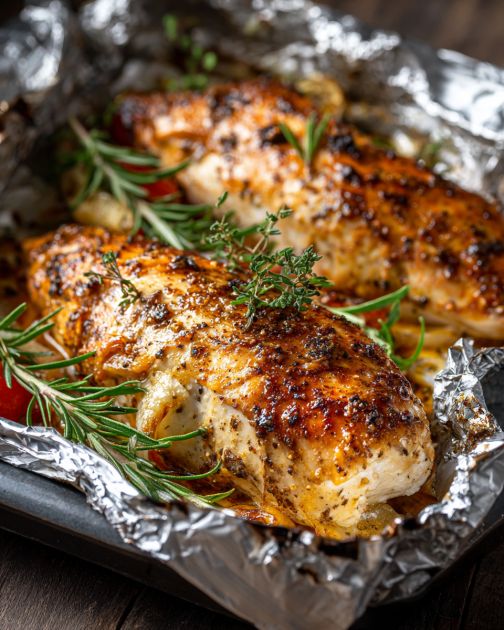
6. Fold the long sides of the foil up and over the chicken, then fold them together tightly to seal. Fold in the short ends to create a fully enclosed packet, leaving just a little space inside for steam to circulate.
7. Transfer the baking sheet with the foil packet to the oven. Bake for 22–28 minutes, depending on the thickness of your chicken pieces, until the chicken is cooked through and reaches an internal temperature of 165°F (74°C).
8. Carefully open the foil—watch out for the burst of hot steam—and spoon some of the balsamic juices over the chicken. If you’d like a bit more color, you can return the open packet to the oven and broil on high for 2–3 minutes, keeping a close eye on it.
9. Let the chicken rest for 3–5 minutes in the juices, then serve directly from the foil tray or transfer to a serving platter, spooning the reduced balsamic sauce over the top.
Because this recipe leans on just three core ingredients, it’s very forgiving and easy to adapt. If you prefer a slightly sweeter profile, choose an aged balsamic, which is naturally thicker and more syrupy; it will reduce a bit in the packet and give you a sauce that tastes almost like a glaze. For a brighter, herbaceous version, tuck a few sprigs of fresh rosemary or thyme under the chicken before sealing the foil—the steam will gently infuse the meat without adding carbs. You can also layer low-carb vegetables directly under the chicken, such as sliced zucchini, bell peppers, or mushrooms; they’ll cook in the balsamic juices and turn into a built-in side dish. If you’re using chicken breasts and want extra insurance against dryness, lightly pound them to an even thickness so they cook more evenly, or reduce the cooking time by a few minutes and check early. Finally, if you’re grilling instead of baking, make individual foil packets with smaller portions of chicken and cook them over medium heat with the lid closed, checking for doneness after about 15–18 minutes.