
Additionally, smell the cheesecake. A fresh cheesecake should have a neutral or slightly sweet aroma. If it has a sour or unpleasant odor, it’s a sign that it may have gone bad. Always trust your senses; when in doubt, it’s better to be cautious and not consume it.
6. The Role of Cooling: Why Putting Cheesecake in the Fridge Too Soon Backfires
Placing a warm cheesecake directly into the refrigerator is a common mistake that can lead to excessive condensation. When a cheesecake is still warm, it releases more moisture, which, when trapped in a cold environment, can lead to a soggy top.
To avoid this, allow your cheesecake to cool at room temperature for at least an hour before transferring it to the fridge. This gradual cooling process helps reduce the amount of condensation that forms on the surface and maintains the cheesecake’s desirable texture.
7. Covering, Wrapping, and Storing Cheesecake the Right Way
Proper storage of cheesecake is crucial to maintaining its quality. Once the cheesecake has cooled to room temperature, cover it with plastic wrap or foil to protect it from the cold air in the fridge. This barrier can help reduce condensation and prevent the cheesecake from absorbing any odors from other foods.
If you have a springform pan, you can cover the cheesecake directly in the pan. Otherwise, transfer the cheesecake to an airtight container for added protection. This method not only preserves the cheesecake’s texture but also extends its shelf life.
8. Simple Fixes: How to Remove Droplets and Rescue the Cheesecake’s Texture
If your cheesecake does develop droplets on the surface, there’s no need to panic. Use a clean paper towel or a piece of parchment paper to gently blot the moisture without pressing too hard on the cheesecake’s surface.
If the texture seems slightly affected by the moisture, serving the cheesecake with a fruit topping or whipped cream can help mask any minor imperfections. The added flavors and textures can enhance the overall dessert experience.
9. Pro Baker Tips to Prevent Weeping and Condensation Next Time
To prevent weeping and condensation in future cheesecakes, incorporate a few professional tips into your baking routine. First, bake your cheesecake in a water bath, which helps regulate the temperature and prevents cracking and excessive moisture loss.
Additionally, consider reducing the sugar content slightly if you notice frequent weeping in your cheesecakes. Finally, always allow your cheesecake to cool slowly and store it properly to maintain its quality.
10. Common Cheesecake Myths About Moisture and Food Safety, Debunked
One common myth is that any moisture on a cheesecake indicates spoilage. As we’ve discussed, this is not necessarily true unless accompanied by other signs of spoilage such as mold or a sour smell.
Another myth is that all cheesecakes need to be stored in the fridge immediately after baking. While refrigeration is essential for long-term storage, allowing the cheesecake to cool at room temperature first can help prevent unwanted moisture issues.
11. When to Toss the Cheesecake: Clear Signs It’s No Longer Safe
While condensation is normal, there are clear signs when a cheesecake should be discarded. If the cheesecake develops a moldy appearance, has an off-putting odor, or shows significant discoloration, it’s no longer safe to eat.
Always consider the storage time as well. If a cheesecake has been stored in the refrigerator for more than a week, it’s generally safer to discard it to avoid potential foodborne illness. Being mindful of these signs ensures that you enjoy your cheesecake safely.
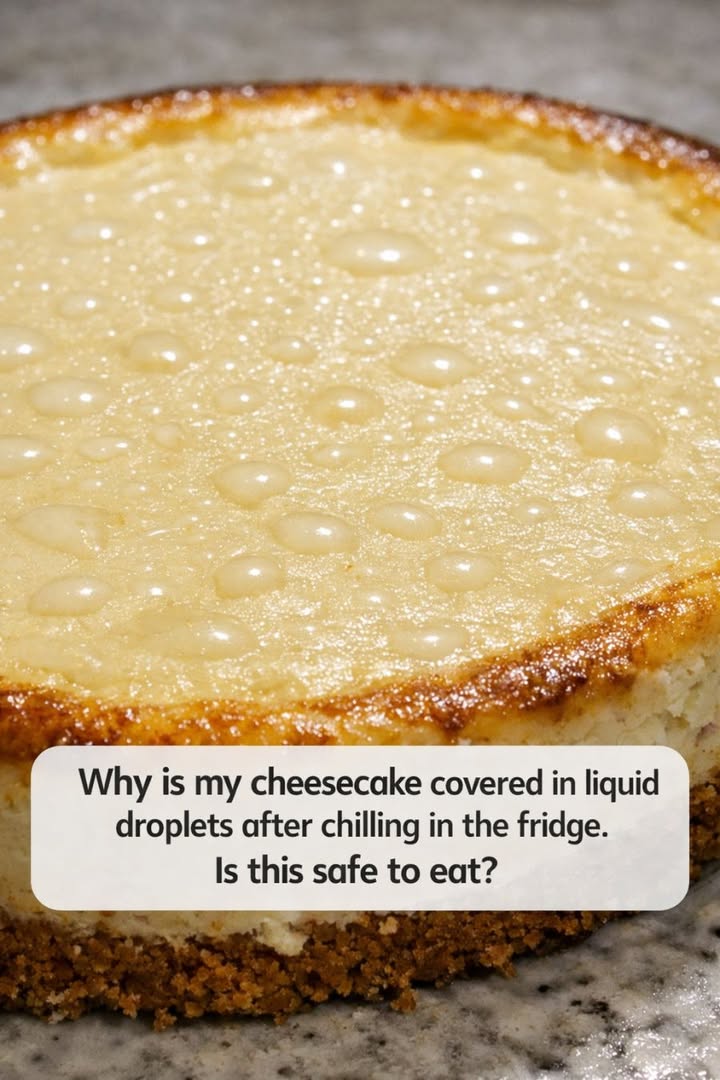
Why is my cheesecake covered in liquid droplets after chilling in the fridge. Is this safe to eat?
Pages: 1 2
