
Fruit salad is a delightful and refreshing dish, perfect for a hot summer day or as a healthy dessert option. However, sometimes you might notice a peculiar fizzy sensation when you take a bite, or see small bubbles forming in the juice. This unexpected carbonation can be puzzling and even concerning. Is it still safe to eat this salad? Understanding the science behind this phenomenon can help you make informed decisions about your food.
Fizziness in fruit salad is typically a result of fermentation, a natural process in which sugars are converted into alcohol and carbon dioxide by microorganisms. While a little fizz might not always be a cause for alarm, it’s important to recognize when your fruit salad has crossed the line into spoilage territory. In this article, we will explore the causes of this fizzy sensation, how to identify when it’s unsafe to consume, and tips for preventing unwanted fermentation.
1. What That Fizzy, Bubbly Sensation in Fruit Salad Really Is
The fizzy sensation you experience in your fruit salad is most likely due to natural fermentation. This process occurs when the sugars in the fruit are broken down by naturally occurring yeasts and bacteria, resulting in the production of alcohol and carbon dioxide gas. The carbon dioxide creates the bubbly, fizzy texture similar to carbonation in beverages.
Fermentation can begin to occur at any time once the fruit is cut and exposed to air, as yeast and bacteria are almost always present in the environment. The speed at which this happens depends on several factors including temperature, sugar content, and the type of fruit used. For example, fruits with higher sugar content, like grapes and apples, are more prone to rapid fermentation.
2. How Natural Fermentation Turns Fruit Sugar Into Tiny Bubbles
Natural fermentation is a biochemical process where sugar molecules (glucose, fructose, and sucrose) are converted into alcohol and carbon dioxide by the action of yeast and bacteria. In fruit salad, this is predominantly an aerobic fermentation process because the surface of the fruit is exposed to air.
The initial stages involve yeast consuming the sugars and producing small amounts of alcohol. This is a relatively slow process but can accelerate under warm temperatures or if the fruit is left out for an extended period. The carbon dioxide produced in this reaction forms small bubbles that can become trapped in the fruit’s juices, creating that characteristic fizziness.
3. The Role of Yeast and Bacteria in Making Your Salad Sparkle
Yeasts, particularly those from the Saccharomyces genus, play a central role in the fermentation of fruit. These organisms are naturally present on the skin of fruits and can start the fermentation process as soon as the fruit is cut open. They metabolize the sugars in the fruit, producing ethanol and carbon dioxide as byproducts.
Bacteria, such as those from the Lactobacillus family, can also contribute to this process, especially in the later stages of fermentation. These bacteria can further break down sugars and other compounds in the fruit, potentially leading to a change in flavor and texture. The combination of yeast and bacterial activity results in the sparkling sensation you might notice.
4. Signs Your Fruit Salad Has Started to Spoil, Not Just Soften
While a slight fizz might not be problematic, there are distinct signs that your fruit salad is beginning to spoil. These include off-putting odors, such as a sour or alcoholic smell, which indicate that fermentation has progressed significantly.
Additionally, a change in the texture of the fruit can be a warning sign. If the fruit becomes overly mushy or slimy, it is likely that spoilage bacteria have taken hold. Visible mold growth is another clear indicator that the fruit salad should not be consumed.
5. When Fizzy Fruit Salad Can Be Unsafe: Alcohol, Gas, and Off-Flavors
In the early stages of fermentation, the alcohol content is usually negligible. However, if left unchecked, the alcohol concentration can increase, potentially making the fruit salad unsuitable for certain individuals, such as children or those avoiding alcohol for health or religious reasons.
Increased gas production can lead to bloating and discomfort if consumed in large quantities. Furthermore, the development of off-flavors, such as bitterness or an overpowering sour taste, suggests that the salad is past its prime and might not be safe to eat.
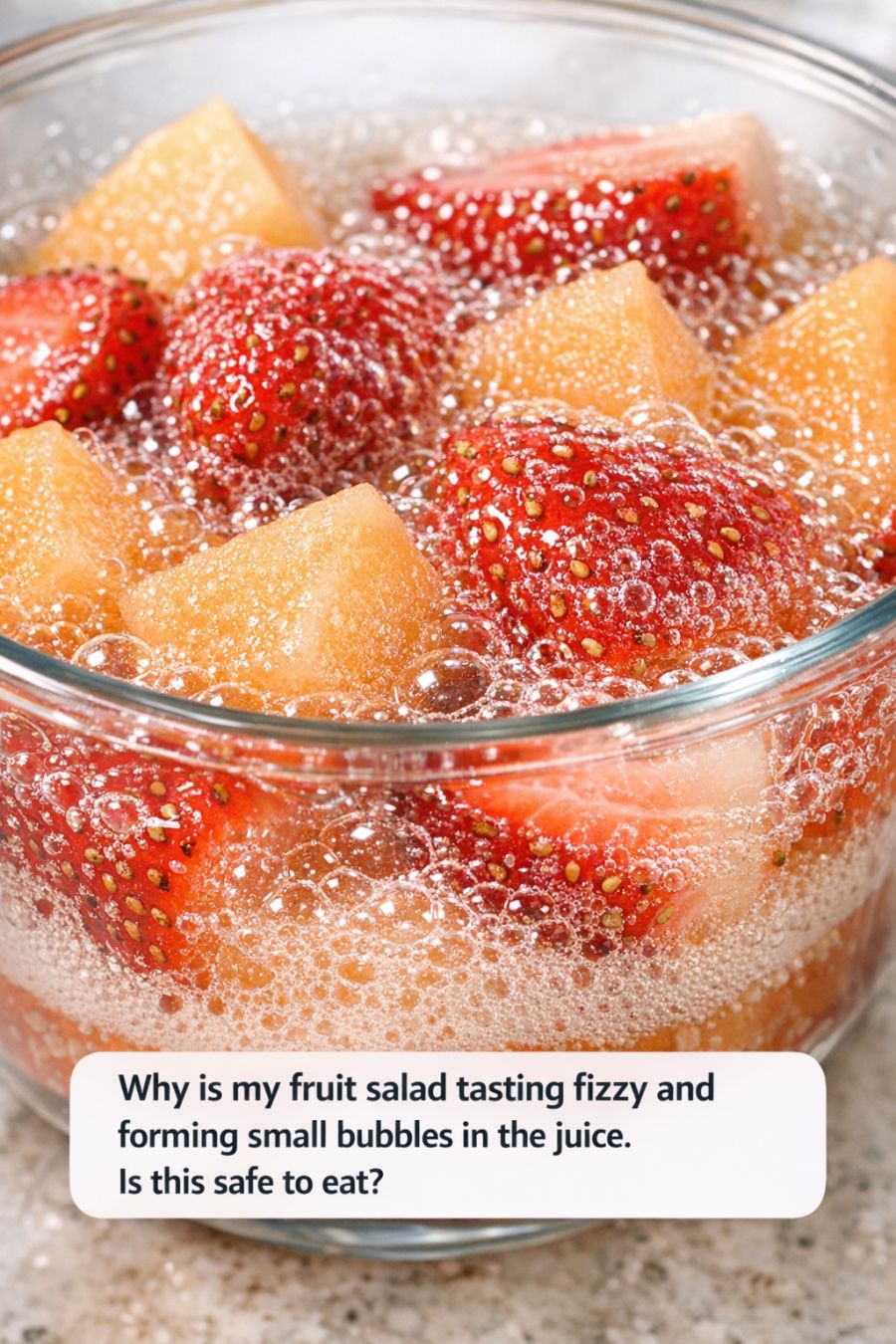
Why is my fruit salad tasting fizzy and forming small bubbles in the juice. Is this safe to eat?
Pages: 1 2
