
As the winter chill gives way to the budding vibrance of spring, March becomes a pivotal month for gardeners looking to rejuvenate their outdoor spaces. During this time, yards are often cluttered with the remnants of winter—a mix of fallen leaves, twigs, and other organic debris. While this might seem like a mess to be cleared away, it’s actually an opportunity to create a sustainable and eco-friendly garden using natural fertilizers.
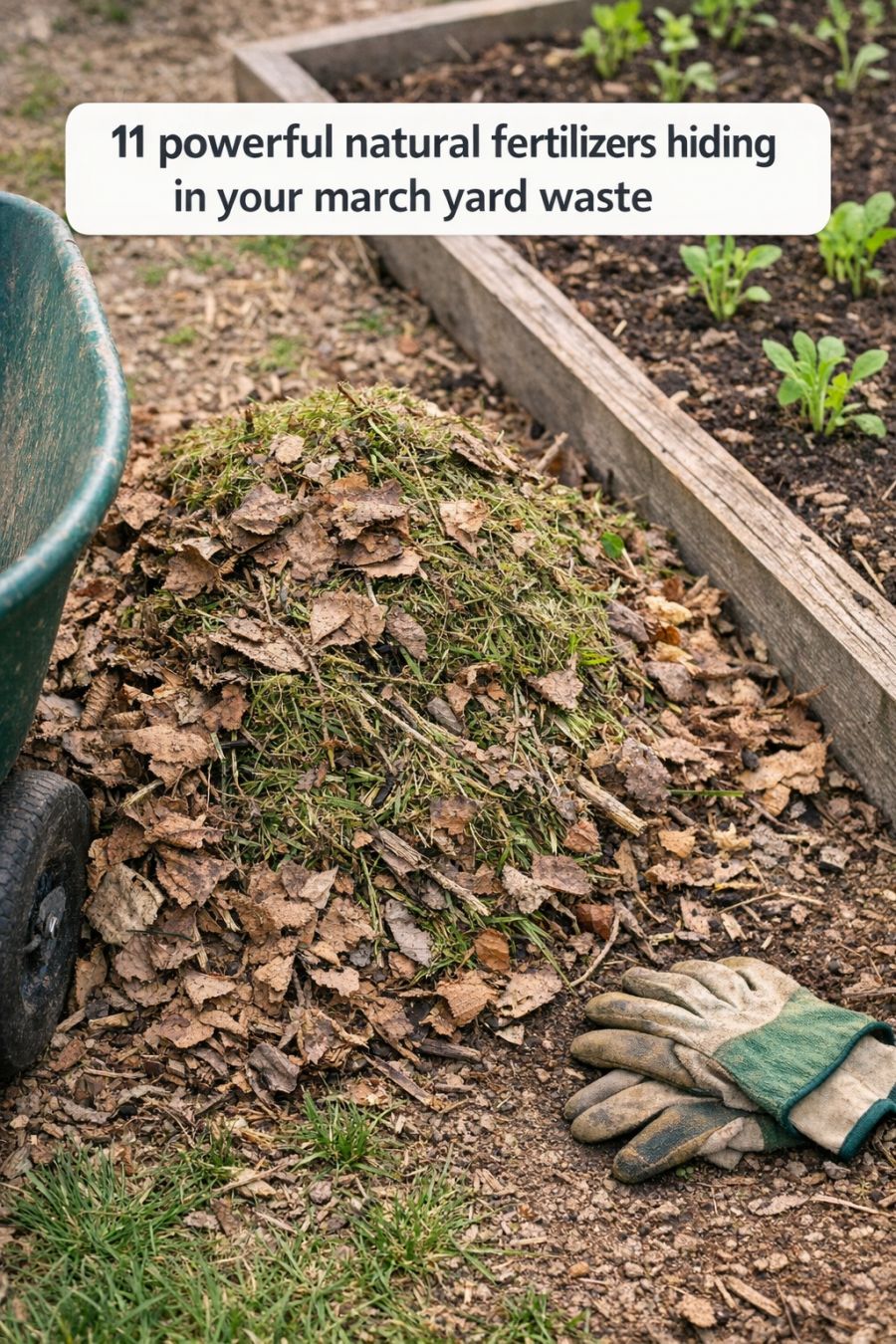
Instead of discarding your yard waste, consider how these materials can be repurposed to enrich and nourish your soil. Understanding the value of each type of yard waste can transform your garden into a thriving ecosystem. From nitrogen-rich grass clippings to carbon-packed twigs, your garden’s waste can be a treasure trove of natural fertilizers, waiting to be unlocked. Let’s explore 11 powerful natural fertilizers hiding in your March yard waste.
1. Grass Clippings: Nitrogen-Rich Green Gold
Grass clippings are a powerhouse of nitrogen, a crucial nutrient for plant growth. When left on the lawn after mowing, they decompose quickly, delivering nitrogen directly to the soil. This process is known as grasscycling and can reduce the need for additional fertilizers by up to 25%. Alternatively, grass clippings can be added to a compost pile, where they act as a ‘green’ component, balancing the ‘brown’ carbon-rich materials.
To maximize the benefits, ensure that the clippings are spread thinly to prevent matting, which can lead to poor air circulation and potential disease. A layer no thicker than 1/4 inch is ideal. Additionally, avoid using clippings from lawns treated with herbicides, as these chemicals can harm your compost and future plants.
2. Fallen Leaves: Slow-Release Mulch and Compost Booster
Fallen leaves are nature’s slow-release fertilizer, rich in carbon and essential minerals. When used as mulch, they help retain soil moisture, regulate temperature, and suppress weeds. Shredding the leaves before applying them as mulch accelerates their decomposition and reduces the risk of mold formation.
In compost, leaves serve as a valuable brown material, balancing the nitrogen-rich green waste. An ideal compost pile should have a ratio of 3:1 greens to browns. Over time, as the leaves break down, they release valuable nutrients like phosphorus and potassium, which are vital for root development and plant health.
3. Pruned Twigs and Small Branches: Carbon for Balanced Compost
Twigs and small branches are excellent sources of carbon, necessary for maintaining a balanced compost pile. When shredded or chipped, they improve aeration and drainage in the compost, preventing the pile from becoming too dense and soggy.
It’s important to cut twigs and branches into smaller pieces, ideally no longer than 2-3 inches, to speed up the decomposition process. Incorporating these into your compost not only provides structure but also reduces the time it takes for your pile to break down into rich, usable compost.
4. Early Spring Weeds: Free Green Manure Before They Seed
Early spring weeds, such as dandelions and chickweed, can be turned into green manure if collected before they go to seed. These weeds are rich in nitrogen and other nutrients that can boost soil fertility. By incorporating them into your compost pile, you can transform a potential nuisance into a beneficial resource.
When adding weeds to compost, ensure they are thoroughly mixed and not left on the surface to prevent them from reseeding. Additionally, consider using them as a layer in sheet composting, where they decompose directly in the garden bed, enriching the soil over time.
5. Last Year’s Dead Annuals: Brown Matter With Hidden Nutrients
The remnants of last year’s annuals, such as stems and leaves, are rich in carbon and trace nutrients. These can be chopped up and added to the compost as a brown material, balancing the nitrogen from fresh greenery.
To enhance decomposition, cut the plant material into smaller pieces and mix thoroughly with other compost ingredients. This not only helps break down the material faster but also reduces the risk of pest infestation and disease carryover from year to year.
6. Old Mulch and Wood Chips: Fungal Food for Healthier Soil
Old mulch and wood chips serve as an excellent food source for beneficial fungi in the soil. These fungi play a crucial role in breaking down organic matter and improving soil structure. As they decompose, they release nutrients slowly, providing a sustained food source for plants.
11 powerful natural fertilizers hiding in your march yard waste
Pages: 1 2
