
Mulching is a critical practice in gardening, offering numerous benefits such as moisture retention, weed suppression, and soil temperature regulation. However, improper mulching can do more harm than good, leading to detrimental effects on your garden’s health. Understanding the common pitfalls associated with mulching can help you avoid these mistakes and promote a thriving garden.
In this article, we will explore 15 mulching habits that can destroy gardens. From piling mulch against tree trunks to neglecting soil moisture before application, each habit can have a significant impact on plant health. By learning about these practices and how to avoid them, you can ensure that your garden remains lush and healthy.
1. Piling Mulch Against Tree Trunks
One of the most common mulching mistakes is piling mulch directly against tree trunks, often referred to as ‘mulch volcanoes.’ This practice can lead to a host of problems including rot, pest infestations, and disease. When mulch is heaped against the trunk, it can trap moisture against the bark, leading to decay and providing a breeding ground for insects.
To prevent these issues, maintain a mulch-free zone around the base of the tree, typically about 3 to 6 inches away from the trunk. This allows the trunk to breathe and prevents moisture buildup, promoting a healthier tree.
2. Using Plastic Under Mulch
Using plastic sheeting under mulch is sometimes thought to prevent weeds, but it can create more problems than it solves. Plastic can block air and water from reaching the soil, which can suffocate plant roots and cause poor soil health. Over time, this can lead to waterlogged soil or, conversely, dry soil where water cannot penetrate.
Instead of plastic, consider using landscape fabric, which allows for better water and air exchange while still suppressing weeds. Ensure that the fabric is permeable and choose a mulch type that complements your garden’s needs.
3. Reusing Diseased Mulch
Reusing mulch that has been infected with plant diseases can spread pathogens throughout your garden. Fungal diseases, in particular, can thrive in mulch and infect healthy plants if not properly managed.
If you suspect that your mulch may be diseased, it’s best to dispose of it rather than reuse it. Always source mulch from reputable suppliers and inspect it for signs of disease before application. Composting diseased mulch at high temperatures can sometimes kill pathogens, but caution is advised.
4. Creating Mulch Volcanoes
Creating ‘mulch volcanoes’ by piling mulch high around plant bases is a detrimental practice that can lead to several problems. These mounds can prevent water from reaching the roots effectively and may cause moisture to accumulate against stems and trunks, encouraging rot.
To avoid this, apply mulch in a more even layer, typically 2 to 4 inches deep, and ensure it is spread evenly around plants, maintaining a space between the mulch and plant bases. This helps in preventing rot and ensuring that water and nutrients reach the root zone effectively.
5. Applying Mulch Too Thickly
Applying too much mulch can suffocate plant roots by blocking air and water penetration. Excessive mulch can also create a habitat for pests and insulate the soil too much, affecting root growth and plant development.
A depth of 2 to 4 inches is generally recommended for most mulch applications. This allows for adequate moisture retention and weed suppression without hindering air and water movement. Regularly check mulch depth and replenish it as necessary, avoiding over-application.
6. Using Non-Biodegradable Mulch
Non-biodegradable mulches, such as rubber mulch, can have long-term negative effects on the garden ecosystem. These materials do not break down over time, leading to soil compaction and poor soil health.
Biodegradable mulches, like wood chips, straw, and compost, enrich the soil as they decompose, improving soil structure and fertility. Choosing the right mulch type for your garden can support its health and sustainability.
7. Ignoring the Type of Mulch
Not all mulches are created equal, and using the wrong type can be detrimental to your garden. For example, using high-nitrogen mulches like grass clippings in excess can lead to nutrient imbalances that harm plants.
Consider the specific needs of your plants and soil when selecting mulch. For instance, pine needles are acidic and are best suited for acid-loving plants, while hardwood mulch is more neutral. Understanding the properties of different mulches can help you make informed decisions.
8. Mulching Too Close to Plant Stems
Mulching too close to plant stems can cause similar issues to piling mulch against tree trunks. It can encourage rot and pest infestations by trapping moisture against the stem.
To avoid this, keep mulch at least 1 to 2 inches away from the base of plants. This small gap can make a significant difference in preventing moisture-related problems and promoting healthy plant growth.
9. Not Considering Climate Conditions
The local climate should dictate your mulching habits. In humid climates, thick layers of mulch can retain too much moisture, leading to fungal diseases. Conversely, in dry climates, insufficient mulch may not provide adequate moisture retention.
Adjust your mulching practices based on seasonal and climatic conditions. For instance, use thicker mulch layers in dry seasons to conserve moisture and thinner layers during wet periods to prevent waterlogging.
10. Overusing Fresh Wood Chips
Fresh wood chips can deplete nitrogen levels in the soil as they decompose, which can negatively affect plant growth. This is particularly true when they are used in large quantities.
If you wish to use fresh wood chips, consider composting them first to reduce their nitrogen-absorbing properties. Alternatively, apply them sparingly and supplement with a nitrogen-rich fertilizer to counterbalance any deficiencies.
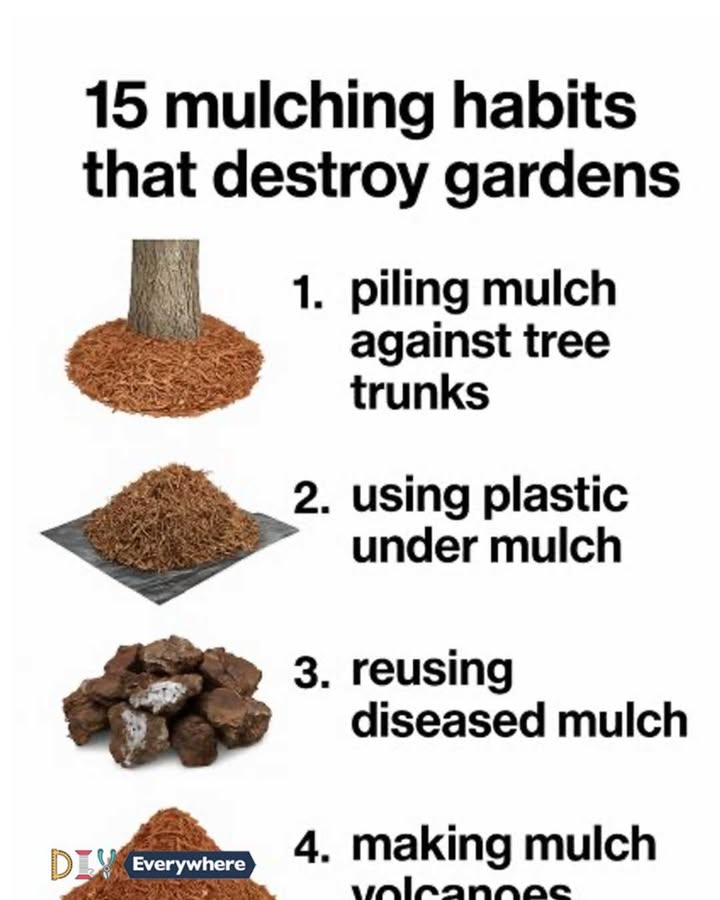
15 mulching habits that destroy gardens
Pages: 1 2
