
11. Failing to Refresh Old Mulch
Old mulch can become compacted and lose its effectiveness in retaining moisture and suppressing weeds. It can also develop a crust that prevents water penetration.
Regularly inspect your mulch and fluff it up with a rake to improve aeration and water infiltration. Refresh mulch annually by adding a new layer, ensuring that the total depth does not exceed recommended limits.
12. Relying on Viral Mulch Hacks Without Research
Viral gardening hacks may offer quick fixes, but they can often lead to unintended consequences if not properly vetted. For example, using unconventional materials like cardboard or newspaper as mulch without understanding their effects can harm soil and plant health.
Always research new mulching techniques thoroughly before implementing them in your garden. Consult reliable sources and consider the specific needs of your garden to ensure that hacks are beneficial rather than harmful.
13. Choosing Invasive Plant Mulch
Using mulch derived from invasive plants can inadvertently introduce these species to your garden, leading to uncontrollable spread. Invasive plants can outcompete native species, disrupting the local ecosystem.
Be cautious about the source of your mulch and avoid using materials that contain seeds or parts of invasive plants. Opt for mulch from known and non-invasive sources to maintain garden balance.
14. Using Mulch as a Permanent Solution
Mulch is an excellent garden aid, but it should not be seen as a permanent solution to all garden problems. Over-reliance on mulch can lead to neglect of other essential gardening practices like soil testing and proper plant care.
Use mulch as part of a comprehensive garden management plan that includes regular soil testing, proper irrigation, and plant maintenance. This holistic approach will ensure long-term garden health.
15. Neglecting Soil Moisture Before Mulching
Applying mulch to dry soil can lock in dryness, making it difficult for plants to access the water they need. Mulch is most effective when soil is already moist, as it helps retain existing moisture.
Before applying mulch, water your garden thoroughly to ensure the soil is adequately hydrated. Once the soil is moist, apply mulch to help conserve this moisture, benefiting plant health during dry periods.
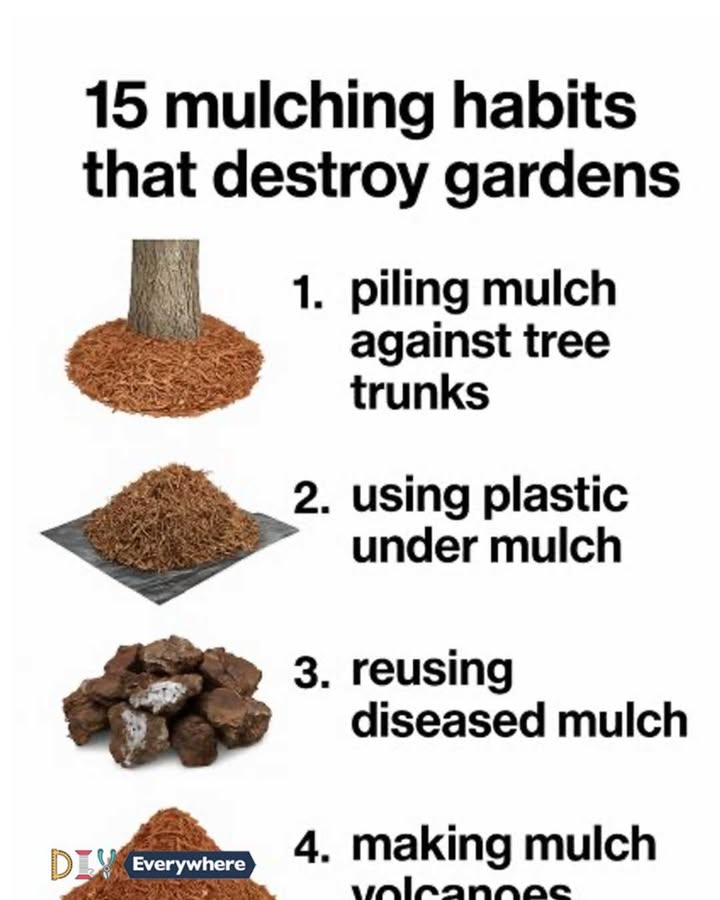
15 mulching habits that destroy gardens
Pages: 1 2
