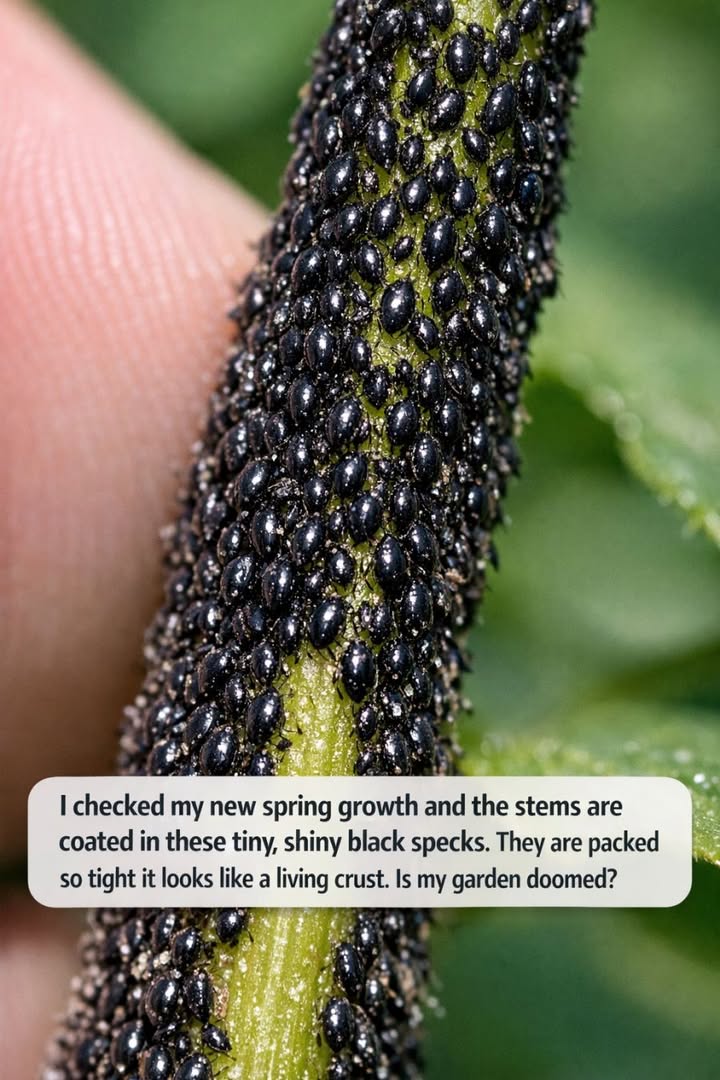
As spring arrives, gardeners eagerly anticipate the vibrant growth and renewal that the season heralds. However, along with the fresh sprouts and colorful blooms, unwanted pests can also make their appearance, sometimes turning our gardening dreams into nightmares. One such alarming sight is the sudden appearance of tiny, shiny black specks coating the stems of your cherished plants.
These specks can quickly spread and leave your garden looking like it’s been taken over by an ominous living crust. You might wonder if your garden is doomed or if there’s hope for reclaiming your leafy oasis. Understanding the nature of these specks and knowing how to effectively manage them can save your plants from potential harm.
1. What Those Tiny, Shiny Black Specks Actually Are
The tiny, shiny black specks you’ve encountered are most likely black bean aphids, also known as Aphis fabae. These sap-sucking insects are small, typically measuring about 1.5–3 mm in length. They are distinguished by their black coloration and can often appear in dense colonies on the tender parts of plants, such as stems, leaves, and buds.
Black bean aphids tend to favor plants like beans, beetroot, and certain ornamentals. They feed by piercing plant tissues and sucking out the sap, which can lead to stunted growth and distorted leaves. Their presence is often accompanied by a sticky substance called honeydew, which they excrete, creating a perfect environment for sooty mold.