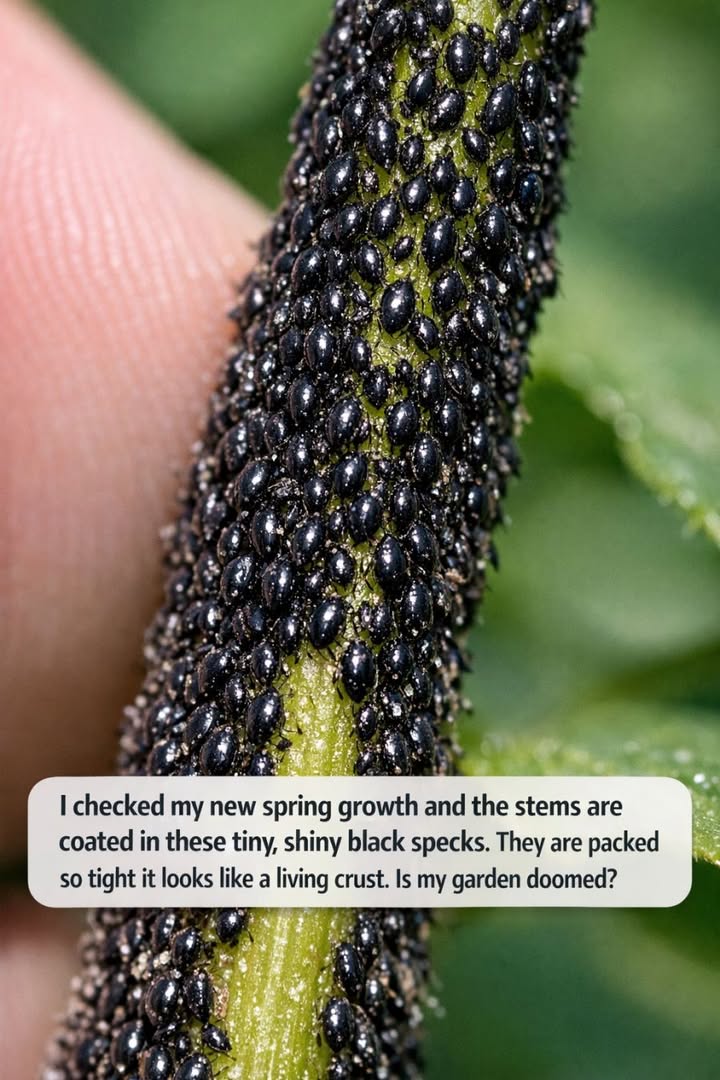
2. How To Tell Black Bean Aphids From Sooty Mold, Flea Beetles, And Other Look-Alikes
While black bean aphids are a common culprit, other pests and conditions can create similar visual effects. Sooty mold, for instance, is a black, powdery fungus that grows on the honeydew secreted by aphids and other sap-sucking insects. Unlike aphids, sooty mold is not an insect but can exacerbate the problems caused by aphids by blocking sunlight from reaching the leaves.
Flea beetles are another potential look-alike. They are small, shiny, and black but tend to jump like fleas when disturbed. These beetles leave behind small, round holes in leaves rather than forming dense clusters. To differentiate, observe your plants closely; aphids will be stationary and can be seen en masse, while flea beetles are more solitary and mobile.
3. Why Aphids Love Tender Spring Growth (And How Fast An Infestation Can Explode)
Aphids are particularly drawn to the tender new growth of spring because these parts offer the most nutrient-rich sap. The high nitrogen content in fresh shoots is particularly attractive to aphids, fostering rapid reproduction and colony expansion.
An aphid infestation can grow exponentially if not managed quickly. Aphids reproduce both sexually and asexually, allowing them to multiply rapidly. A single aphid can give birth to dozens of offspring within a week, and these offspring are ready to reproduce within a week themselves, leading to an explosive growth of their population if unchecked.
4. Is Your Garden Doomed? The Real Risks To Leaves, Buds, And Yields
While a severe aphid infestation can cause significant damage, it does not necessarily mean your garden is doomed. The primary risks posed by aphids include stunted growth, curled or yellowing leaves, and reduced yields. The sap loss weakens plants, making them more susceptible to disease.
However, with prompt action, you can mitigate these effects. Monitoring your plants regularly and taking steps to manage aphid populations can help protect your garden. Most plants can recover from mild to moderate aphid damage with proper care and attention.
5. First Response: What To Do The Moment You Spot A Living Black Crust
Upon spotting aphids, the first step is to physically remove them. You can use a strong spray of water to dislodge them from plants. Ensure you cover both sides of leaves and stems. Removing heavily infested leaves can also help in managing their population.
Next, inspect nearby plants as aphids can quickly spread. Isolating affected plants may prevent further infestation. Keep an eye on the weather; aphids thrive in warm, dry conditions, so a rainy spell can naturally reduce their numbers.
6. Gentle, Low-Toxicity Ways To Wash, Squish, And Dislodge Aphids
For a gentle approach, consider using insecticidal soap or a homemade mixture of water and mild dish soap. This method disrupts the aphids’ cell membranes, killing them without harming plants. Spray thoroughly, covering all affected areas.