
The sweet, juicy allure of homegrown strawberries is a temptation that’s hard to resist. With their vibrant color and exquisite taste, strawberries are a delightful addition to any garden, and the good news is, it’s entirely possible to cultivate them in a way that ensures a continuous harvest throughout the spring season. Whether you’re a seasoned gardener or a novice with a green thumb, this guide will walk you through the steps needed to achieve an endless supply of strawberries, fresh from your own garden.
In this comprehensive guide, we will explore everything from selecting the right varieties to optimizing soil conditions, planting times, and maintenance techniques that will keep your strawberry plants thriving year after year. By following these detailed steps, you’ll not only enjoy bountiful spring harvests but also gain the knowledge to maintain and expand your strawberry patch sustainably.
1. Choose The Right Strawberry Varieties For Continuous Spring Harvests
Selecting the right strawberry varieties is crucial for ensuring a continuous harvest. Day-neutral and everbearing varieties are ideal choices for a staggered harvest throughout spring. Day-neutral strawberries, such as ‘Seascape’ or ‘Albion’, produce fruit regardless of the day length, allowing for a more extended fruiting period. Everbearing varieties like ‘Ozark Beauty’ or ‘Quinault’ typically produce two to three harvests per year, with one in early spring. By planting a combination of these varieties, you can ensure a steady supply of strawberries from early spring through summer.
When choosing varieties, consider your local climate and the specific conditions of your garden. Some varieties may be more disease-resistant or better suited to your soil type, which can significantly impact your overall yield. Consult with local nurseries or extension services to select the best varieties for your region.
2. Map Out Your Garden For Staggered, High-Yield Planting
Strategically planning your garden layout can maximize your strawberry yield. Allocate space for multiple planting beds to accommodate different growth stages and varieties. For continuous harvests, stagger your plantings by setting out new plants every few weeks during the planting season. This staggering ensures that as one set of plants ends their fruiting cycle, another set begins.
Consider using raised beds or containers if space is limited. Ensure each plant has about 12 to 18 inches of space between them to allow for adequate air circulation and growth. This spacing helps prevent the spread of disease and optimizes sunlight exposure, critical factors in achieving a high yield.
3. Prepare Nutrient-Rich, Well-Drained Soil That Supercharges Sweetness
Strawberries thrive in soil that is rich in organic matter and well-draining. Begin by testing your soil’s pH level, aiming for a slightly acidic range of 5.5 to 6.5. Amend the soil with plenty of organic compost to improve its nutrient content and drainage capabilities.
Incorporate well-aged manure or a balanced 10-10-10 fertilizer into the soil a few weeks before planting. This preparation provides a nutrient-rich environment that supports robust plant growth and enhances fruit sweetness. Ensure the soil remains loose and aerated to encourage root development and prevent waterlogging.
4. Plant Strawberries At The Perfect Time And Depth For Spring Success
Timing your planting is essential for a successful strawberry harvest. In most regions, planting in early spring as soon as the soil is workable is ideal. This timing allows plants to establish before the heat of summer.
When planting, set each strawberry plant so that the crown is at soil level, ensuring that roots are spread out in the hole. Avoid burying the crown, as this can lead to rot. Water thoroughly after planting to settle the soil and eliminate air pockets around the roots.
5. Master Watering And Mulching To Keep Berries Juicy And Beds Weed-Free
Proper watering and mulching are critical for maintaining healthy strawberry plants. Water strawberries deeply once a week, providing about 1 to 1.5 inches of water, especially during dry spells. Consistent moisture is key to preventing berries from becoming small and dry.
Apply a layer of organic mulch, such as straw or pine needles, around the plants. Mulching helps retain soil moisture, suppress weeds, and regulate soil temperature. It also keeps the fruit clean and reduces the risk of soil-borne diseases.
6. Feed Your Plants On A Schedule That Fuels Endless Flowering
Strawberries benefit from regular feeding to support continuous flowering and fruiting. Apply a balanced fertilizer, such as a 10-10-10, every six to eight weeks during the growing season. Alternatively, use a slow-release fertilizer at the beginning of the season.
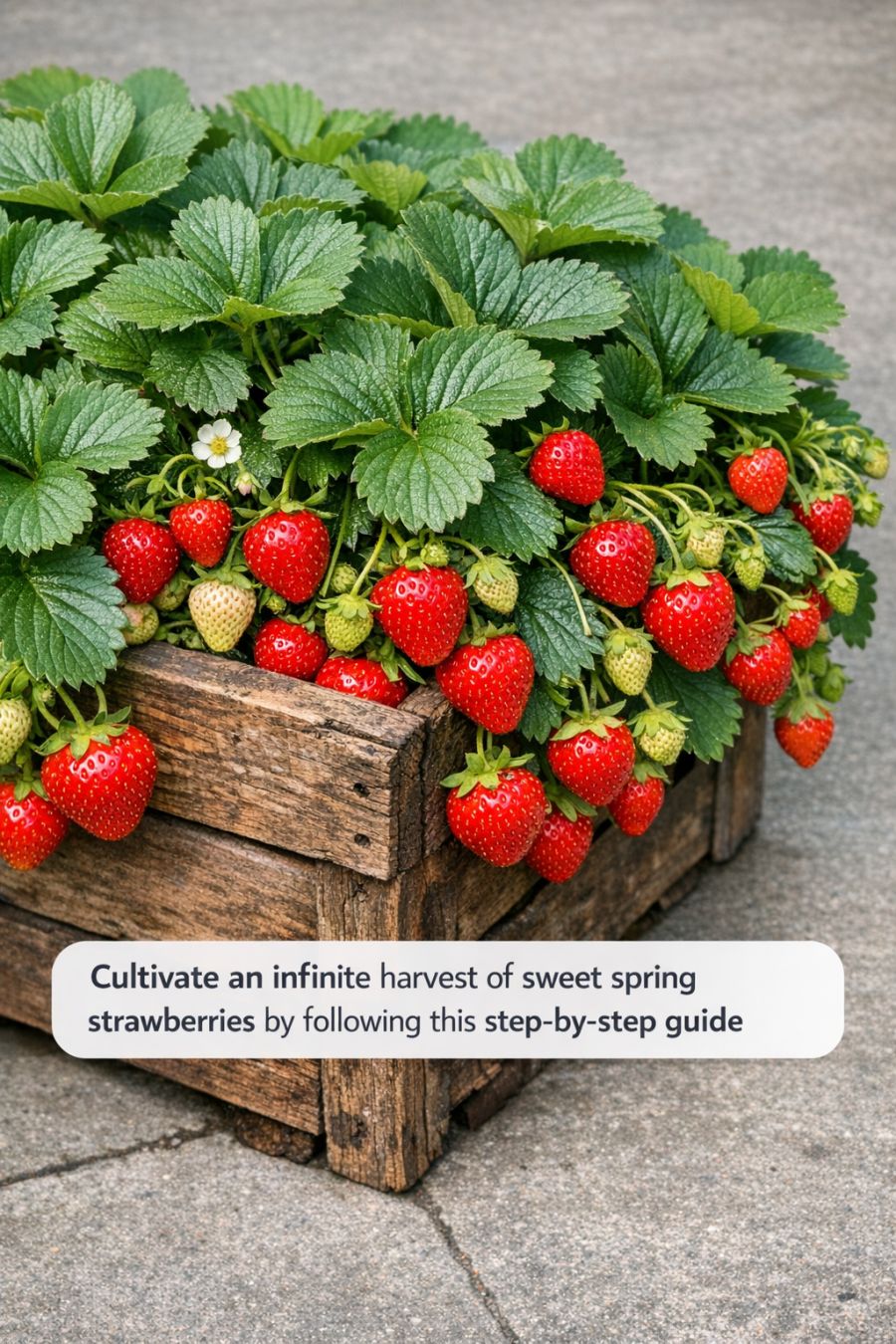
Cultivate an infinite harvest of sweet spring strawberries by following this step-by-step guide
Pages: 1 2
