
Growing your own fresh spring lettuce can be a rewarding and satisfying endeavor, especially when you have the ability to cultivate an unlimited supply right from a planter. Whether you’re an urban gardener with limited space or simply looking to add a touch of green to your balcony, growing lettuce in planters is an excellent way to ensure you have fresh, crisp greens at your fingertips. Lettuce is one of the easiest vegetables to grow and can thrive in a variety of environments with the right care.
With a little planning and the right techniques, you can enjoy a continuous harvest throughout the spring and beyond. This guide will walk you through each step of the process, from choosing the right planter to mastering the art of continuous harvesting. By following these steps, you’ll not only enhance your gardening skills but also relish the taste of homegrown lettuce all season long.
1. Choose the Right Planter and Location for Spring Lettuce
Selecting the right planter is crucial for the health and productivity of your lettuce. Opt for a planter that is at least 12 inches deep to allow ample space for root growth. A wider planter, at least 18 inches across, can accommodate several plants, maximizing your growing space. Ensure that the planter has sufficient drainage holes to prevent waterlogging, which can lead to root rot.
Location is equally important. Place your planter in a spot that receives at least 6 hours of sunlight each day. If your area is prone to intense afternoon sun, consider a location with partial shade to prevent the lettuce from wilting. If you’re growing indoors, a south-facing window or a grow light can provide the necessary illumination for healthy growth.
2. Select Lettuce Varieties That Regrow Again and Again
For an ongoing supply of lettuce, choose ‘cut-and-come-again’ varieties that allow for multiple harvests from a single plant. Loose-leaf lettuces, such as ‘Black Seeded Simpson’ and ‘Oakleaf’, are excellent choices as they regrow quickly after harvesting. Another option is ‘Salad Bowl’, which produces tender, flavorful leaves that can be harvested repeatedly.
Avoid heading varieties like iceberg, as they are designed to form a single head and do not regrow well after cutting. By selecting the right varieties, you’ll ensure a continuous supply of fresh greens throughout the growing season.
3. Prepare a Nutrient-Rich, Well-Draining Potting Mix
The quality of your potting mix can significantly impact the health and yield of your lettuce plants. Use a high-quality potting mix that offers good drainage while retaining enough moisture. A blend containing peat moss, perlite, and compost will provide the necessary nutrients and aeration.
Consider adding organic fertilizers or a slow-release granular fertilizer to the mix to give your plants a nutrient boost. Lettuce has a shallow root system, so a rich potting mix is essential for healthy growth and development.
4. Sow Seeds for Continuous Harvests, Not One-Time Heads
When sowing lettuce seeds, aim for a staggered planting schedule to ensure a continuous harvest. Begin by sowing seeds approximately 1/4 inch deep, spaced about 1 inch apart, in rows or a grid pattern. As the seedlings grow, thin them out to about 4 to 6 inches apart to give each plant enough space to thrive.
To maintain a steady supply, sow new seeds every two weeks. This succession planting technique will allow you to harvest mature leaves while younger plants are still developing, ensuring your planter is always full of fresh lettuce.
5. Master Watering and Moisture to Keep Lettuce Tender
Lettuce requires consistent moisture to remain tender and flavorful. Water your planter regularly, ensuring the soil remains evenly moist but not waterlogged. A general rule of thumb is to water until you see excess draining from the bottom of the planter, indicating that the entire root system has been adequately hydrated.
During hot spells or windy conditions, you might need to water more frequently. Consider using a drip irrigation system or self-watering planter to maintain consistent moisture levels, especially if you have a busy schedule.
6. Use Light and Temperature Tricks to Extend the Season
Lettuce thrives in cooler temperatures, typically between 60-70°F (15-21°C). To extend your growing season, use shade cloth or a lightweight row cover to protect your plants from extreme heat. These tools can help maintain a cooler microclimate around your lettuce, reducing the risk of bolting (premature flowering) that occurs in high temperatures.
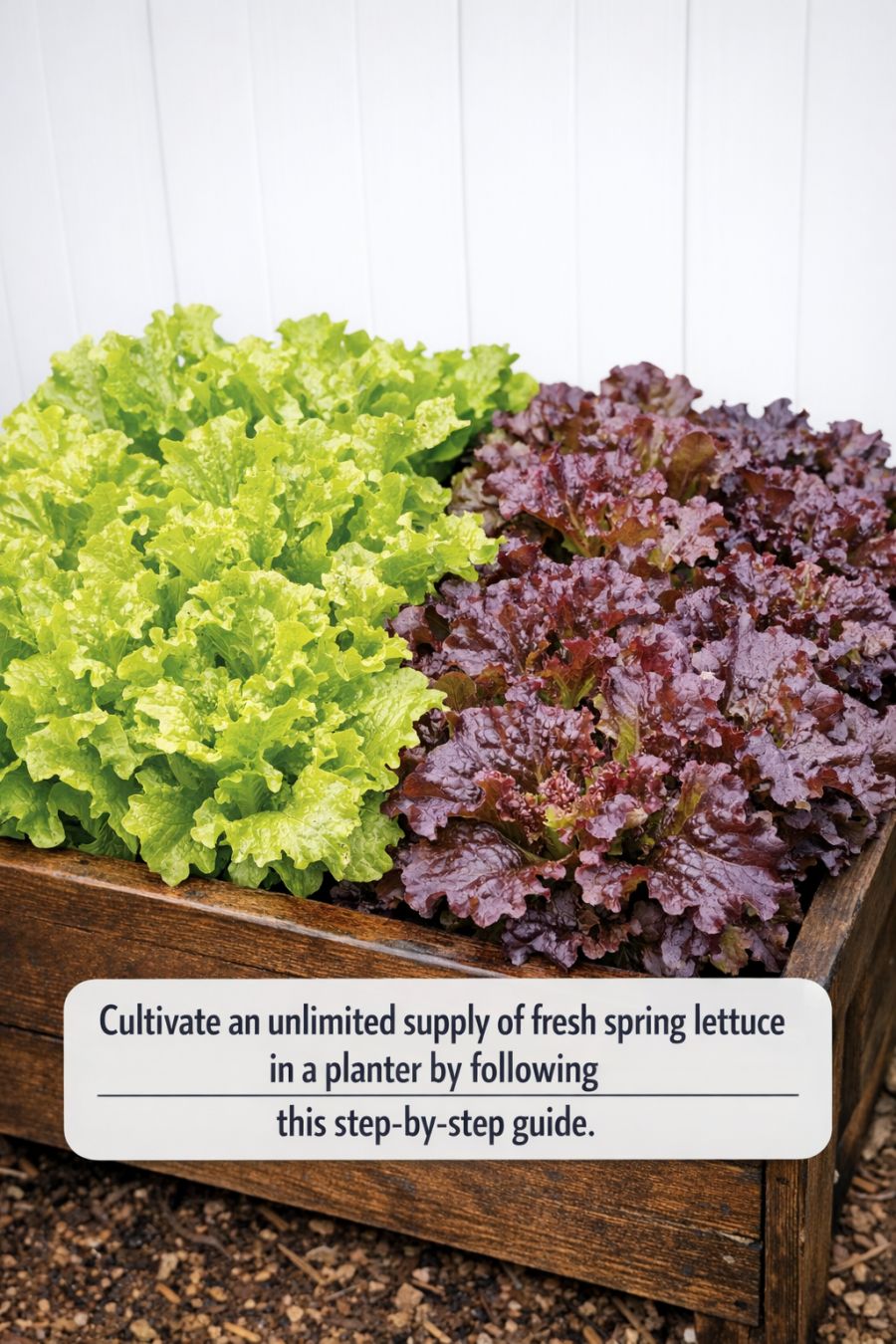
Cultivate an unlimited supply of fresh spring lettuce in a planter by following this step-by-step guide
Pages: 1 2
