
In cooler climates, consider using a cold frame or placing your planter in a sunny, sheltered location to take advantage of natural warmth. By managing light and temperature, you can prolong the productivity of your lettuce plants well into late spring or early summer.
7. Feed and Mulch Your Planter for Explosive Leaf Growth
Regular feeding is essential for lush, vibrant lettuce leaves. Apply a balanced, water-soluble fertilizer every two weeks to provide your plants with essential nutrients. Look for a fertilizer with equal parts nitrogen, phosphorus, and potassium to promote both vegetative growth and root development.
Mulching can also aid in retaining soil moisture and suppressing weeds. Use organic materials like straw or shredded leaves, applying a 1-2 inch layer around the base of your plants. This will help keep the soil temperature consistent and reduce the frequency of watering.
8. Harvest With the Cut-and-Come-Again Method
To harvest using the cut-and-come-again method, snip individual outer leaves from each plant, leaving the inner leaves intact to continue growing. Use clean, sharp scissors or garden shears to make cuts about 1 inch above the soil level.
This method not only provides a continuous supply of fresh lettuce but also encourages the plant to produce new leaves. Regular harvesting will prevent the plants from becoming overcrowded and maintain a steady growth cycle.
9. Rotate, Reseed, and Succession-Plant for an Endless Supply
Rotating your crops and implementing succession planting will keep your lettuce supply abundant. After harvesting, reseed the empty spaces with new lettuce seeds to maintain a continuous cycle of growth. Rotate the planter’s location periodically to prevent soil nutrient depletion and reduce the risk of disease.
By planning ahead and maintaining a rotation schedule, you can optimize your planter’s productivity and enjoy an endless supply of fresh lettuce throughout the growing season.
10. Prevent Pests and Bolting Without Harsh Chemicals
Lettuce can attract pests like aphids and slugs, which can damage the leaves. Use natural pest control methods such as companion planting with marigolds or nasturtiums to deter pests. You can also create barriers using crushed eggshells or diatomaceous earth around the base of your plants to prevent slugs.
To prevent bolting, monitor the temperature and provide shade during hot spells. If signs of bolting appear, such as elongated stems and bitter-tasting leaves, harvest the affected plants promptly and reseed the planter with new seeds.
11. Troubleshoot Common Lettuce Planter Problems Fast
Common issues with lettuce planters include yellowing leaves, slow growth, and wilting. Yellowing leaves may indicate nutrient deficiencies, so ensure your plants are receiving adequate fertilization. Slow growth can result from insufficient light or overcrowding, so adjust the planter’s location and thin the plants as needed.
Wilting may be caused by inconsistent watering or root rot. Check the soil moisture and ensure proper drainage to resolve this issue. By identifying and addressing problems quickly, you can maintain healthy, productive lettuce plants.
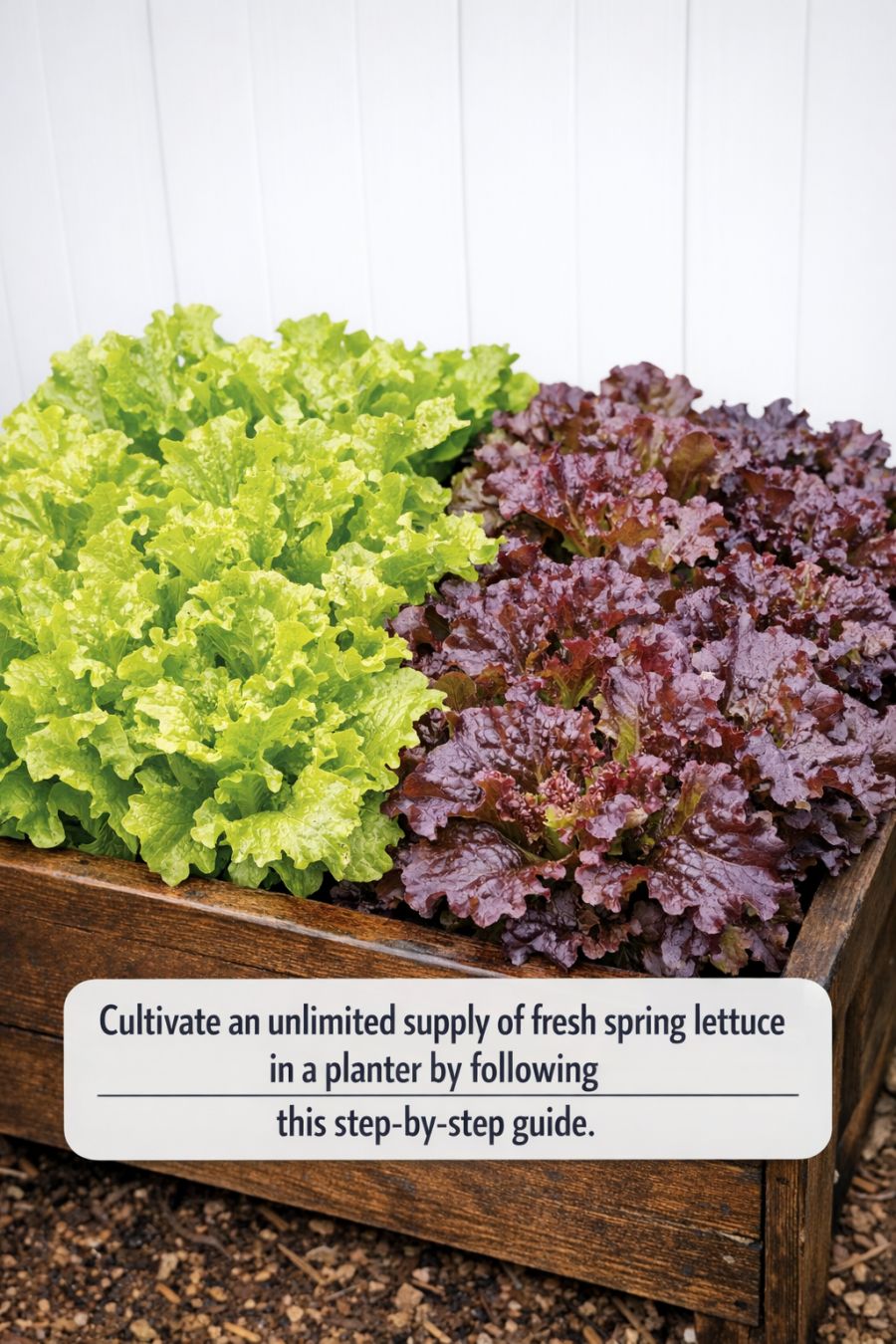
Cultivate an unlimited supply of fresh spring lettuce in a planter by following this step-by-step guide
Pages: 1 2
