
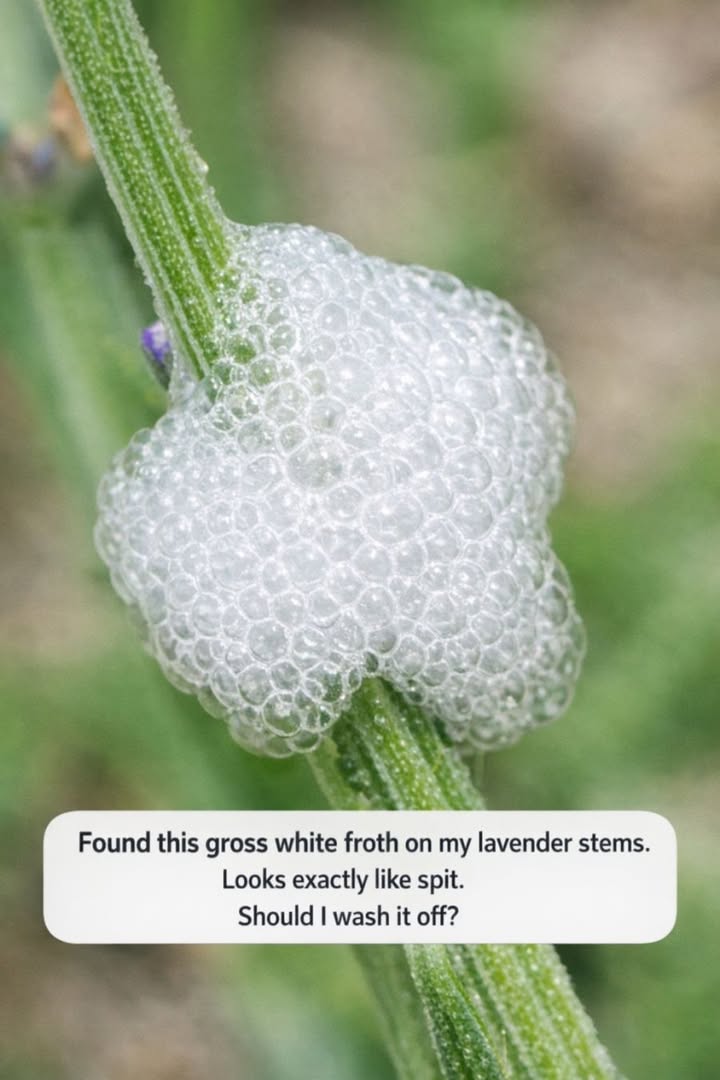
Lavender, with its fragrant blossoms and soothing properties, is a beloved plant in many gardens. However, discovering an unusual white froth on its stems can be concerning for any gardener. This frothy substance often raises alarm, resembling something as unsightly as spit.
Before you reach for the hose to wash it off in disgust, it’s important to understand what this substance is, why it appears on your plants, and whether it poses any threat to your lavender. This article will guide you through understanding the mystery foam, its origins, and provide actionable steps to address your concerns effectively.
1. What Is That White Froth on Your Lavender, Really?
The white froth you see on your lavender plants is commonly known as ‘cuckoo spit.’ Despite its unsightly appearance, this frothy substance is not harmful in itself. It is actually created by a small insect known as the spittlebug. The foam serves as a protective covering for the young nymphs of these insects.
The froth is created by the nymphs as they feed on plant sap. As they suck the sap, they excrete a liquid that they whip into bubbles using specialized abdominal structures. These bubbles provide insulation against temperature extremes and protection from predators, effectively camouflaging the nymph while it continues to feed.
2. Meet the Spittlebug: The Tiny Insect Behind the ‘Spit’
Spittlebugs, also known as froghoppers, belong to the family Cercopidae. These small insects, measuring about 6-12 millimeters in length, are common in gardens and can be found on a variety of plants. The nymphs are the main culprits behind the foam, which serves as their temporary home.
The adult spittlebug is less conspicuous and resembles a tiny frog, hence the name ‘froghopper.’ Despite their small size, they possess powerful hind legs that allow them to jump considerable distances. The life cycle of spittlebugs includes egg, nymph, and adult stages, with the frothy ‘spit’ being most noticeable during the nymph stage.
3. Is Spittlebug Foam Harmful to Your Lavender Plants?
Generally, spittlebug foam is not harmful to your lavender plants. While the nymphs do feed on plant sap, their presence and feeding activities typically do not cause significant damage to healthy plants. Lavender is a robust plant, capable of withstanding minor infestations without detrimental effects.
In some cases, if the infestation is heavy, it might lead to some stunting or distortion of new growth. However, this is rare and usually occurs only if the plants are already stressed due to other factors, such as drought or poor soil conditions.
4. Should You Wash the Foam Off—or Leave It Alone?
Deciding whether to wash off the foam depends on the severity of the infestation and your personal preference. If the frothy patches are minimal and the plants otherwise appear healthy, it is often best to leave them alone. The spittle serves as a natural part of the garden ecosystem and will eventually disappear as the nymphs mature and move on.
However, if the appearance of the foam is bothersome or if you notice a large number of spittlebug nymphs on your lavender, you might choose to wash it off. This can be done gently with a spray of water from a hose, taking care not to damage the plant.
5. Simple Ways to Remove Spittlebug Foam by Hand
If you prefer a hands-on approach, removing spittlebug foam by hand is straightforward. Simply use your fingers or a soft cloth to wipe the foam off the stems and leaves. This method is effective for small infestations and can be done quickly without the need for any special equipment.
Be sure to dispose of the foam and any nymphs you remove in a safe manner, either by placing them in soapy water or discarding them in a sealed bag. This helps prevent the insects from returning to your plants.
6. When (and How) to Use Water or Soap Sprays Safely
For larger infestations, using water or a mild soapy spray can be an effective solution. To create a soapy spray, mix a few drops of dish soap with water in a spray bottle. Apply the solution directly to the foam and affected areas of the plant, ensuring even coverage.
Found this gross white froth on my lavender stems. Looks exactly like spit. Should I wash it off?
Pages: 1 2
