
April is a pivotal month for gardeners, especially those hoping to enjoy a bountiful display of hydrangea blooms come summer. These beloved shrubs, known for their stunning, voluminous flowers, require some care and attention during the early spring season to ensure they produce abundant blooms. Whether you’re an experienced gardener or a beginner, understanding what your hydrangeas need in April can make all the difference.
As the weather begins to warm and nature awakens from its winter slumber, it’s the perfect time to prepare your hydrangeas for their growing season. From pruning techniques to soil care, each step you take now will help set the stage for a season filled with lush, vibrant blooms. Below, we’ve outlined nine critical actions you should undertake this April to ensure your hydrangeas are the envy of the neighborhood by summer.
1. Start With a Careful Spring Cleanup Around Each Plant
Before new growth begins, take the time to clear the area around your hydrangeas. Remove fallen leaves, dead branches, and any debris that might have accumulated over the winter. This not only improves the appearance of your garden but also helps prevent disease and pest infestations.
Be gentle in your cleanup efforts, as new buds can be quite delicate. Use a rake to carefully remove debris, and if you notice any signs of mold or rot, consider removing affected areas to prevent the spread. A clean base sets the foundation for healthy growth and blooms.
2. Prune Only the Right Stems—And Know Your Hydrangea Type
Pruning hydrangeas requires understanding the type of hydrangea you have, as different varieties require different pruning techniques. For example, ‘bigleaf’ (Hydrangea macrophylla) and ‘oakleaf’ (Hydrangea quercifolia) typically bloom on old wood, so prune only dead or damaged stems, leaving the buds intact. In contrast, ‘panicle’ (Hydrangea paniculata) and ‘smooth’ (Hydrangea arborescens) bloom on new wood, and can be pruned more heavily to encourage strong new growth.
Use clean, sharp pruning shears to make cuts at a slight angle, about 1/4 inch above a healthy bud. Avoid over-pruning, as this can lead to fewer blooms. Understanding your hydrangea type is crucial to ensure proper care and maximize blooming potential.
3. Feed for Blooms, Not Just Green Leaves
A balanced fertilizer with an N-P-K ratio of 10-10-10 or 12-4-8 can help promote both foliage and flower growth. Apply fertilizer around the base of the plant, approximately 6 inches away from the main stem, to avoid root burn. Follow the manufacturer’s instructions for the correct amount, typically about 1/2 cup per plant.
Fertilize in early April to provide nutrients as the plant begins its growing season. Avoid high-nitrogen fertilizers, as they can lead to lush green leaves at the expense of blooms. Instead, aim for a balanced formula that supports overall plant health and flower production.
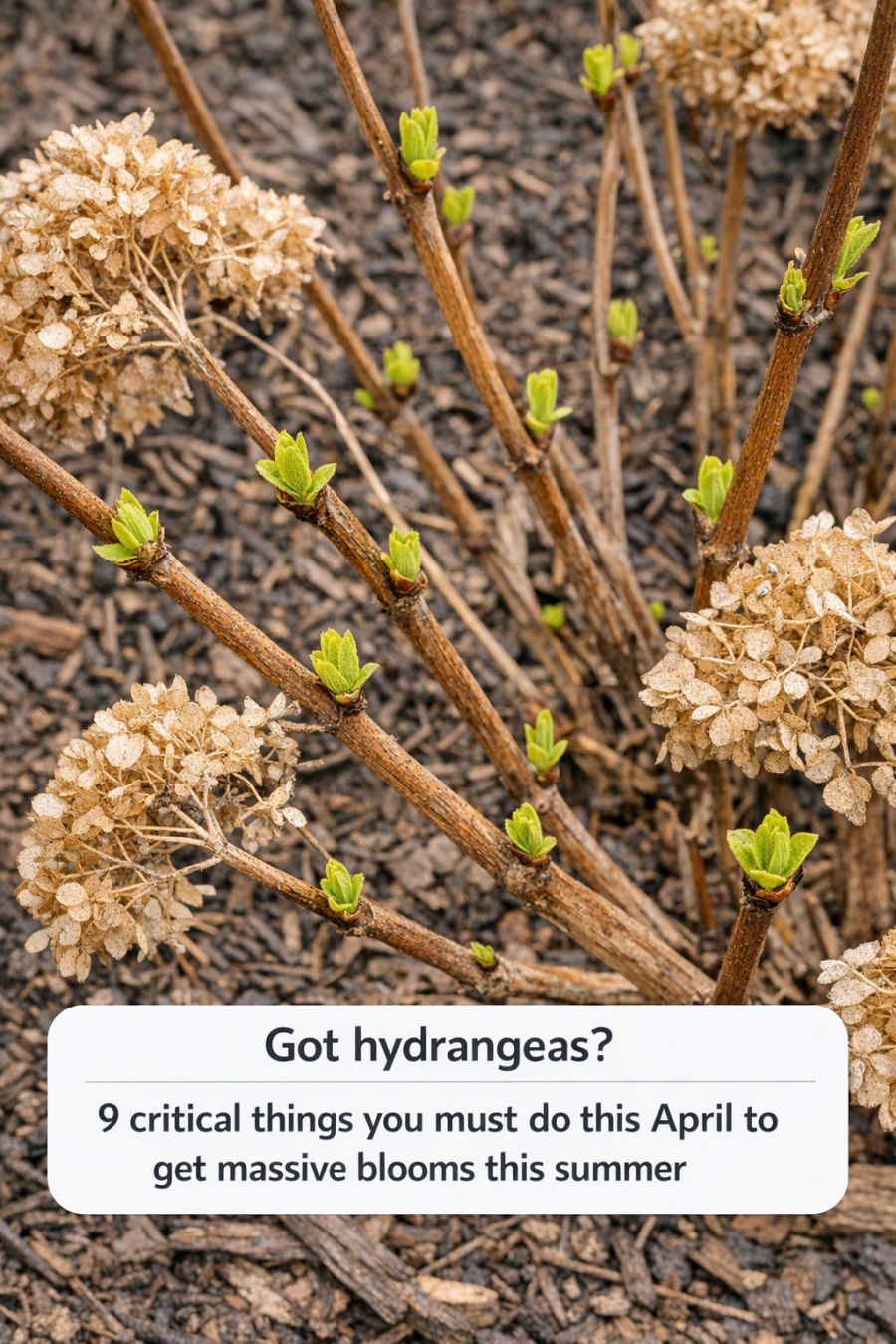
Got hydrangeas? 9 critical things you must do this April to get massive blooms this summer
Pages: 1 2
