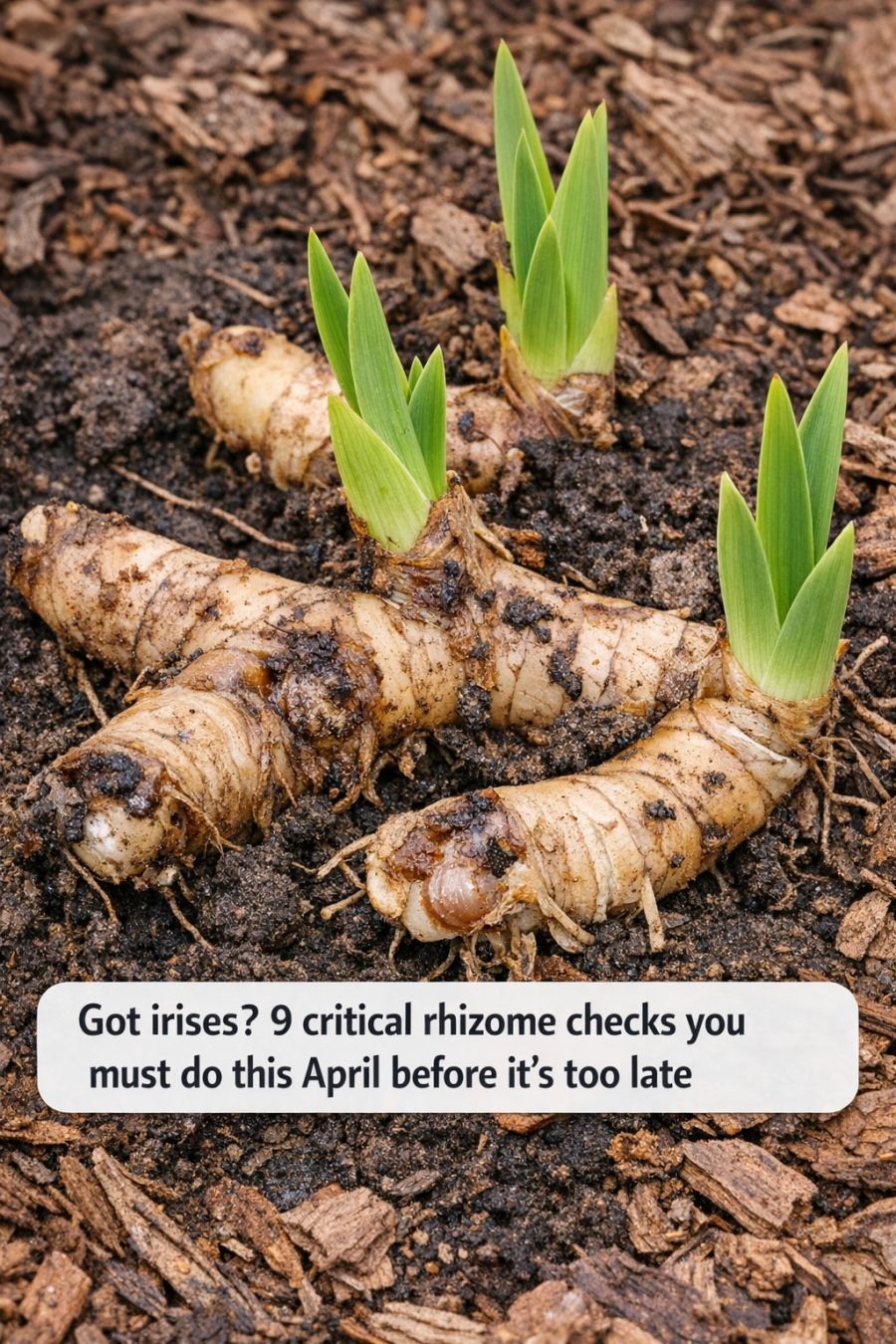
Rhizome rot is often caused by overwatering or poor drainage, so addressing these issues promptly is essential. Ensuring that the rhizomes are exposed to air and not buried too deeply can help prevent these problems from recurring.
2. Check for Borer Entry Holes and Hidden Insect Damage
Iris borers are a common pest that can wreak havoc on your plants. Look for small holes in the rhizomes or sawdust-like frass around the base of the plant, which are telltale signs of borer activity. These pests burrow into the rhizomes, causing significant damage that can lead to rot and plant death.
To manage this problem, remove any affected rhizomes and destroy them. Insecticidal treatments may also be necessary if the infestation is severe. Regularly monitoring your irises for signs of borers and other insect damage is a proactive way to protect your plants.
3. Look for Leaf Streaks, Spots, and Other Disease Red Flags
The foliage of your irises can provide important clues about their health. Examine the leaves for any streaks, spots, or discoloration, which could indicate fungal diseases such as leaf spot or rust. These diseases can spread quickly, particularly in wet or humid conditions.
To control fungal infections, remove and dispose of affected leaves to prevent the spread of spores. Fungicidal sprays can also be applied as a preventative measure. Ensuring good air circulation around your plants by spacing them appropriately can help reduce the risk of disease.
4. Confirm Rhizomes Are Properly Exposed and Not Buried Too Deep
Irises prefer to have their rhizomes partially exposed to sunlight. Check that your rhizomes are not buried under more than a thin layer of soil or mulch, as this can lead to rot. Ideally, the top of the rhizome should be visible above the soil surface.
If you find that your rhizomes are buried too deeply, carefully remove some of the soil to expose them. This will allow them to dry out between waterings and prevent moisture accumulation that can lead to decay.
5. Assess Crowding and Decide Which Clumps Need Dividing
Over time, iris clumps can become crowded, which can hinder their growth and blooming potential. April is an excellent time to assess whether your irises need dividing. If the rhizomes are tightly packed and the blooms have been decreasing over the years, it’s time to divide them.
Using a sharp spade or knife, divide the clumps into smaller sections, ensuring each has a healthy rhizome and a few leaves. Replant them at the proper spacing of about 12 to 24 inches apart to give them room to grow and flourish.