
Tulips are one of the most beloved spring blooms, known for their vibrant colors and elegant shapes. However, these beautiful flowers can fall victim to a range of pests and diseases if not properly cared for. As March approaches, it’s crucial to take proactive measures to protect your tulip beds and ensure they bloom beautifully throughout the season.
In this article, we outline eight essential tasks to perform in March to safeguard your tulips from pests and promote their health and vitality. From early inspections to strategic watering techniques, these steps will help keep your garden vibrant and pest-free. Let’s dive into the specific actions you can take to nurture your tulips this spring.
1. Inspect Emerging Shoots Daily for Early Pest Warning Signs
As the first signs of spring appear, so do your tulip shoots. It’s essential to inspect these emerging shoots daily for any early signs of pest activity. Look for small holes, chewed edges, or discoloration on the leaves, which could indicate the presence of insects like aphids or caterpillars.
Use a magnifying glass to examine the undersides of the leaves and stems, where pests often hide. Early detection is key to controlling infestations before they spread. If you find any pests, remove them by hand or use an insecticidal soap spray, following the manufacturer’s instructions carefully.
2. Clear Away Old Mulch and Debris That Harbor Hidden Pests
Old mulch and garden debris can provide a cozy hiding place for pests over the winter months. As temperatures rise, these pests will emerge, ready to feast on your tulips. To prevent this, clear away any old mulch and debris from your garden beds.
Rake up leaves, twigs, and any other organic material, being careful not to disturb the emerging shoots. Dispose of the debris properly, as it may contain eggs or larvae. Once cleared, consider applying a fresh layer of mulch to help retain soil moisture and regulate temperature, without harboring unwanted guests.
3. Refresh the Soil Surface and Add a Targeted Spring Feed
After clearing debris, it’s time to refresh the soil surface. Lightly cultivate the top inch of soil to break up any compaction and improve air circulation. This encourages healthy root growth and drainage, crucial for tulip health.
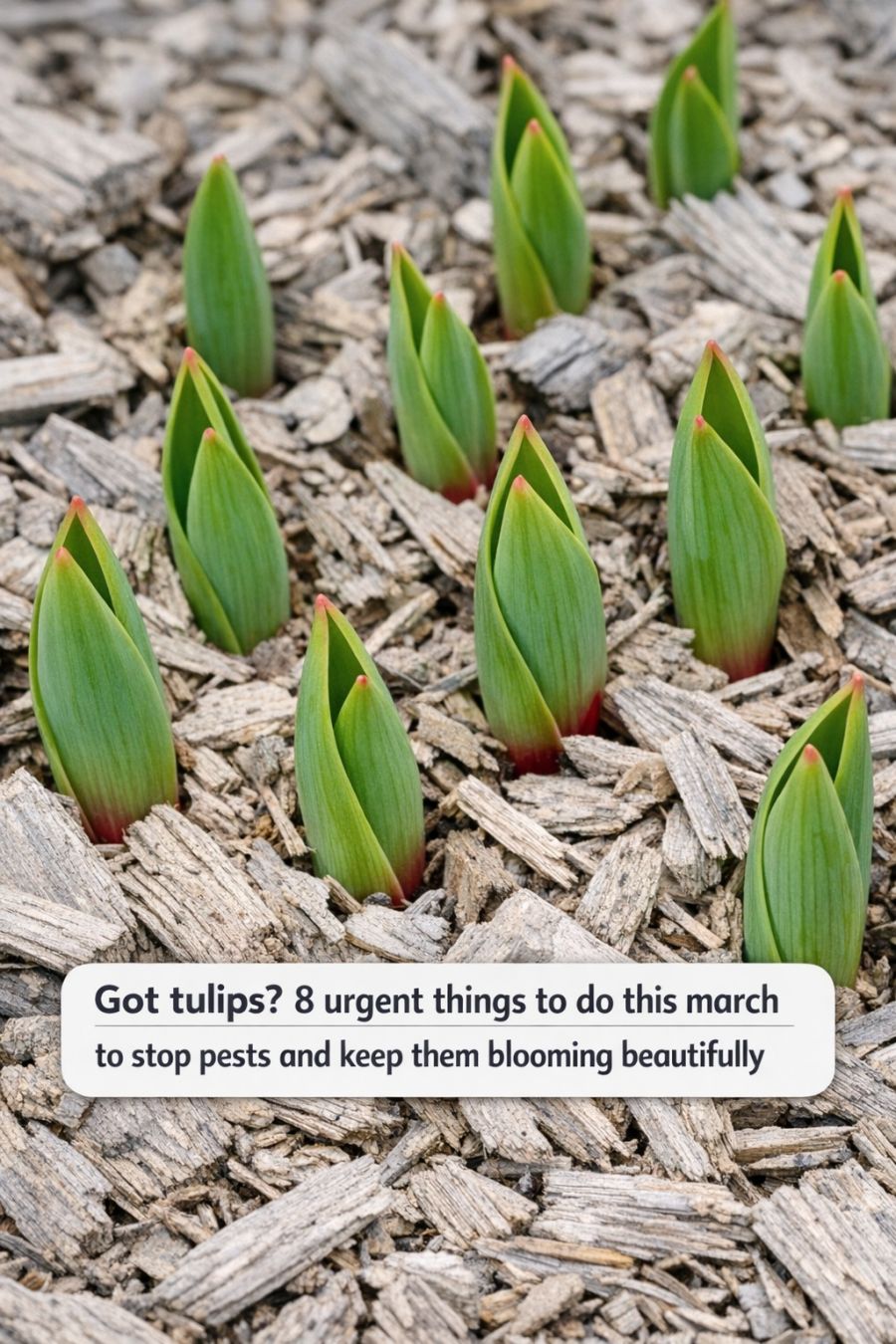
Got tulips? 8 urgent things to do this march to stop pests and keep them blooming beautifully
Pages: 1 2
