
Once the soil is prepared, apply a balanced, slow-release fertilizer formulated for spring bulbs. Follow the recommended application rate, typically around 2-4 pounds per 100 square feet. This will provide essential nutrients to support strong stem growth and vibrant blooms.
4. Set Up Barriers and Traps to Stop Slugs and Snails in Their Tracks
Slugs and snails are notorious for damaging young tulip shoots. To protect your plants, set up physical barriers like copper tape or rings around your flower beds. The copper reacts with the slime of these pests, creating a mild electric shock that deters them.
Additionally, consider using traps to catch slugs and snails. Bury shallow dishes of beer at soil level; these pests are attracted to the yeast and will drown. Regularly check and empty the traps to maintain effectiveness.
5. Protect Bulbs and Buds From Squirrels, Rabbits, and Other Critters
Squirrels, rabbits, and other critters are known to dig up bulbs and nibble on tender buds. To prevent this, use physical barriers like chicken wire or mesh to cover your tulip beds. Ensure the mesh is secured tightly to the ground to deter digging.
Alternatively, apply a natural repellent spray, such as one containing garlic or hot pepper, to make the plants less palatable. Reapply after rain or as needed, based on the product’s instructions.
6. Prune, Deadhead, and Support Stems to Maximize Bloom Power
While tulips don’t require extensive pruning, removing spent blooms can encourage the plant to direct energy toward bulb development instead of seed production. Use clean, sharp scissors to deadhead flowers as they fade.
If your tulips grow tall, consider using stakes or supports to keep them upright, especially in windy areas. This prevents stem breakage and keeps your garden looking tidy.
7. Water the Right Way to Prevent Rot, Mold, and Fungal Outbreaks
Proper watering is crucial to prevent issues like rot, mold, and fungal diseases. Tulips prefer well-drained soil, so avoid overwatering. Water deeply but infrequently, allowing the soil to dry out slightly between waterings.
Water at the base of the plants early in the morning to minimize evaporation and fungal growth. Avoid wetting the foliage, as this can promote disease. Adjust your watering schedule based on rainfall and soil moisture levels.
8. Plan Successive Blooms and Future-Proof Your Tulip Beds
To enjoy a continuous display of tulips, plan for successive blooms by planting early, mid, and late-season varieties. This will extend the flowering period and keep your garden colorful for longer.
Consider interplanting tulips with companion plants like daffodils or muscari, which can deter pests and enhance the visual appeal of your garden. At the end of the season, leave the foliage to die back naturally to nourish the bulbs for next year’s growth. With these strategies in place, you can future-proof your tulip beds for years of beautiful blooms.
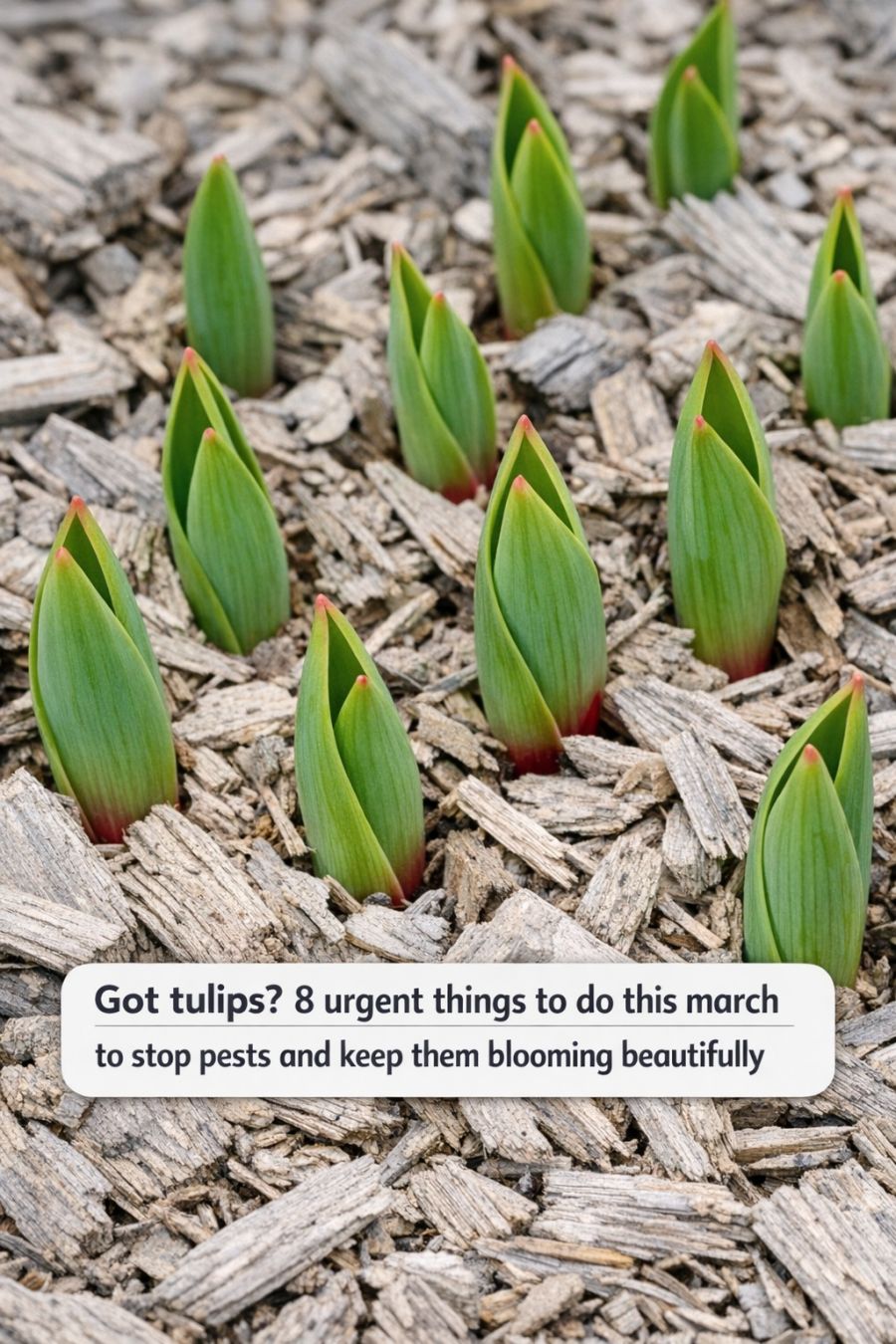
Got tulips? 8 urgent things to do this march to stop pests and keep them blooming beautifully
Pages: 1 2
