
Imagine having a constant supply of fresh, crunchy, and sweet spring carrots right at your fingertips. No more trips to the grocery store or farmer’s market. Instead, you can cultivate an endless harvest of this versatile vegetable in the comfort of your own home. With the right guidance, growing carrots in a bucket can be a simple and rewarding endeavor.
This step-by-step guide will walk you through everything you need to know to successfully grow carrots in containers. From selecting the right carrot varieties to optimizing the growing conditions, we’ve got you covered. Whether you’re a seasoned gardener or a beginner, you can reap the benefits of fresh carrots all season long by following these tips.
1. Why Buckets Are the Secret Weapon for Endless Spring Carrots
Buckets offer several advantages for growing carrots. Firstly, they provide excellent control over soil quality, which is crucial for root vegetables like carrots. By using a bucket, you can ensure the soil is loose and well-draining, preventing issues like compaction, which can lead to deformed roots.
Additionally, buckets are portable and space-efficient. Even if you have a small balcony or patio, you can easily accommodate a few buckets. This portability allows you to move the carrots to catch more sunlight or to protect them from harsh weather conditions.
2. Choose the Right Carrot Varieties for Container Growing
Not all carrot varieties are suitable for container growing. Smaller, shorter varieties such as ‘Thumbelina’, ‘Nantes’, and ‘Chantenay’ are ideal for buckets due to their shorter root lengths. These varieties typically grow to about 4-6 inches long, making them perfect for the limited depth of a bucket.
When selecting seeds, be sure to check the packet for information on the mature size of the carrots, and opt for those that are described as being well-suited for containers or small spaces.
3. Pick the Perfect Bucket Size, Drainage Setup, and Location
The size of the bucket is crucial for growing healthy carrots. A 5-gallon bucket is ideal as it provides enough depth and volume for the roots to develop fully. Ensure the bucket has ample drainage holes at the bottom; about 5-6 holes should suffice.
Place the bucket in a location that receives at least 6-8 hours of sunlight daily. If you live in a particularly hot climate, consider a spot that gets some afternoon shade to prevent the soil from drying out too quickly.
4. Mix a Loose, Nutrient-Rich Potting Blend Carrots Love
Carrots thrive in loose, sandy soil that allows easy root penetration. To create the perfect potting mix, combine equal parts of potting soil, sand, and compost. This mixture will provide the necessary nutrients while ensuring good drainage.
Avoid using heavy garden soil or clay, as these can compact and impede root growth. You can also add a balanced organic fertilizer to the mix to further boost nutrient availability.
5. Sow Carrot Seeds Correctly for Maximum Yield in a Small Space
To sow carrot seeds, first moisten the soil in your bucket. Then, make shallow furrows about 1/4 inch deep and 2 inches apart. Scatter the seeds thinly along the furrows and cover them lightly with soil. Avoid sowing too densely to minimize overcrowding.
Gently water the soil to settle it around the seeds. Keep the soil consistently moist, but not waterlogged, to encourage germination, which usually takes 10-14 days.
6. Water Like a Pro to Keep Carrots Tender, Sweet, and Split-Free
Consistent moisture is key to growing sweet and tender carrots. Water the bucket thoroughly whenever the top inch of soil feels dry to the touch. Aim to keep the soil evenly moist but not soggy.
Inconsistent watering can lead to problems such as splitting or irregularly shaped roots. Consider using a drip irrigation system or self-watering container to maintain steady moisture levels.
7. Thin Seedlings the Smart Way to Double Your Harvest
Once the seedlings are about 2 inches tall, it’s time to thin them to prevent overcrowding. Thin the seedlings so that there is about 2-3 inches of space between each plant, allowing enough room for the roots to develop properly.
Don’t discard the thinnings. Instead, use them in salads or as garnishes. Proper thinning will result in larger, healthier carrots and can effectively double your harvest by ensuring quality growth.
8. Feed and Mulch to Keep Carrots Growing Fast All Season
Carrots benefit from a balanced fertilizer applied every 4-6 weeks. Use a water-soluble fertilizer with a balanced N-P-K ratio, such as 10-10-10, to promote root and foliage development.
Mulching is also beneficial for retaining soil moisture and suppressing weeds. Apply a 1-2 inch layer of organic mulch, like straw or shredded leaves, around the base of the plants. This will keep the soil temperature stable and conserve moisture.
9. Protect Your Bucket Crop From Pests, Diseases, and Weather Swings
Common pests like carrot flies can be deterred by covering the buckets with fine mesh or floating row covers. This physical barrier prevents the pests from laying eggs near the plants.
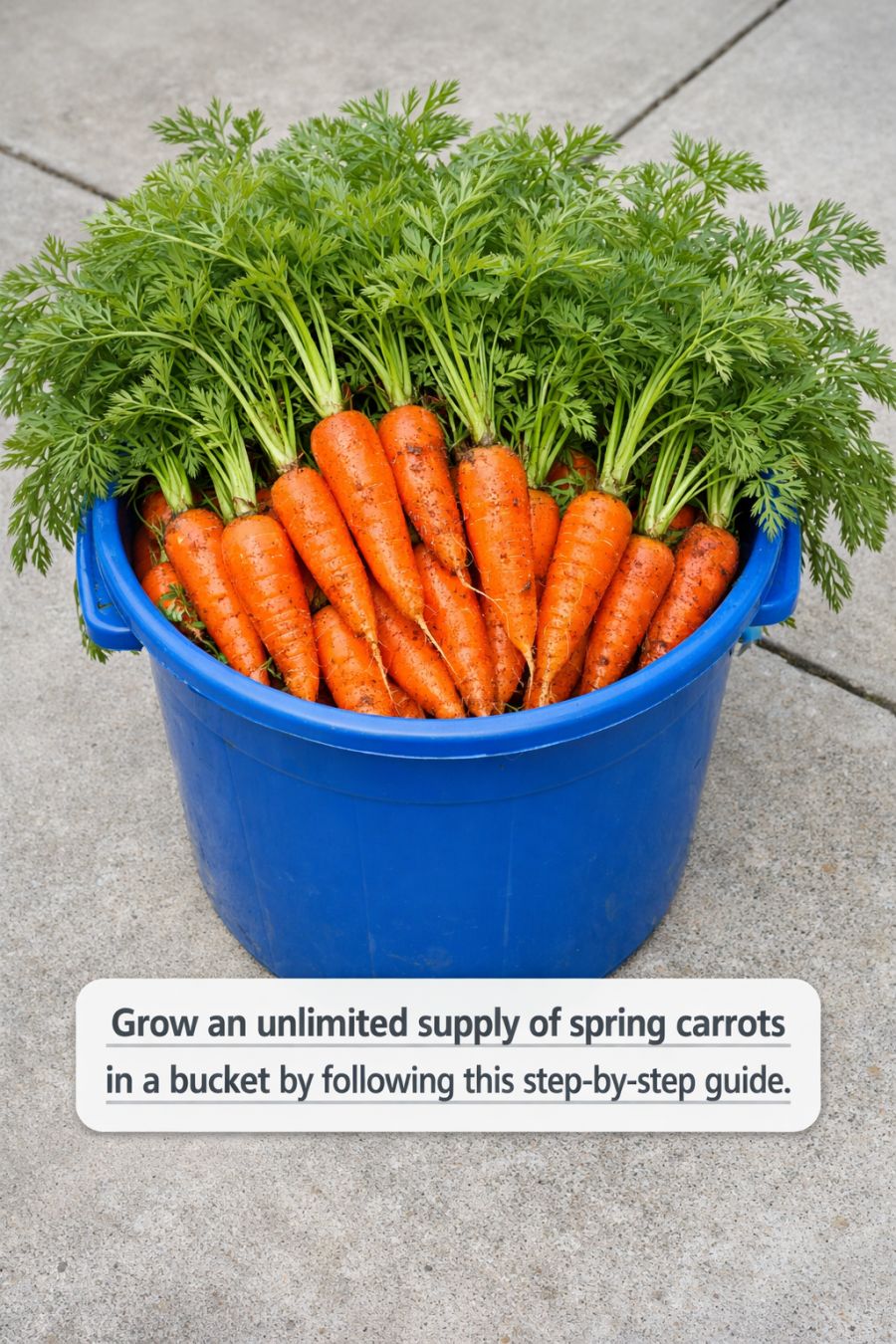
Grow an unlimited supply of spring carrots in a bucket by following this step-by-step guide
Pages: 1 2
