
Monitor for signs of diseases such as leaf blight or powdery mildew. Remove affected foliage promptly and ensure good air circulation around the plants. In extreme weather conditions, move the buckets to a sheltered location to prevent damage from heavy rain or strong winds.
10. Harvest at the Right Time and Replant Immediately for Continuous Crops
Carrots are typically ready for harvest 60-80 days after sowing, depending on the variety. Harvest when the roots are about 1/2 inch in diameter. Gently pull the carrots from the soil and brush off excess dirt.
To enjoy a continuous supply, replant new seeds immediately after harvesting. This practice, known as succession planting, ensures you have fresh carrots available throughout the growing season.
11. Save Seeds and Scale Up to a Truly Unlimited Bucket Carrot Supply
To achieve an unlimited supply of carrots, consider saving seeds from your healthiest plants. Allow some carrots to flower and go to seed in the second year. Once the seed heads turn brown, harvest and dry them before storing in a cool, dry place.
With saved seeds, you can expand your bucket garden or share with friends and family. Scaling up your operation is as simple as adding more buckets and following the same growing process, ensuring a bountiful carrot harvest year-round.
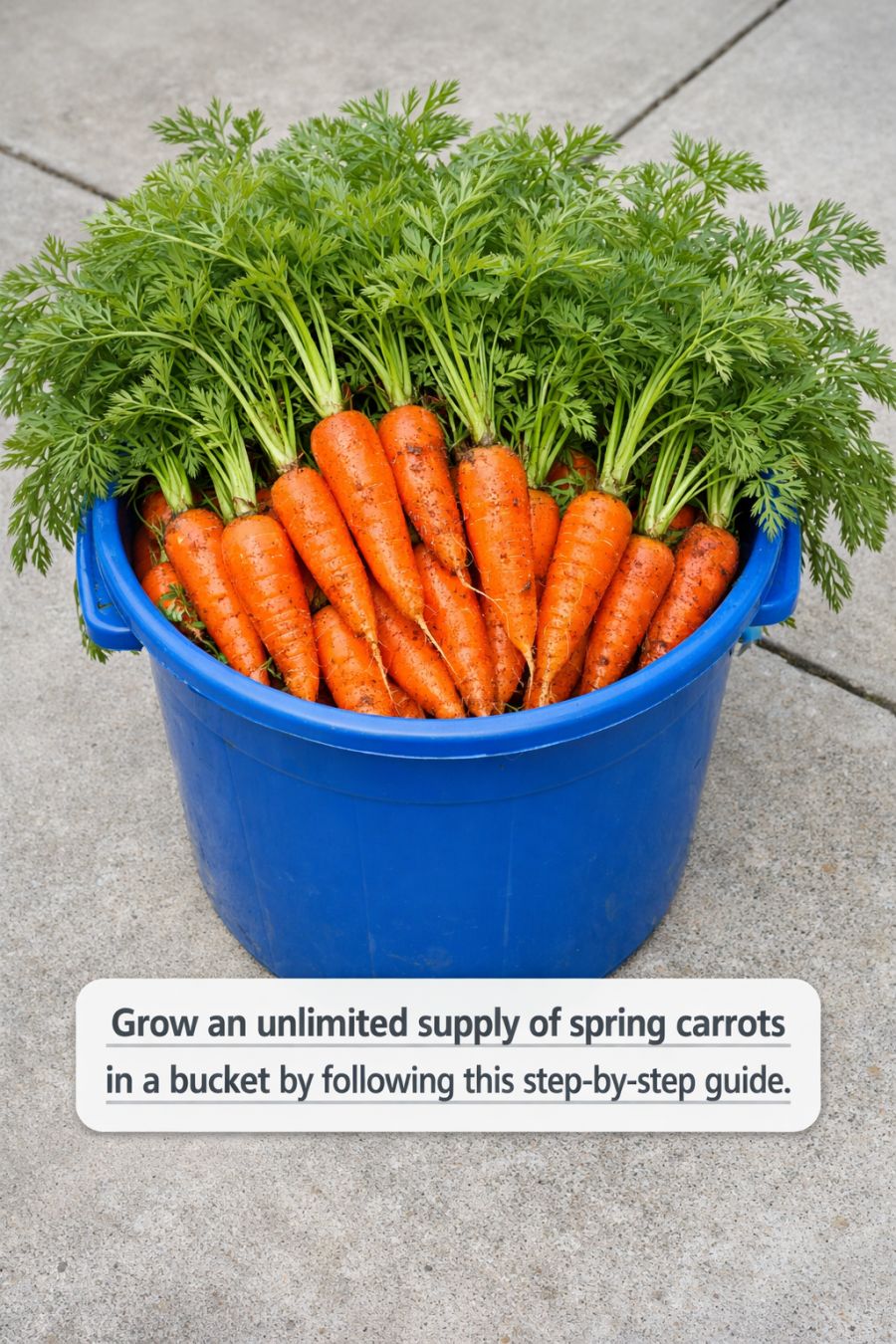
Grow an unlimited supply of spring carrots in a bucket by following this step-by-step guide
Pages: 1 2
