
While their appearance and movements might be unsettling, there is no evidence to suggest they can cause harm to humans. In fact, they can be considered beneficial in controlling populations of certain insect pests that they parasitize.
8. How to Tell a Horsehair Worm From Other Creepy Parasites
Differentiating horsehair worms from other parasitic worms or similar creatures involves a few key characteristics. Their extreme thinness and length are distinguishing features, as is their unique movement pattern of twisting and knotting.
Unlike other parasitic worms, horsehair worms are almost exclusively found in wet environments outside of a host. Their lack of segmentation and smooth, hair-like appearance further set them apart from creatures like earthworms or leeches.
9. What to Do If You Find One in Your Yard, Pool, Or Water Trough
If you come across a horsehair worm in your yard, pool, or water trough, there is no cause for alarm. They pose no threat and can be left alone to continue their life cycle. If desired, they can be gently relocated to a nearby natural water source.
In pools or water troughs where they might be considered a nuisance, simple removal with a net or similar tool is sufficient. Maintaining clean water sources and minimizing debris can help reduce their presence in these areas.
10. Why Scientists Are Fascinated by These Parasitic Puppeteers
Horsehair worms captivate scientists due to their unique life cycle and parasitic strategies. Their ability to manipulate host behavior, compelling insects to seek water, is a prime example of the complex relationships that can evolve between parasites and their hosts.
Additionally, their simple yet effective body plan and movement have implications for understanding the evolution of parasitism and the ecological roles these organisms play. Research into their biology continues to shed light on the intricate balance within ecosystems.
11. When to Worry: Signs It Might Be Something Other Than a Horsehair Worm
While horsehair worms are generally harmless, encountering a similar-looking creature that behaves differently should raise some questions. Parasitic worms that infect humans or pets, such as roundworms or tapeworms, have different characteristics, such as segmentation or differences in size and shape.
If you come across a worm-like creature in an unexpected setting or one that does not match the description of a horsehair worm, further investigation or consultation with a professional may be warranted. It’s always wise to err on the side of caution when dealing with unfamiliar organisms.
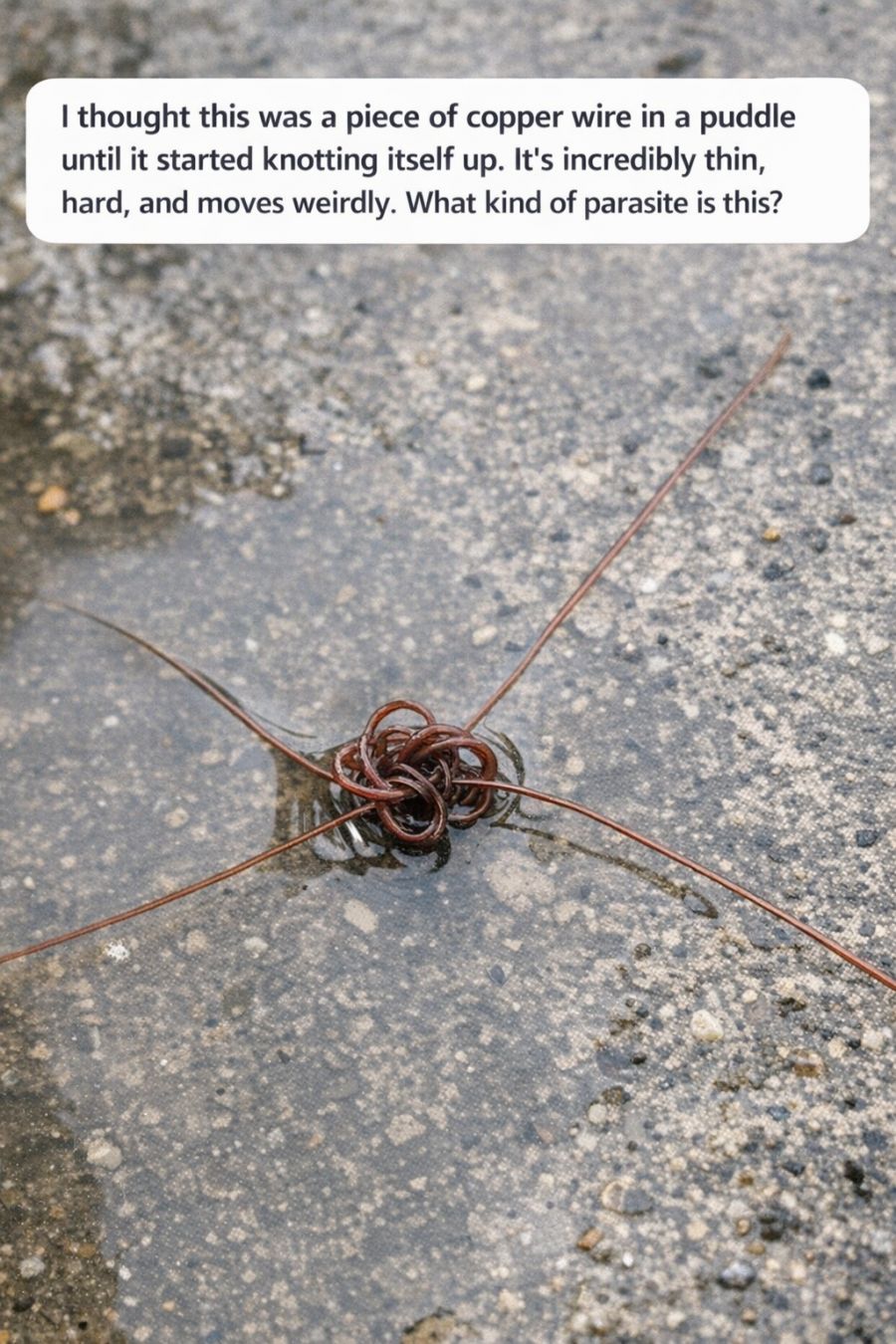
I thought this was a piece of copper wire in a puddle until it started knotting itself up. It’s incredibly thin, hard, and moves weirdly. What kind of parasite is this?
Pages: 1 2
