
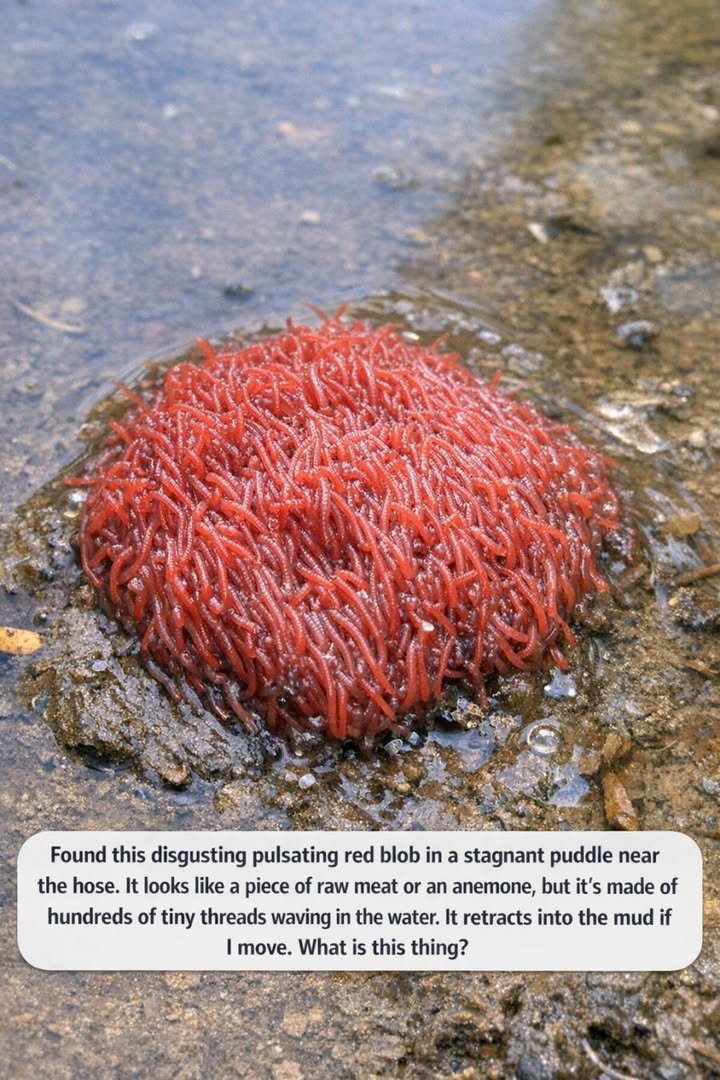
If you’ve stumbled upon a bizarre, pulsating red blob in your backyard, you might have initially recoiled in disgust or curiosity. Resembling a piece of raw meat or even a strange underwater anemone, this peculiar sight can be both fascinating and unsettling. Such discoveries are not uncommon, especially in areas where water collects and becomes stagnant.
These blobs, often found in puddles or near garden hoses, are not just random occurrences. They are part of a larger ecological system that thrives in specific environmental conditions. As you delve deeper into understanding what these blobs are, you’ll uncover a world of microscopic wonders and complex biological interactions that explain their presence and behavior.
1. The Shocking Sight: A Pulsating Red Blob in Your Backyard
Seeing a pulsating red blob in your backyard can be quite alarming. These blobs can measure anywhere from a few centimeters to a foot in diameter, depending on the size of the colony. Their vibrant red color and rhythmic pulsations can make them look alive, which in a way, they are.
These blobs are typically found in stagnant water, such as puddles or areas with poor drainage. They may appear to be a single entity, but upon closer inspection, you will find that they are composed of numerous tiny threads waving in the water. This sight can be both mesmerizing and disturbing, as the blobs seem to respond to movement and stimuli in their environment.
