
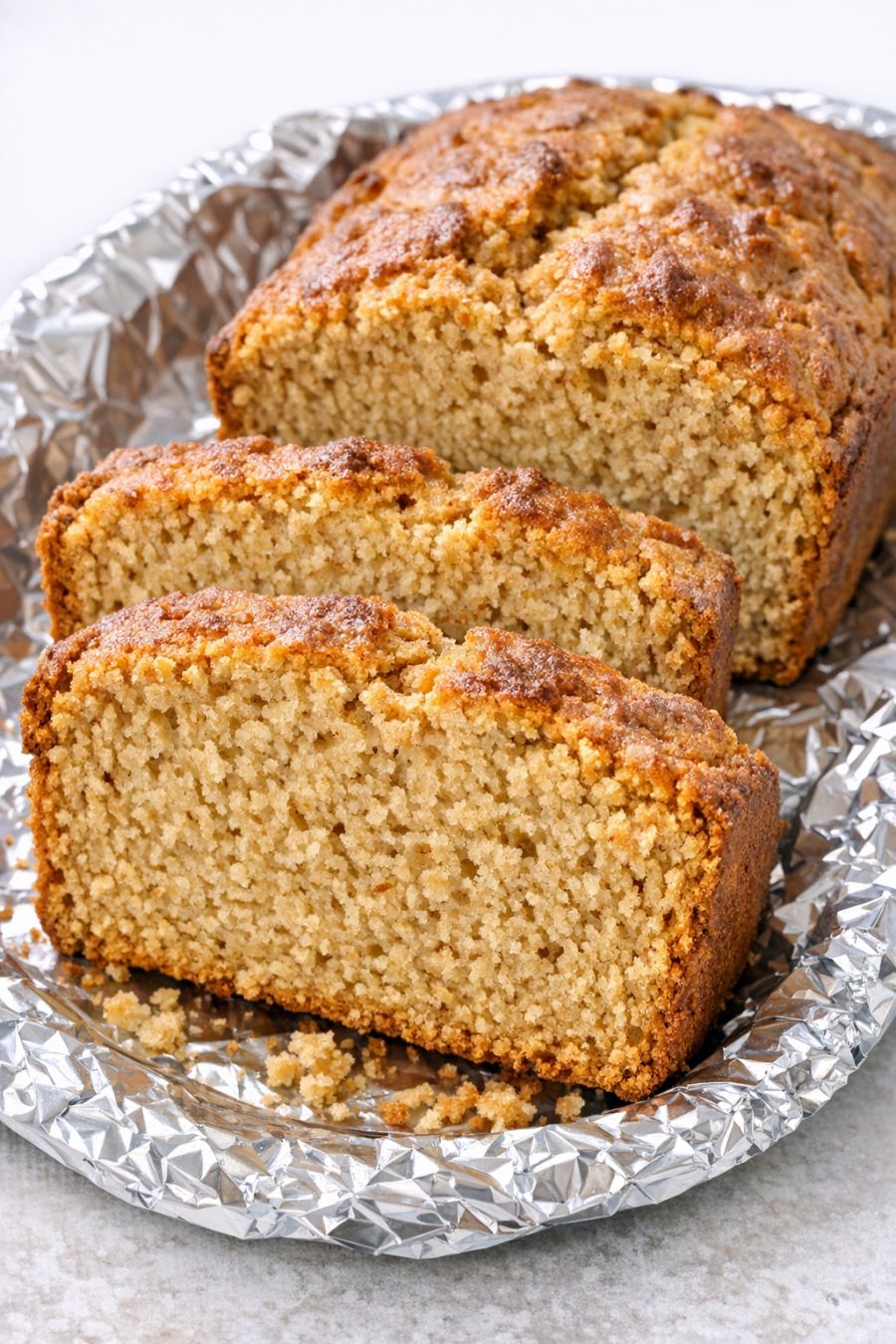
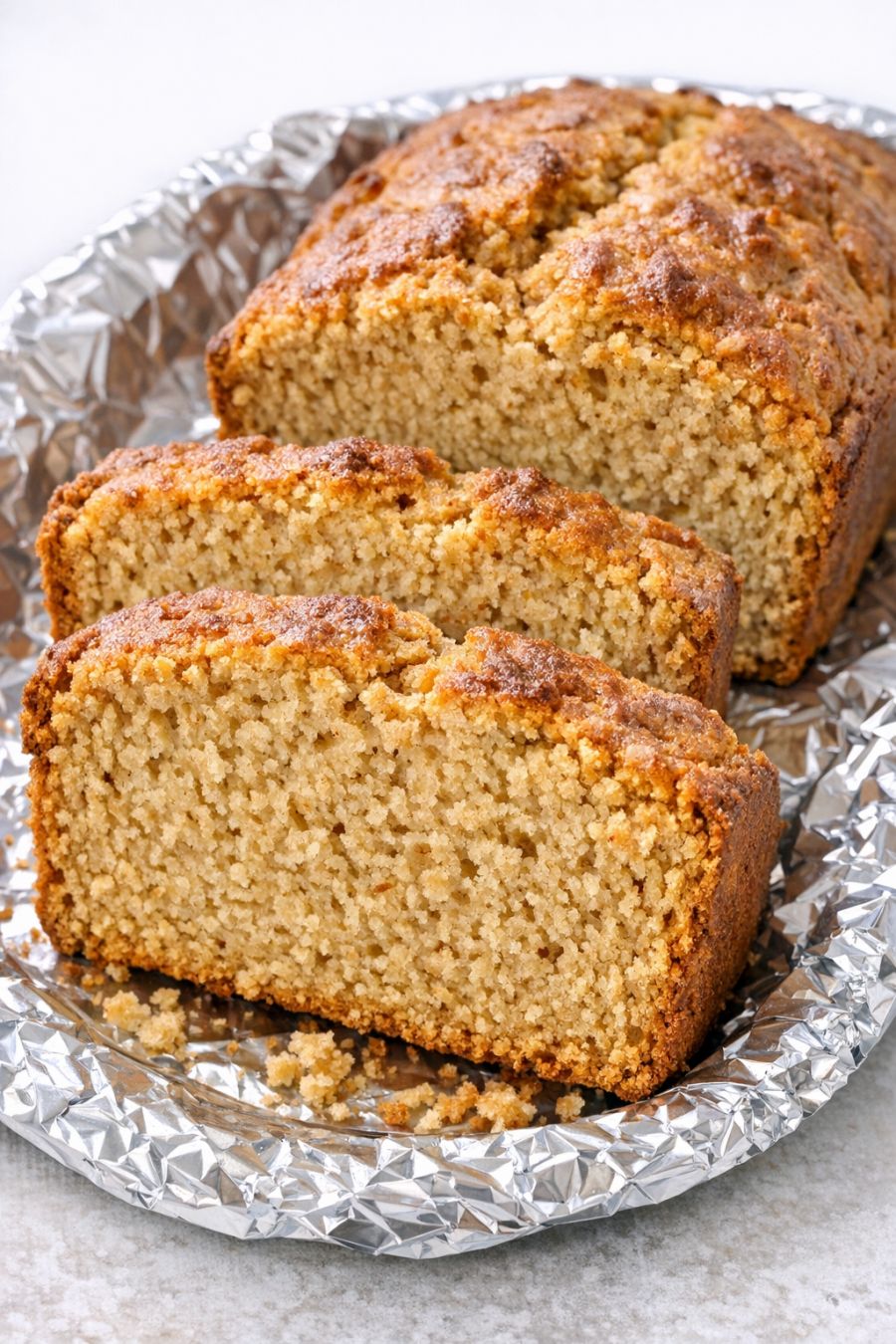
This 3-ingredient peanut butter bread is the kind of sturdy, no-fuss loaf that could have come straight out of a 1930s farmhouse kitchen. My grandmother used to say that when the cupboards were bare but you still needed to put something warm and filling on the table, you reached for what you had: a jar of peanut butter, a scoop of flour, and just enough milk to pull it all together. The result is a dense, chewy slice with a rich, nutty flavor that feels incredibly comforting eaten warm from the oven. It’s not fancy, and that’s exactly the point—it’s practical, thrifty, and deeply satisfying, the way so many Depression-era recipes were.
Serve this peanut butter bread warm, sliced thick, with a little extra butter or a smear of jam if you have it. It goes nicely with a glass of cold milk, a mug of coffee, or hot tea. For breakfast, pair it with scrambled eggs or a bowl of fruit; for an afternoon snack, enjoy a slice just as it is, still slightly warm and crumbly. It also makes a sturdy base for a peanut butter and jelly sandwich, echoing that old-fashioned, stick-to-your-ribs comfort my grandmother always aimed for.
3-Ingredient Peanut Butter Bread
Servings: 8
Ingredients
1 cup creamy peanut butter
2 cups all-purpose flour
1 1/4 to 1 1/2 cups whole milk (start with 1 1/4 cups and add more only if needed)
Directions
Preheat your oven to 350°F (175°C). Line a standard 8×4-inch loaf pan with foil, letting some hang over the sides to help lift the loaf out later. Lightly grease the foil with a bit of oil or butter if you like, to keep the crust from sticking.
In a medium mixing bowl, stir the peanut butter with a sturdy spoon to soften it up. Gradually add about half of the milk, stirring until the mixture looks smooth and loose enough to work with. This helps the peanut butter blend into the flour more easily.
Add the flour to the bowl and stir gently, then pour in the remaining milk a little at a time. Keep stirring until everything comes together into a thick, heavy batter. It should be dense but spreadable, not dry and crumbly. If it seems too stiff to stir, add a spoonful or two more milk, just until there are no dry pockets of flour. Do not overmix; stop as soon as you have an even, thick batter.
Spoon the batter into the prepared loaf pan. Use the back of the spoon to press it into the corners and smooth the top. The surface will look a bit rustic and rough—that’s just fine and will help form a nice crust as it bakes.
Pages: 1 2
