
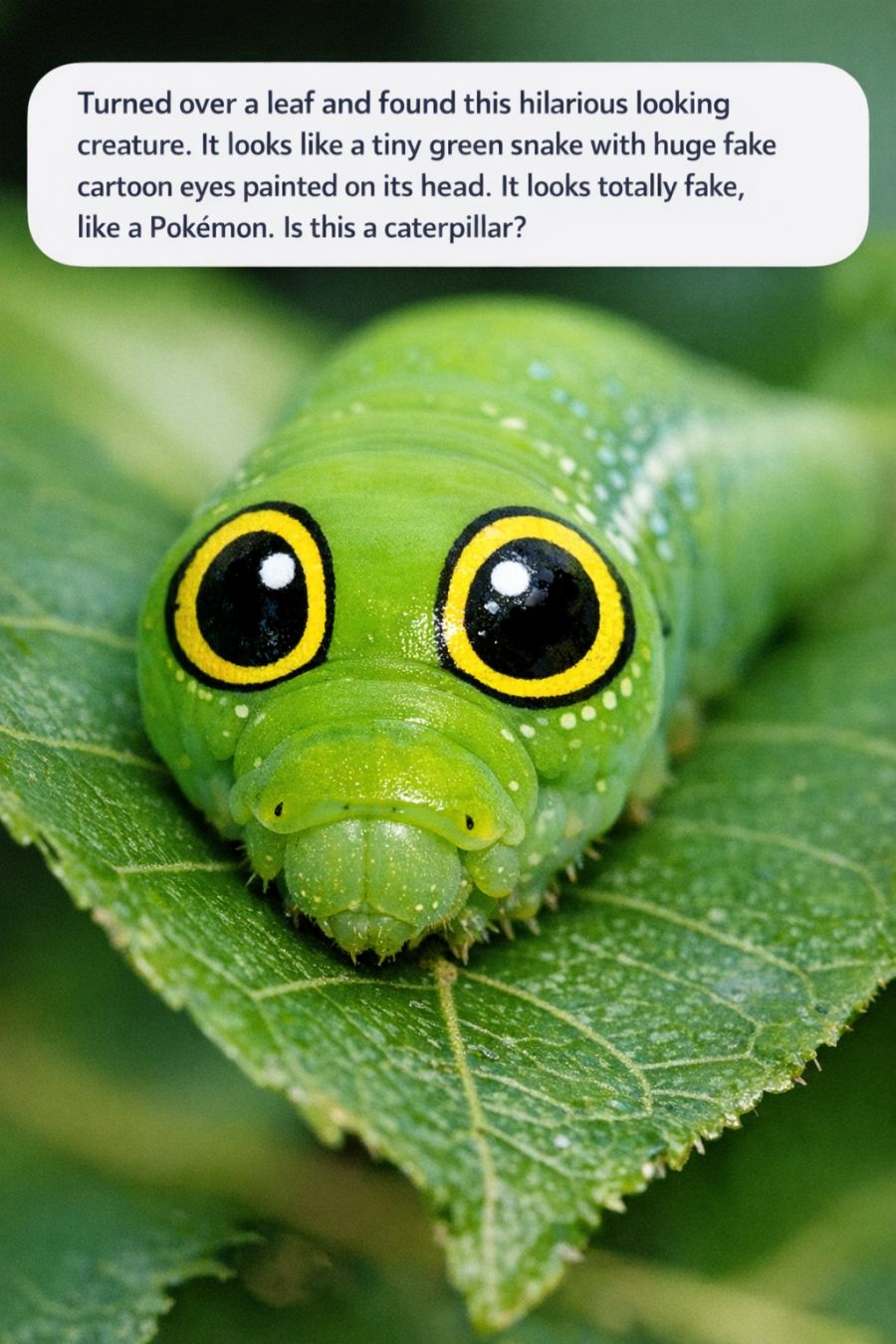
In the world of nature, surprises often lurk in the most unexpected places. Imagine turning over a leaf during a casual stroll in the garden, only to be greeted by what appears to be a tiny green snake with oversized cartoonish eyes staring back at you. This bizarre yet fascinating sight might make you question if you’ve stumbled upon a new species of reptile or perhaps a whimsical creation from the Pokémon universe.
However, what you’ve actually encountered is not a snake or a fantastical creature, but a clever master of disguise from the insect world. This is the larval stage of a butterfly, specifically the Spicebush Swallowtail caterpillar. Its remarkable appearance is not just for show but serves a very practical purpose in its survival strategy.
1. The Tiny Green “Snake” With Cartoon Eyes: What You Actually Found
The creature you discovered is indeed a caterpillar, but not just any caterpillar. This is the Spicebush Swallowtail caterpillar, which is renowned for its snake-mimicking appearance. At first glance, its body is a vibrant green color that perfectly blends with its leafy surroundings, but it’s the head end that draws the most attention. The caterpillar has evolved to possess large, eye-like spots that resemble the eyes of a snake, complete with a faux ‘head’ that looks intimidating to potential predators.
Typically, these caterpillars measure about 2 to 5 centimeters in length during their later stages of development. Their unique appearance is a classic example of Batesian mimicry, where a harmless species evolves to imitate the warning signals of a harmful species to deter predators.
2. Meet The Spicebush Swallowtail Caterpillar
The Spicebush Swallowtail caterpillar, scientifically known as Papilio troilus, is a native species to North America, particularly found in the eastern regions. As a member of the swallowtail family, these caterpillars are destined to become beautiful butterflies, but their larvae stage is particularly captivating due to its unique adaptations.
These caterpillars primarily feed on the leaves of spicebush (Lindera benzoin) and sassafras (Sassafras albidum) plants, which are native to their habitat range. The choice of host plants not only provides nourishment but also aids in their camouflage, as the green coloration of the caterpillar matches the leaves they inhabit.
3. Why It Looks Like A Snake: Nature’s Genius Camouflage Trick
The Spicebush Swallowtail caterpillar’s snake-like appearance is a brilliant example of evolutionary adaptation. By mimicking the appearance of a small snake, the caterpillar is able to deter birds and other predators who might otherwise see it as an easy meal. The ‘eyes’ located on its thorax are not actual eyes but rather pigmented spots that create an illusion of a much larger creature.
These eye spots are not just randomly placed; their size and positioning are critical to the mimicry. When threatened, the caterpillar rears up its head, making the eye spots more prominent and convincing. This act alone can be enough to scare off a predator, giving the caterpillar a fighting chance to survive and eventually transform into a butterfly.
4. Those Huge Fake Eyes: How Eye Spots Scare Off Predators
The large eye spots on the Spicebush Swallowtail caterpillar are an ingenious form of defense. These spots mimic the eyes of a snake, complete with detailing that suggests depth and dimension, making them appear startlingly realistic. For a small bird or insectivorous mammal, the sudden appearance of what seems to be a snake’s head can be enough to cause a momentary pause, allowing the caterpillar to remain undetected or escape.
Research has shown that eye spots can be effective deterrents because they exploit a predator’s instinctual fear of encountering a larger, potentially dangerous animal. This evolutionary strategy is not unique to caterpillars; many animals, including certain fish and moths, employ eye spots to confuse or frighten predators.
5. Color-Changing Magic: From Bird-Poop Baby To Neon-Green “Snake”
Interestingly, the Spicebush Swallowtail caterpillar doesn’t always look like a snake. In its early stages, the caterpillar actually resembles bird droppings. This initial disguise is just as effective as its later snake mimicry, as it allows the young caterpillar to avoid detection by blending in with its surroundings.
As the caterpillar grows, it undergoes a dramatic transformation. It molts several times, each time increasing in size and changing in coloration. The transition from a brown, bird-dropping mimic to a vivid green ‘snake’ occurs over several weeks, with the eye spots becoming more pronounced in the latter stages of development.
Turned over a leaf and found this hilarious looking creature. It looks like a tiny green snake with huge fake cartoon eyes painted on its head. It looks totally fake, like a Pokémon. Is this a caterp
Pages: 1 2
