
6. Where Spicebush Swallowtail Caterpillars Live And What They Eat
Spicebush Swallowtail caterpillars are typically found in deciduous forests, woodlands, and areas where their host plants, spicebush and sassafras, are abundant. These habitats provide the necessary resources for their growth and development, as well as cover from predators.
The caterpillars feed exclusively on the leaves of these plants, which not only serve as their primary food source but also offer an effective camouflage. The leaves of spicebush and sassafras are broad and green, making them ideal for the caterpillars to blend in with their surroundings while feeding and resting.
7. How To Tell It Apart From Real Snakes And Other Lookalikes
While the Spicebush Swallowtail caterpillar does a remarkable job of imitating a snake, there are several key differences that can help you distinguish this harmless insect from a real snake. Real snakes have scales, while the caterpillar’s body is smooth and segmented. Additionally, the caterpillar’s ‘head’ is not separate from its body, unlike a snake’s, and the eye spots are not functional eyes.
Other caterpillars and insects may also employ similar mimicry tactics, but the Spicebush Swallowtail caterpillar is distinctive due to its specific coloration and the size and arrangement of its eye spots. Observing these features carefully can help you identify this unique caterpillar in the wild.
8. From Fake Snake To Elegant Butterfly: Its Life Cycle Explained
The life cycle of the Spicebush Swallowtail is a testament to nature’s wonder. It begins as an egg laid on the leaves of a host plant. Once hatched, the caterpillar goes through several instars, or growth stages, each time shedding its skin and changing appearance.
After reaching its final larval stage, the caterpillar forms a pupa, also known as a chrysalis, where it undergoes metamorphosis. This stage can last several weeks, after which the adult butterfly emerges. The Spicebush Swallowtail butterfly is strikingly beautiful, with black wings adorned with iridescent blue or green spots, completing its transformation from a cleverly disguised caterpillar to a graceful butterfly.
9. Is It Safe To Touch? What To Do If You Find One
The Spicebush Swallowtail caterpillar is harmless to humans and can be safely observed or gently handled. Unlike some caterpillars, it does not possess stinging hairs or venomous spines. However, it’s always best to handle any wildlife with care and respect their natural habitat.
If you find one in your garden, it’s a great opportunity to observe its fascinating behavior and life cycle. You might even consider leaving it in place to continue its development, as it plays a beneficial role in the local ecosystem by pollinating plants once it becomes a butterfly.
10. Why This “Pokémon” Caterpillar Matters For Local Ecosystems
The Spicebush Swallowtail caterpillar, and eventually the butterfly, is an important player in its ecosystem. As a caterpillar, it serves as a food source for various birds and other wildlife, despite its impressive defenses. Once it becomes a butterfly, it acts as a pollinator, helping to fertilize plants by transferring pollen as it feeds on nectar.
This pollination is critical for the reproduction of many plant species, which in turn supports a diverse range of wildlife. By supporting the life cycle of the Spicebush Swallowtail, we contribute to the health and biodiversity of our local ecosystems.
11. How To Attract Spicebush Swallowtails To Your Own Backyard
If you’re interested in attracting Spicebush Swallowtails to your backyard, consider planting spicebush and sassafras, their preferred host plants. These plants not only provide food for the caterpillars but also serve as larval habitats.
Creating a butterfly-friendly garden involves providing a variety of nectar-producing flowers for adult butterflies to feed on. Choose native plants that bloom at different times throughout the season to ensure a continuous supply of nectar. Avoid using pesticides, as these can harm caterpillars and butterflies, and consider providing a shallow dish of water with rocks for the butterflies to perch on while drinking.
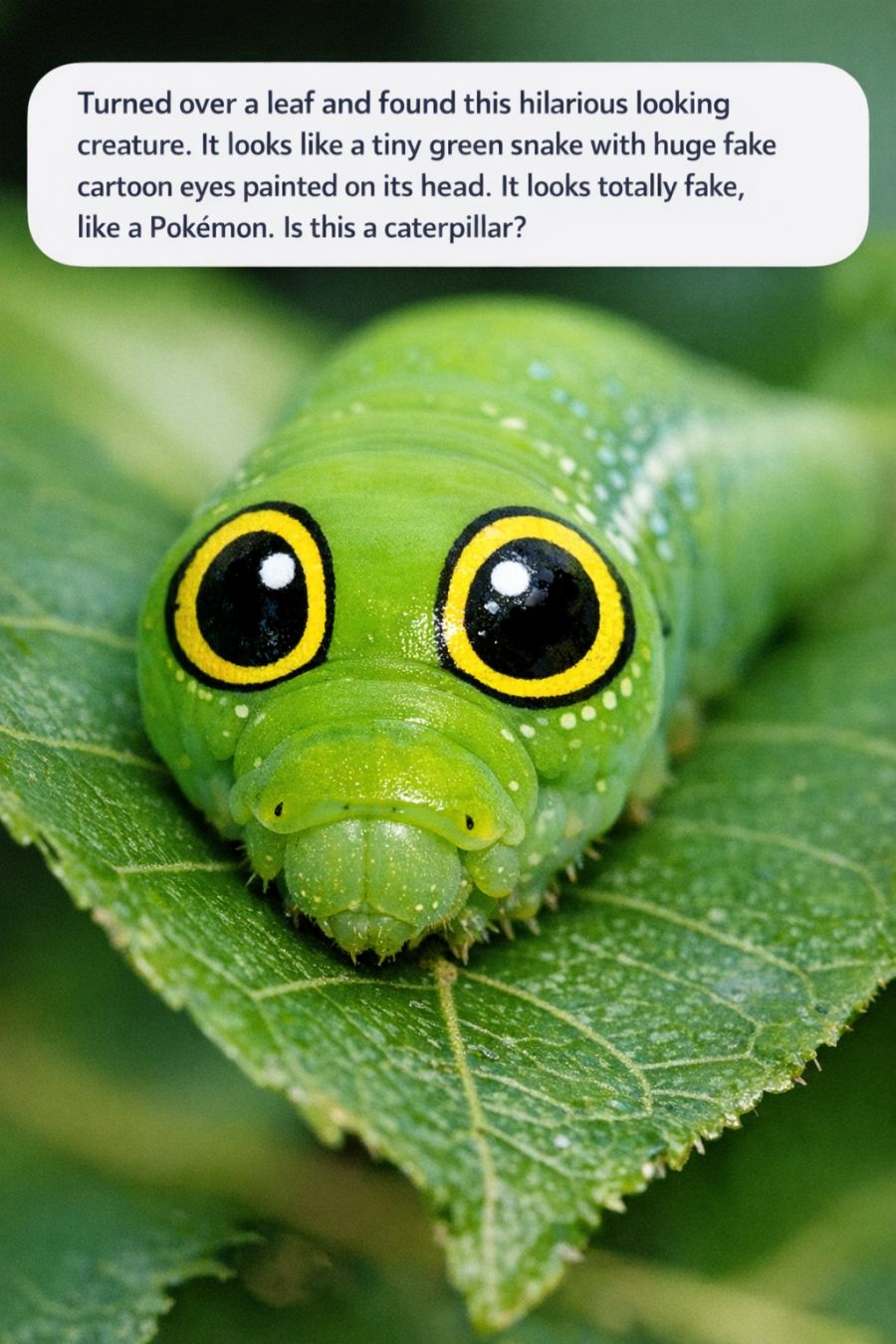
Turned over a leaf and found this hilarious looking creature. It looks like a tiny green snake with huge fake cartoon eyes painted on its head. It looks totally fake, like a Pokémon. Is this a caterp
Pages: 1 2
