
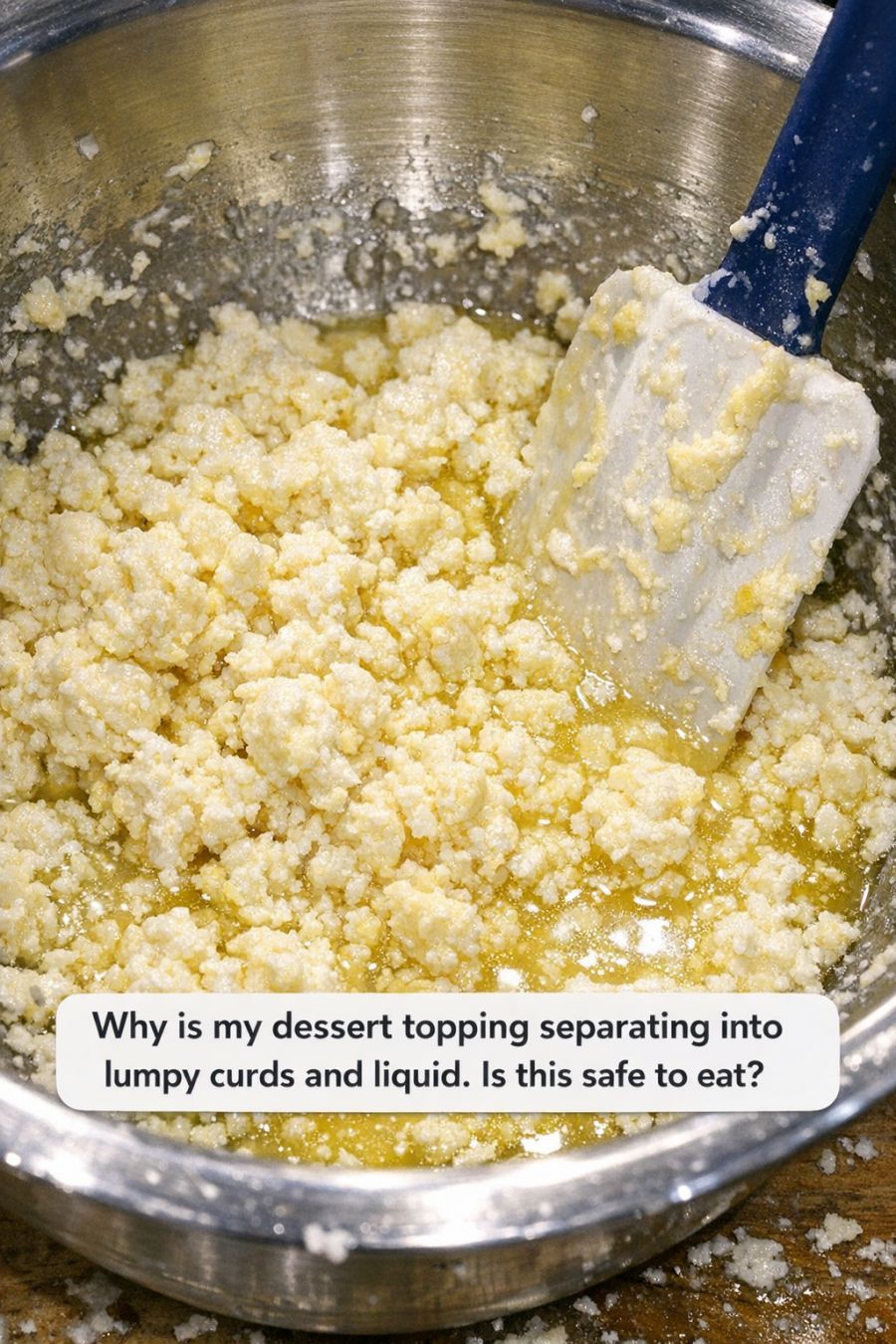
There’s nothing quite as disheartening as preparing a luscious dessert topping, only to find it has separated into unappetizing lumps and liquid. Whether you’re working with a delicate whipped cream, a rich buttercream, or a tangy cream cheese frosting, curdling can turn your sweet masterpiece into a culinary disaster. But before you panic, it’s important to understand why this happens and whether your dessert topping is still safe to enjoy.
Understanding the science behind why toppings curdle can help you prevent this issue in the future. In this article, we’ll delve into the reasons why your dessert topping might separate, the science of emulsions, common mistakes to avoid, and how to determine if a curdled topping is still safe to eat. We’ll also provide practical tips for fixing and preventing curdling, so your desserts can always look and taste their best.
1. What’s Actually Happening When Your Topping Suddenly Curdles
Curdling occurs when the emulsion of a dessert topping breaks, causing the fat and liquid to separate. This process can result in a mixture of lumpy curds floating in a watery liquid. Emulsions are a delicate balance of ingredients, often involving fats and liquids that are forced to mix and stay together. When this balance is disrupted, curdling occurs.
For example, in whipped cream, the whipping process incorporates air into heavy cream, creating a stable structure held together by fat. If the cream is over-whipped or the fat is not properly emulsified, the structure collapses, leading to a curdled mess. Similarly, in buttercream, improper mixing or temperature changes can cause the butter and sugar to separate, resulting in a broken emulsion.
2. The Science of Emulsions: Why Butter, Cream, and Sugar Can Break
Emulsions are a combination of two immiscible substances, such as oil and water, that are stabilized by an emulsifier. In dessert toppings, ingredients like egg yolks, butter, and sugar act as emulsifiers, helping to bind fat and liquid into a smooth mixture. However, emulsions are fragile and can break easily under certain conditions.
Temperature plays a significant role in the stability of an emulsion. When ingredients are too cold, the fats can become solid and resist mixing with liquids. Conversely, if ingredients are too warm, the fats can melt and separate from the liquid. Additionally, over-mixing or under-mixing can disrupt the emulsion, causing it to break and curdle.
3. Temperature Troubles: Cold Ingredients That Shock Your Buttercream
Using ingredients that are too cold is a common cause of curdling in dessert toppings. For instance, if you’re making buttercream and your butter is too cold, it won’t blend smoothly with the sugar, resulting in a lumpy texture. Similarly, if you’re adding cold cream to a warm mixture, the temperature shock can cause the fats to seize and separate.
To prevent temperature-related curdling, always ensure your ingredients are at room temperature before mixing. This allows the fats to blend seamlessly with the liquids, creating a stable emulsion. If you’re in a rush, you can gently warm cold ingredients by placing them in a warm water bath or using a microwave on low power for short intervals.
4. Overheating and Melting: When Warm Kitchens Ruin Stable Frosting
While cold ingredients can cause curdling, overheating can be equally problematic. In a warm kitchen, the heat can cause the fats in your dessert topping to melt, leading to separation. This is particularly common with butter-based toppings, such as buttercream, where the melting point of butter is around 90-95°F (32-35°C).
To maintain the stability of your dessert topping in a warm environment, keep it cool by working quickly and storing it in the refrigerator if necessary. If the topping does start to melt, try chilling it for a few minutes before re-whipping it to restore its texture.
5. Common Mistakes With Butter, Cream Cheese, and Whipped Cream Toppings
Several common mistakes can lead to curdling in dessert toppings. Over-whipping cream can cause the structure to break down, resulting in a curdled texture. Similarly, adding liquid too quickly to butter or cream cheese can overwhelm the emulsion, causing it to separate.
To avoid these issues, whip cream slowly and stop as soon as soft peaks form. When making butter or cream cheese-based toppings, add liquids gradually, allowing each addition to fully incorporate before adding more. This ensures the emulsion remains stable and prevents curdling.
6. How to Tell If Your Curdled Topping Is Still Safe to Eat
Even if your topping has curdled, it may still be safe to eat, provided it hasn’t spoiled. The most reliable way to determine safety is to check the expiration dates of the ingredients and ensure they were stored properly prior to use.
If your topping was made with fresh ingredients and has been refrigerated appropriately, it is likely safe to consume. However, if you notice any signs of spoilage, such as an off odor or mold, it’s best to discard the topping to avoid potential foodborne illness.
7. Visual, Smell, and Taste Checks: Spotting True Spoilage vs. Harmless Separation
When assessing a curdled topping, start by examining its appearance. Harmless separation typically results in small lumps and a watery base, whereas spoilage may be accompanied by discoloration or mold. Smell is another important indicator; a sour or rancid odor suggests spoilage.
Why is my dessert topping separating into lumpy curds and liquid. Is this safe to eat?
Pages: 1 2
