
Tasting a small amount can also help determine safety. If the topping tastes fresh and consistent with its ingredients, it is likely safe to eat. However, if you detect any off flavors, it’s best to err on the side of caution and discard the topping.
8. Step-By-Step Fixes to Rescue a Lumpy, Broken Dessert Topping
If your topping has curdled, there are several techniques you can try to save it. For whipped cream, gently folding in a small amount of fresh cream can help re-emulsify the mixture. In the case of buttercream, warming the mixture slightly and re-whipping can restore its texture.
For cream cheese-based toppings, gradually adding powdered sugar while mixing can help thicken and smooth out the texture. Be patient and add the sugar slowly to avoid overpowering the flavor. With persistence, you can often salvage a curdled topping and return it to its creamy glory.
9. Pro Tricks to Prevent Curdling Before It Starts
Preventing curdling starts with proper preparation. Always use room temperature ingredients to ensure they blend smoothly. When whipping cream, use a chilled bowl and beaters to help stabilize the mixture.
Incorporate liquids slowly and evenly, and avoid over-mixing once the desired texture is achieved. If you’re working in a warm environment, consider chilling your mixing bowl and utensils to keep the ingredients cool. By following these tips, you can minimize the risk of curdling and create perfectly smooth dessert toppings every time.
10. When to Toss It: Food Safety Red Flags You Shouldn’t Ignore
Food safety is a crucial consideration when dealing with curdled toppings. If you notice any signs of spoilage, such as mold, an off odor, or a sour taste, it’s best to discard the topping to avoid potential health risks.
Additionally, if the topping has been left out at room temperature for more than two hours, it may no longer be safe to consume. Always err on the side of caution and prioritize food safety to ensure your desserts are not only delicious but also safe to eat.
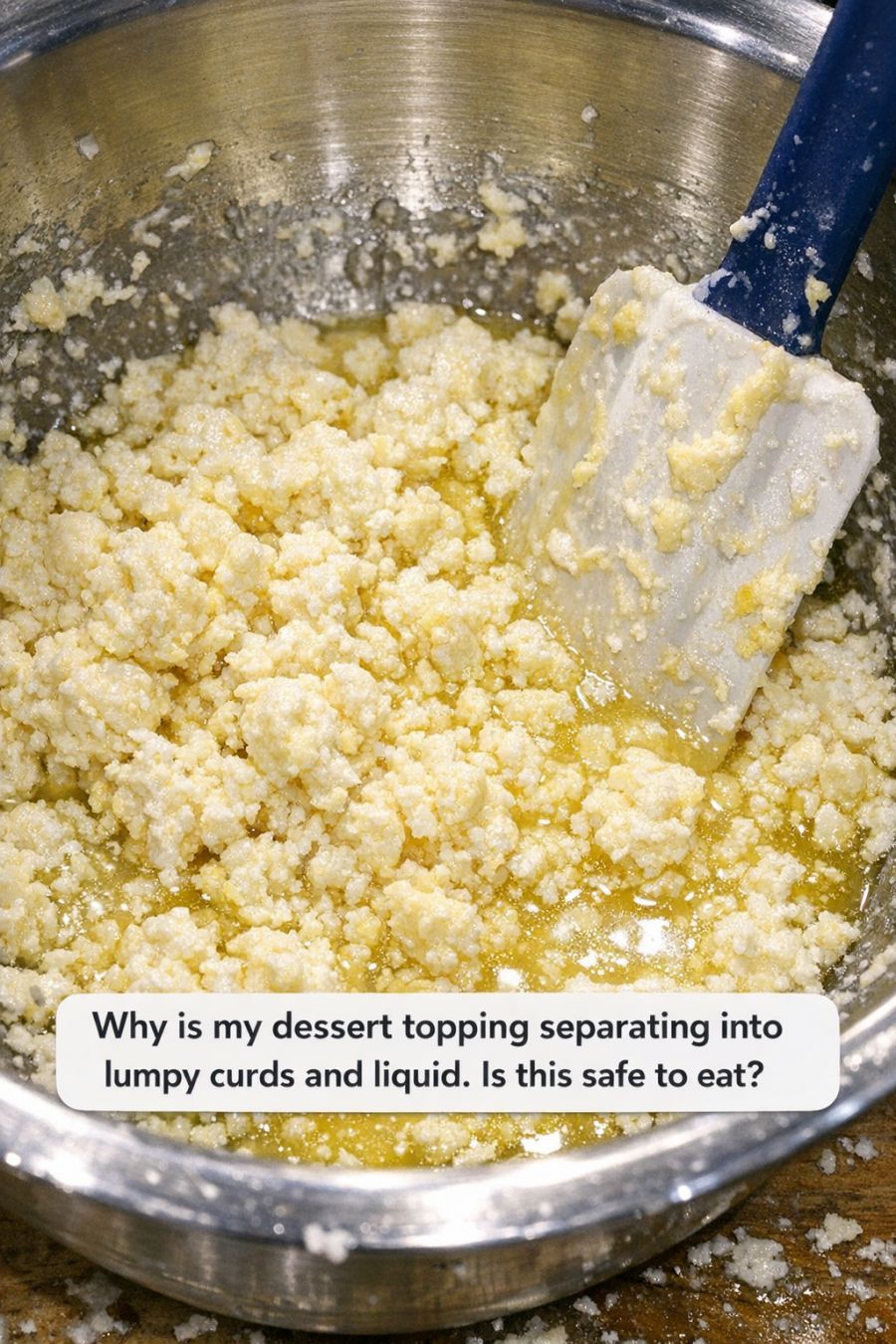
Why is my dessert topping separating into lumpy curds and liquid. Is this safe to eat?
Pages: 1 2
