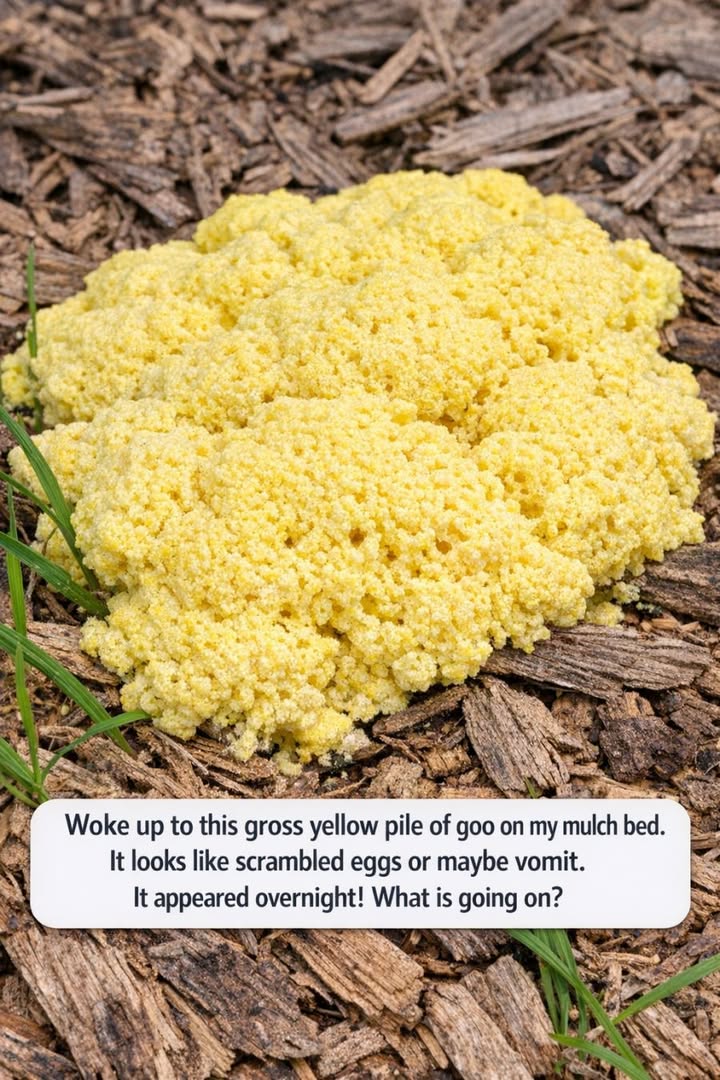
Fresh mulch provides a perfect environment for slime molds. It retains moisture and contains plenty of organic material to feed on. As the mulch breaks down, it releases nutrients that slime molds use to grow and reproduce.
4. Is It Dangerous? Health Risks To Pets, Kids, And Your Garden
Fortunately, dog vomit slime mold is not harmful to humans, pets, or plants. It doesn’t produce toxins or allergens, so even if your pet or child were to come into contact with it, there would be no adverse health effects. The mold itself does not cause plant diseases, nor does it damage the plants it grows around.
It’s perfectly safe to leave it alone, and it will eventually dry up and disappear on its own. However, if you find it particularly unsightly, there are ways to remove it, which we’ll discuss later.
5. How To Tell Dog Vomit Slime Mold From Fungus, Vomit, Or Animal Waste
Identifying dog vomit slime mold can be tricky if you’re unfamiliar with it. Compared to fungi, slime molds are more gelatinous and lack a defined structure, such as a cap or stem. They can vary in color but are typically bright yellow, orange, or even white.
Unlike animal waste, slime mold doesn’t have a foul odor. It also doesn’t attract flies in the same way as decomposing matter would. Its texture is more akin to a thick, wet sponge rather than the consistency of vomit or feces. Observing these characteristics can help you determine whether you’re dealing with a slime mold or something else.
6. What This Yellow Goo Is Actually Doing To Your Soil And Plants
While dog vomit slime mold might not be aesthetically pleasing, it’s actually playing a beneficial role in your garden ecosystem. As it feeds on microorganisms and decaying organic matter, it helps break down the mulch and return nutrients to the soil. This process enriches the soil, promoting healthier plant growth.
By decomposing organic materials, slime molds contribute to the nutrient cycle, making essential elements like nitrogen and carbon available to plants. This activity supports the overall health and fertility of your garden.