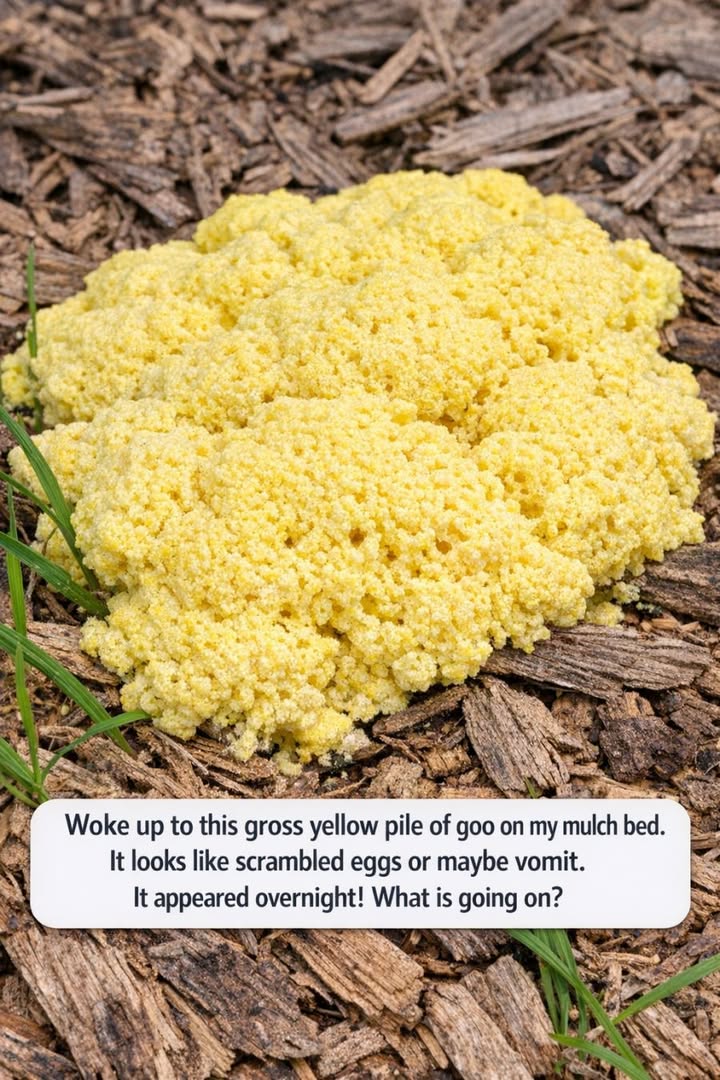
7. Simple Ways To Remove It (And When You Can Just Leave It Alone)
If the presence of slime mold bothers you, there are simple methods to remove it. You can physically scoop it up with a shovel or piece of cardboard and dispose of it in the trash. Spraying the area with a strong jet of water can also help break it up and wash it away.
However, since slime mold is harmless and beneficial, you might choose to leave it alone. It will dry up and vanish in a few days, especially if the weather turns dry and sunny. Regularly turning your mulch to aerate it can also help prevent slime mold from forming.
8. Prevention Tips: How To Make Your Mulch Less Inviting To Slime Molds
To reduce the likelihood of slime mold appearing, ensure your mulch is not too thick. A layer of about 2 to 3 inches is sufficient. This allows for proper air circulation, which helps keep the mulch drier and less inviting to moisture-loving slime molds.
Consider using mulch types that decompose more slowly, such as hardwood bark, which provides fewer nutrients for slime molds. Regularly turning and raking your mulch can also help aerate it and reduce moisture retention.
9. When To Worry Enough To Call An Expert
In most cases, you don’t need to worry enough to call an expert about slime mold. However, if you’re unsure about the identification of the substance in your garden or if it spreads extensively and you’re concerned about its impact, consulting a local extension service or a garden expert can provide peace of mind.
Additionally, if you have allergies or respiratory issues and are concerned about mold spores, a specialist can offer advice on handling and minimizing exposure.
10. Weird But True: Fascinating Science Behind This Bizarre Organism
Slime molds are fascinating creatures that challenge our understanding of life. They can move, albeit slowly, by extending pseudopodia to explore their surroundings. They are capable of learning and adapting their behavior based on past experiences—an attribute usually associated with more complex organisms.
Slime molds exist in a curious state between single-celled and multicellular organisms. When conditions are favorable, individual cells aggregate to form a larger structure that can move and feed as a single entity. This ability to transition between states is part of what makes them so intriguing to scientists.
11. Why This Gross Yellow Blob Is A Sign Of A Healthy Ecosystem
The presence of slime molds in your garden is an indicator of a healthy ecosystem. It signifies that there is an active microbial community breaking down organic matter and enriching the soil with nutrients. This process is essential for sustaining plant life and maintaining soil health.
Slime molds contribute to the biodiversity of your garden, promoting a balance that supports various forms of life. Their role in nutrient cycling and decomposition is a natural part of the ecosystem, highlighting the interconnectedness of living organisms in your garden.