
Spring radishes are a gardener’s delight, cherished for their quick growth, crisp texture, and peppery flavor. These vibrant root vegetables are among the first crops to be harvested in the spring, providing fresh produce after a long winter. Their rapid growth cycle, which can be as short as 25 days from sowing to harvest, makes them an excellent choice for gardeners looking to maximize their space and enjoy a continuous supply of fresh radishes throughout the season.
By following a few key techniques, from understanding radish varieties to mastering succession planting, you can ensure a bountiful harvest of crisp radishes. This guide will walk you through the steps needed to cultivate a steady crop, ensuring that your garden remains productive and your kitchen well-stocked with these nutritious roots.
1. Understand What Makes Spring Radishes So Fast and Crisp
Spring radishes are known for their rapid growth, which is largely due to their short life cycle and preference for cool weather. Unlike their larger, slower-growing summer and winter counterparts, spring radishes thrive in temperatures between 50°F and 65°F (10°C to 18°C). This preference for cooler temperatures allows them to grow quickly, developing their characteristic crisp texture and spicy flavor.
Another factor contributing to their rapid growth is their small size. Most spring radish varieties mature within 25 to 30 days of planting, making them one of the fastest vegetables to grow. The small root system of radishes also means they require less soil space and nutrients, allowing them to mature quickly without the need for extensive resources.
2. Choose The Right Early Varieties For Succession Sowing
Selecting the right radish varieties is crucial for successful succession planting. Early-maturing varieties like ‘Cherry Belle’, ‘French Breakfast’, and ‘Easter Egg’ are ideal for spring planting. These varieties are known for their quick growth and vibrant colors, making them both practical and aesthetically pleasing choices for your garden.
By choosing early-maturing varieties, you can ensure a quick turnover from planting to harvest. This allows you to plant multiple rounds of radishes throughout the spring, ensuring a continuous supply. Consider planting a mix of varieties to enjoy a range of flavors and colors in your harvest.
3. Prepare Loose, Fertile Soil For Uniform Roots
Radishes prefer loose, well-draining soil that is rich in organic matter. Before planting, work the soil to a depth of at least 6 inches (15 cm) to break up any clumps and remove rocks that could impede root growth. Incorporate compost or well-rotted manure to enhance soil fertility and improve drainage.
Ensuring the soil is loose and fertile will allow radish roots to develop uniformly, resulting in consistent bulb size and quality. Avoid soils that are too high in nitrogen, as this can lead to excessive leaf growth at the expense of root development.
4. Time Your First Sowing To Catch The Cool-Weather Window
Timing is critical when planting spring radishes. Begin sowing seeds as soon as the soil can be worked in early spring, typically 3 to 4 weeks before the last expected frost date in your area. Radishes can tolerate light frost, making them ideal for early planting.
By planting early, you take advantage of the cool weather that radishes thrive in. This minimizes the risk of bolting, which occurs when plants prematurely flower and seed, often due to rising temperatures.
5. Practice Succession Planting For A Nonstop Harvest
To ensure a continuous supply of radishes, practice succession planting. Sow a new batch of seeds every 7 to 10 days throughout the spring. This staggered planting schedule will result in a steady harvest, allowing you to enjoy fresh radishes over an extended period.
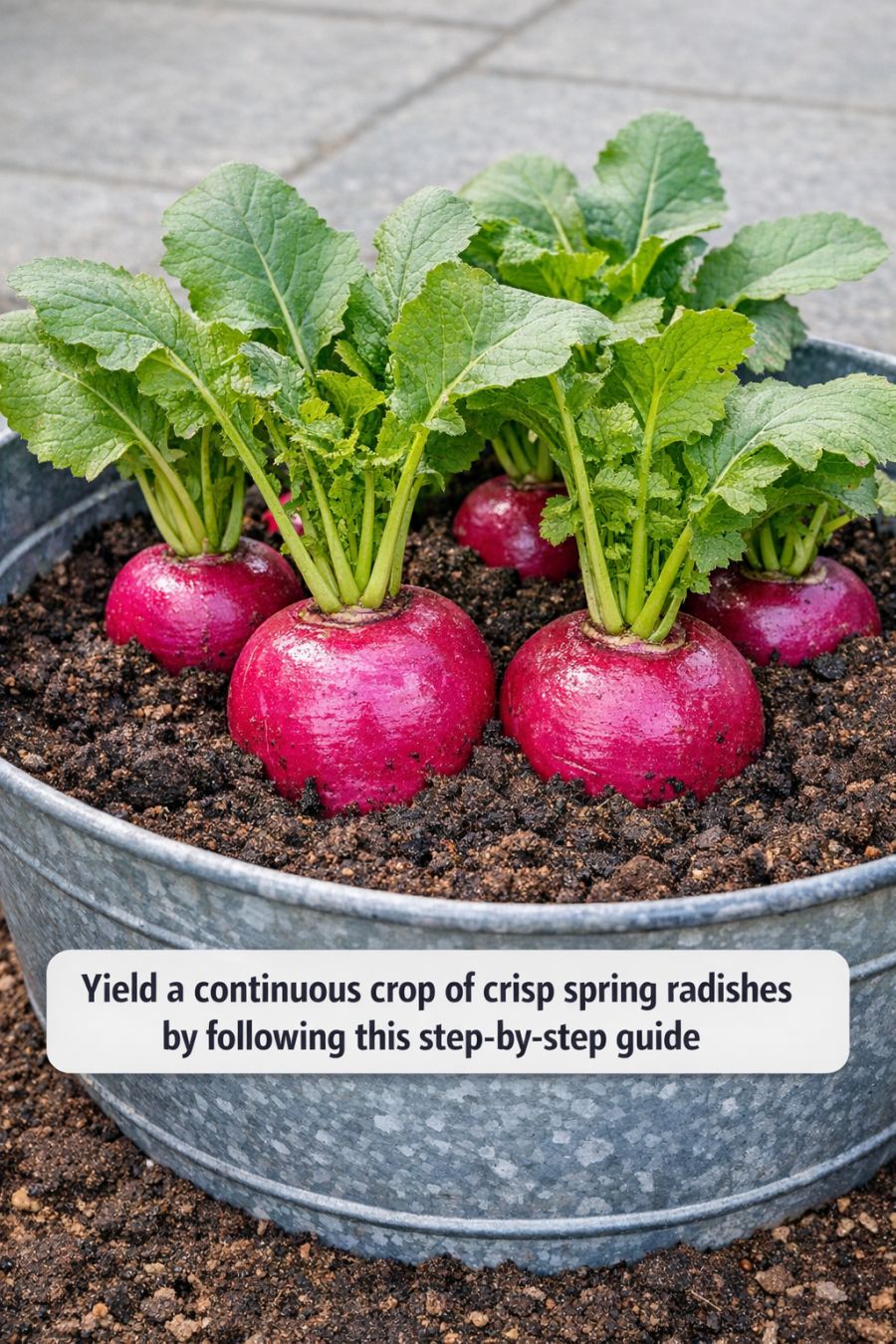
Yield a continuous crop of crisp spring radishes by following this step-by-step guide
Pages: 1 2
