
Be mindful of changing weather conditions and adjust your planting schedule accordingly. As temperatures rise, you may need to reduce the frequency of sowing or switch to heat-tolerant varieties to prevent bolting.
6. Use Precise Spacing And Depth For Consistent Bulb Size
Proper spacing and planting depth are essential for developing uniform radish bulbs. Plant seeds 1/2 inch (1.3 cm) deep and space them 1 inch (2.5 cm) apart in rows spaced 12 inches (30 cm) apart. This spacing ensures each radish has enough room to grow without competing for nutrients and sunlight.
Overcrowding can lead to small, misshapen roots, so thinning seedlings is crucial. Once seedlings emerge, thin them to 1 to 2 inches (2.5 to 5 cm) apart to promote healthy growth and maximize your harvest.
7. Water And Mulch To Keep Growth Fast And Tender
Consistent moisture is key to growing tender, crisp radishes. Water your radish plants regularly, providing about 1 inch (2.5 cm) of water per week, either through rainfall or supplemental irrigation. Ensure the soil remains evenly moist but not waterlogged.
Applying a layer of organic mulch, such as straw or shredded leaves, can help retain soil moisture, regulate temperature, and suppress weed growth. Mulch also reduces the risk of soil crusting, which can inhibit seedling emergence.
8. Protect Against Pests And Bolting Before They Ruin Crops
Common pests such as flea beetles and root maggots can damage radish crops. Implement preventive measures like floating row covers to protect young plants from insect damage. Regularly inspect your plants for signs of infestation and take action immediately if pests are detected.
To prevent bolting, avoid planting radishes too late in the season when temperatures begin to rise. Bolting can lead to tough, bitter roots, so timely planting and harvesting are crucial for maintaining quality.
9. Harvest At Peak Size For Maximum Crunch And Flavor
Radishes should be harvested when they reach their mature size, typically when the roots are about 1 inch (2.5 cm) in diameter. Check your seed packet for specific maturity guidelines for your chosen variety.
Harvest radishes promptly to enjoy their maximum crunch and flavor. Leaving them in the ground too long can result in woody, pithy roots, so regular checking and harvesting are essential.
10. Replant Beds Quickly To Keep The Crop Cycle Going
After harvesting, replant your radish beds promptly to maintain a continuous crop cycle. Amend the soil with compost or a balanced fertilizer to replenish nutrients and prepare the bed for the next round of planting.
By keeping your beds productive, you can maximize your garden’s output and enjoy fresh radishes throughout the growing season. Rotate your crops periodically to prevent soil depletion and reduce the risk of disease.
11. Store, Use, And Preserve Radishes To Enjoy Every Batch
Once harvested, radishes can be stored in the refrigerator for up to two weeks. Remove the greens to prevent moisture loss and store the roots in a plastic bag or container to maintain freshness.
Radishes can be enjoyed raw in salads, added to sandwiches, or pickled for a tangy treat. Consider preserving excess radishes by fermenting or pickling them to enjoy their spicy crunch long after the growing season ends.
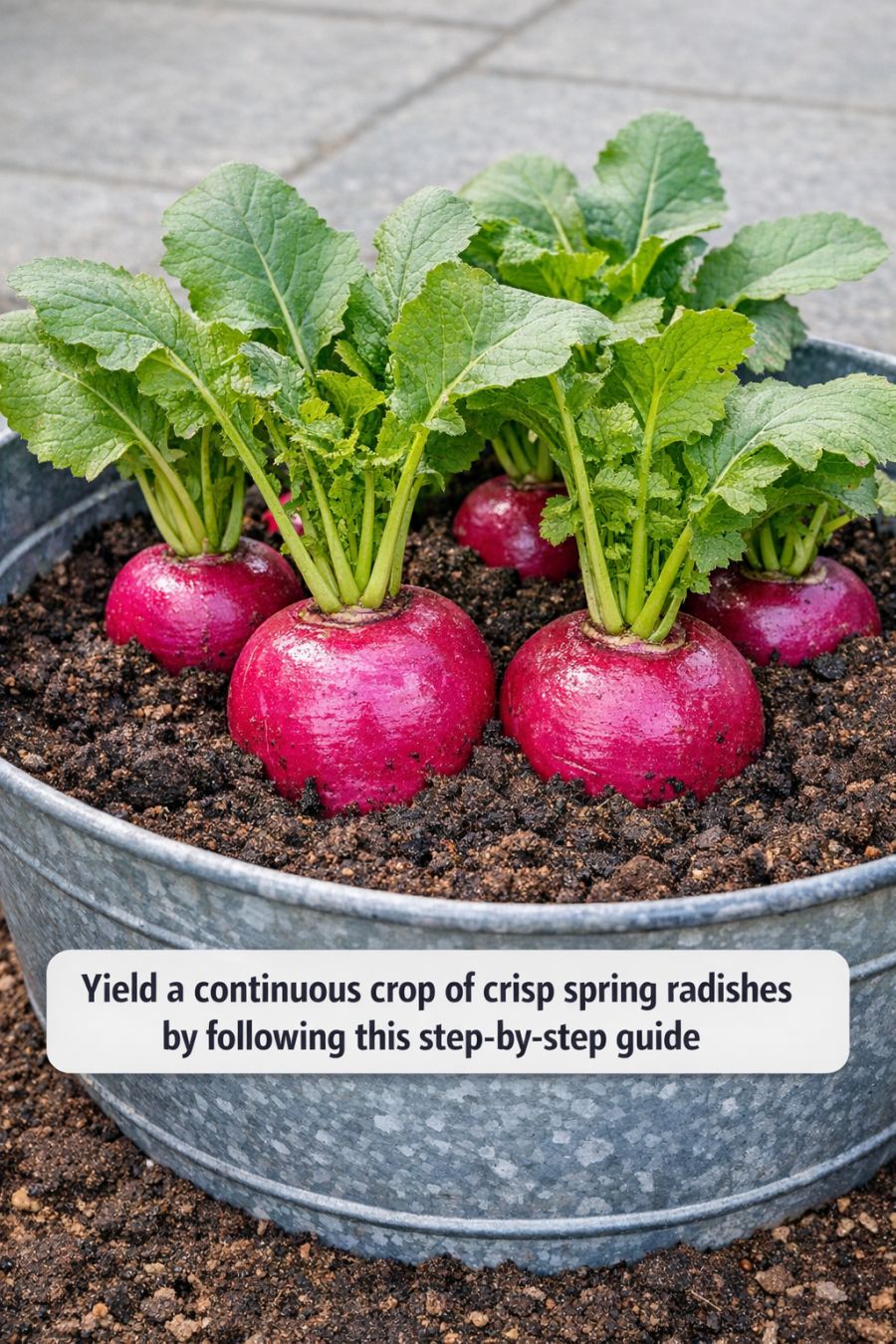
Yield a continuous crop of crisp spring radishes by following this step-by-step guide
Pages: 1 2
